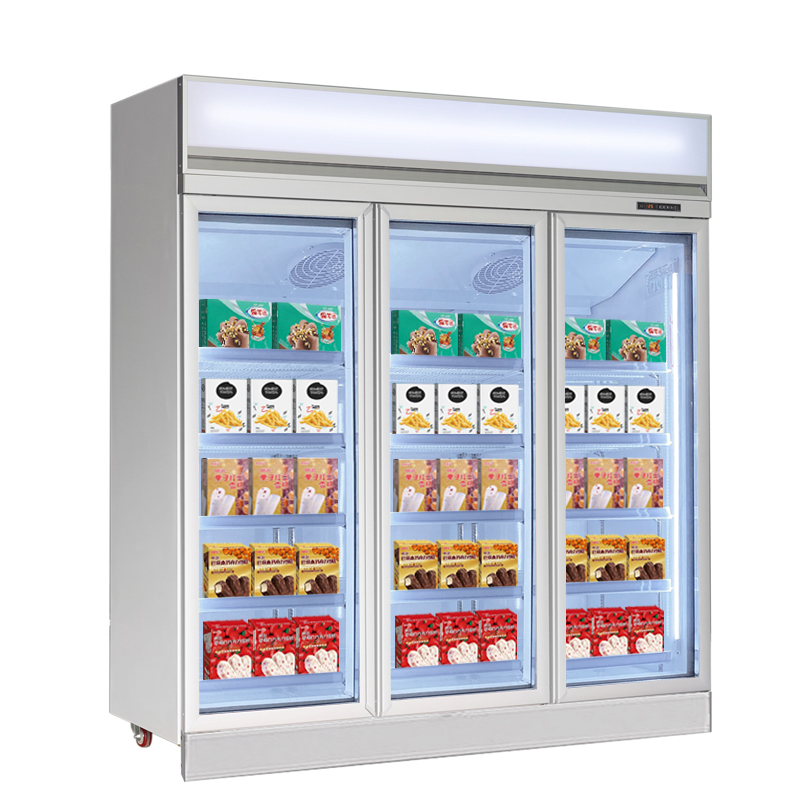

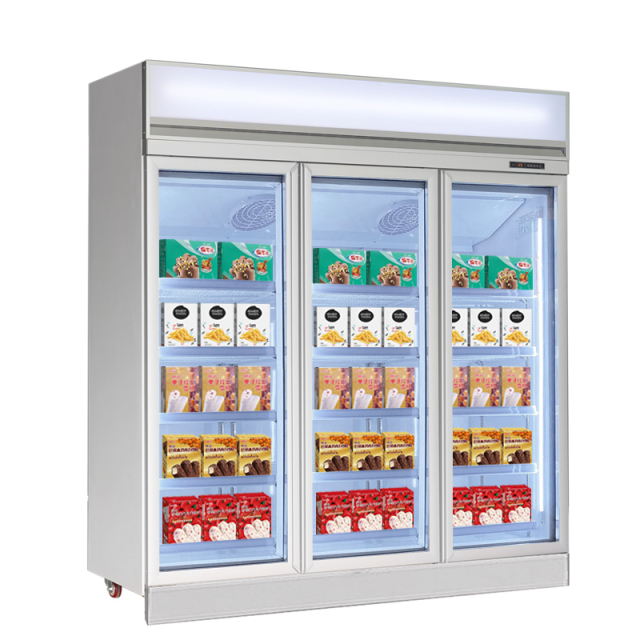
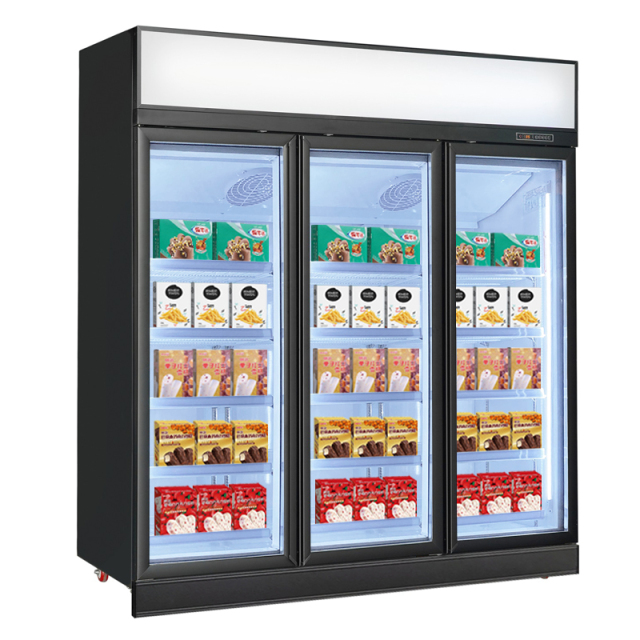
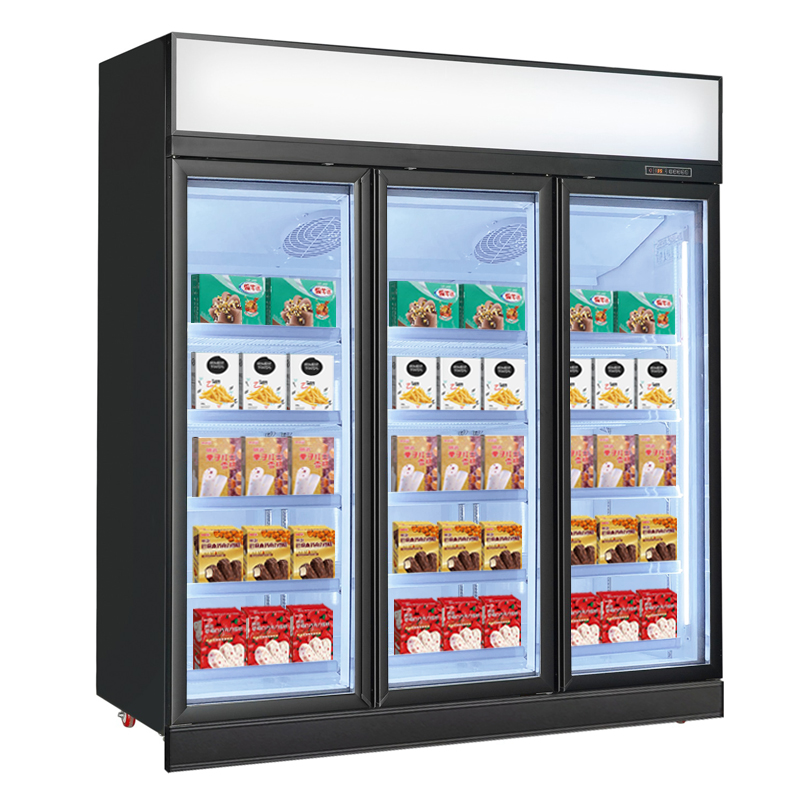
A three-door frozen display, built to be shopped from
The ES-D1880-3M-F is a top mounted triple door freezer that puts the whole frozen range behind glass at browsing height. Three heated hinged doors open onto powder-coated shelves, vertical LED lighting runs down each section, and the refrigeration deck sits above the cabinet instead of in a compartment at the bottom.
Each door becomes a category
Because every door covers its own run of shelving, ice cream can sit in one section, frozen meat or seafood in the next and ready meals in the third. Staff can restock one section without standing in front of the other two, and a shopper gets a short, clear run to scan rather than one very wide glass front.
Where it earns its space
Supermarkets and frozen food shops use it as a primary frozen display; convenience stores, forecourt shops and specialist frozen food operators use it where a chest freezer would hide too much of the range. Importers and distributors stock it for trade customers who want a display cabinet rather than hidden storage.
What it replaces
Usually an ageing glass door freezer, or a chest freezer that made shoppers lift a lid to see what was inside. Nothing about the format is experimental: it is a straightforward upright display freezer with heated glass, a lit header and enough run length to carry a full frozen category through a trading day.
| Model | ES-D1880-3M-F |
|---|---|
| Doors | 3 |
| Door type | Hinged, heated hollow glass with aluminium frame |
| Dimensions (mm) | 1880 × 735 × 2090 |
| Temperature range | -22 °C to -18 °C |
| Capacity | 1600 L |
| Refrigeration position | Top-mounted |
| Cooling | Fan cooling with auto-defrost |
| Evaporator | Copper, copper ends |
| Condenser | Web-type painted steel, copper ends |
| Shelves | Powder-coated, adjustable |
| Lighting | Vertical LED |
| Water tray | Self-evaporating |
| Container loading (20GP/40HQ) | 9/18 |
Where the refrigeration sits
On this cabinet the compressor and condenser sit in a deck above the display area. Cooling is still produced at the copper evaporator inside the cabinet, but the heat-rejecting side of the system is at the top rather than in a machine compartment at floor level.
What the sales floor gains
A bottom-mounted cabinet puts a vented compartment at kick height, exactly where mops, trolley wheels and dust collect. With the deck on top, the base of the cabinet stays closed and wipeable, the frozen zone starts at the floor, and there is no floor-level grille for staff to clean around.
Service access
Coil cleaning and component checks happen at the top of the cabinet, where a technician can work standing up instead of kneeling in a trading aisle. In a store that trades all day, that decides whether maintenance happens on schedule or waits for a quiet hour that never comes.
Heat and airflow
Warm air leaves the system at the top of the cabinet and rises away from the frozen zone and from shoppers' feet. Keeping the deck clear of cartons, signage and stored stock is what allows that heat to leave; the deck is part of the cabinet, not an extra shelf.
Keeping the machine out of the shopping floor is why the top mounted triple door freezer layout is chosen for cabinets that stand directly in a trading aisle, with product visible from the base of the glass to the header.
A frozen band, held steady
The cabinet runs between -22 °C and -18 °C, the band frozen food is sold from. Ice cream and frozen desserts sit comfortably at the colder end; frozen meat, poultry, seafood and ready meals hold well across the range. The set point is entered on the digital controller and read by staff without opening a door.
Why a busy aisle is the hard part
A commercial lightbox display freezer for supermarket use rarely gets a quiet hour. Doors open and close all day, warm air enters every time, and the cabinet has to pull back to temperature quickly. Fan cooling circulates cold air through the cabinet rather than letting it stratify, so the top and bottom shelves stay close to the set point.
Loading it properly
Load pre-frozen product only: a warm delivery dropped straight in will push the temperature up and take hours to recover. Keep the rear air path clear, stack to the shelf edge rather than over it, and leave gaps between blocks so cold air can move. After a large restock, give the cabinet time to recover before the next rush.
What affects performance in store
Doorways, direct sunlight, heating vents and draughts from entrance doors all make the cabinet work harder. If the freezer will stand near an entrance or under a skylight, tell your sales contact when you order so the position can be checked against your layout.
One supplier for the rest of the frozen aisle
A frozen aisle is rarely one cabinet. The same factory builds upright glass door coolers and freezers, open chillers, serve counters, ice makers and ice storage bins, cake and ice cream showcases, stainless steel kitchen refrigeration, dry ageing cabinets, wine coolers and back bar coolers. That matters when a fit-out runs to one schedule: the display freezer, the beverage cooler at the front of the store and the ice machine at the back can be specified together, in one language, with one set of documents.
Where the companion models fit
A single door glass front beverage cooler covers chilled drinks; a double glass door freezer or cooler fills the next bay; an upright freezer with R290 refrigerant suits a kiosk or a smaller format; a black painted steel open chiller with a self-closing glass door handles dairy and chilled food. For bakery and foodservice counters there are cake showcases, ice cream freezers and deli or meat cabinets, and for back of house, cube ice makers from compact units up to high-output series with large storage bins.
What that means for an order
Specifying several categories in one place keeps control layout, finish and shelf style consistent down an aisle, and keeps the paperwork in one file. Working with a 3 door display freezer manufacturer that also builds the rest of the range means spare-part and after-sales questions land with one team rather than three.
ESCOLO has manufactured commercial refrigeration equipment in Foshan, Guangdong since 2010, and the team now numbers more than 800 people. Fifteen-plus years in the trade, a network of 3,000+ qualified partner factories and an annual output of 200,000+ units let us run container-scale programmes and repeat orders for supermarket, convenience and foodservice buyers. OEM and ODM work is standard: size, colour, function and your own branding are set to the specification you send. Factory audit, pre-shipment inspection, consolidated shipping and after-sales support are handled in-house.
On a top mounted triple door freezer the compressor and condenser sit in a deck above the display, so the floor-level space stays closed and easy to clean and the frozen zone starts at the base of the cabinet. A technician can also reach the deck standing up rather than kneeling in the aisle, which makes routine coil cleaning quicker to schedule in a store that trades all day.
The -22 °C to -18 °C band covers frozen food as it is normally merchandised: ice cream and frozen desserts, frozen meat and poultry, seafood, ready meals and frozen bakery. Ice cream and desserts perform optimally at the colder end, and the digital controller lets you set the cabinet to suit the mix you carry. As with any commercial lightbox display freezer for supermarket use, keep the doors closed between customers so the cabinet recovers quickly.
Each door is a hollow glass panel with a heater built into it and an aluminium frame around it. The heater keeps the glass clear of the moisture that would otherwise settle on a cold surface, which is why the display stays readable in humid stores and near entrance doors. That is also why heated doors are used on frozen cabinets rather than plain glass.
Plan for the cabinet footprint given in the specifications, working clearance above the top-mounted deck for heat rejection and service access, and door-swing room in front of the glass. Send your store layout to your sales contact and we will confirm the clearances we recommend for this model before you fix the position.
Yes — the header is an illuminated panel and it is normally used for the store name, a category message or a promotion. Send the artwork or wording to your sales contact and confirm the panel format, colour and file requirements before the order is placed, because as a 3 door display freezer manufacturer the panel is prepared as part of the cabinet build rather than added afterwards.
Take the shelves out and wash them with a mild detergent, then wipe the painted steel interior with a soft cloth and dry it before reloading. Keep water away from the controller and the ventilation openings, and leave work on the refrigeration system itself to a service technician rather than to store staff.