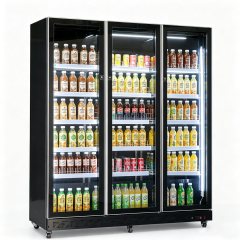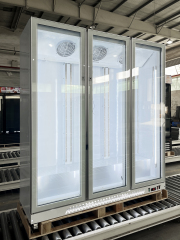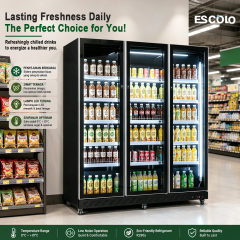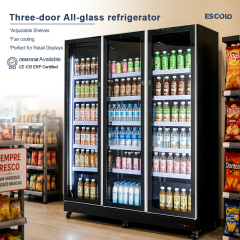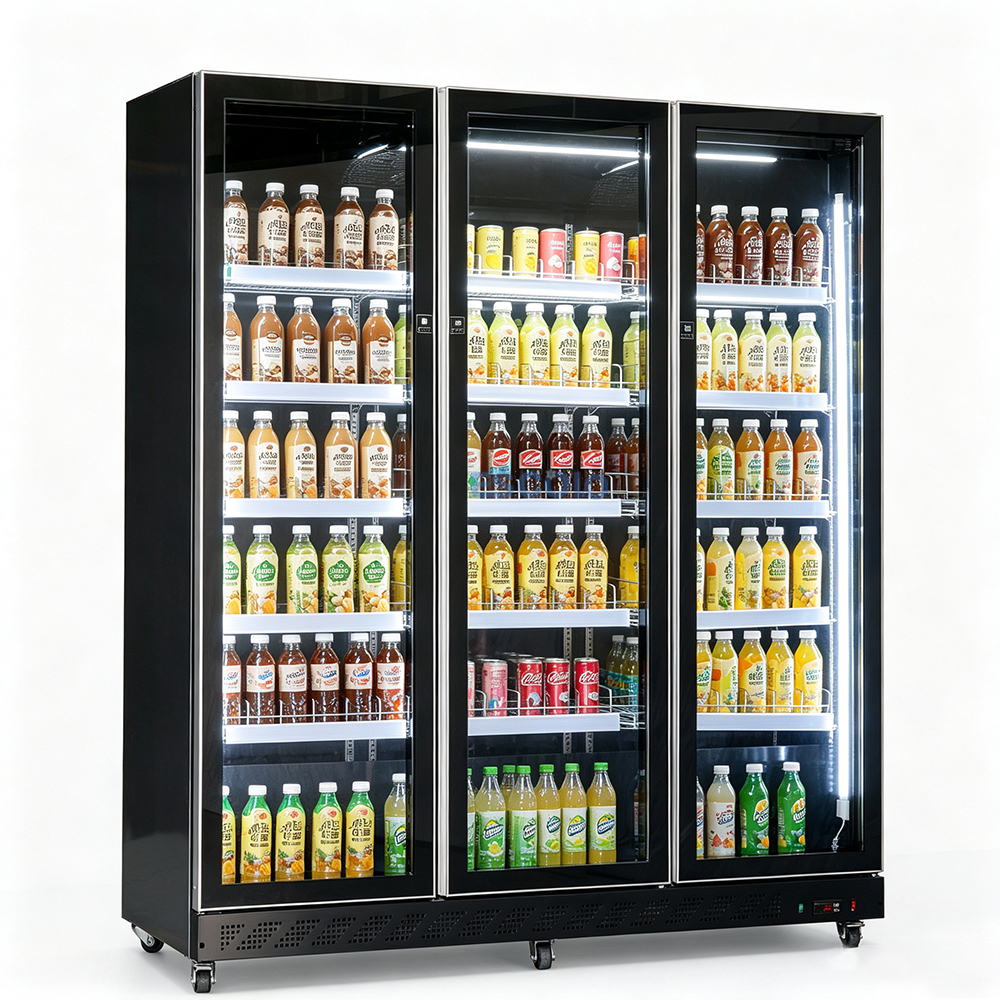
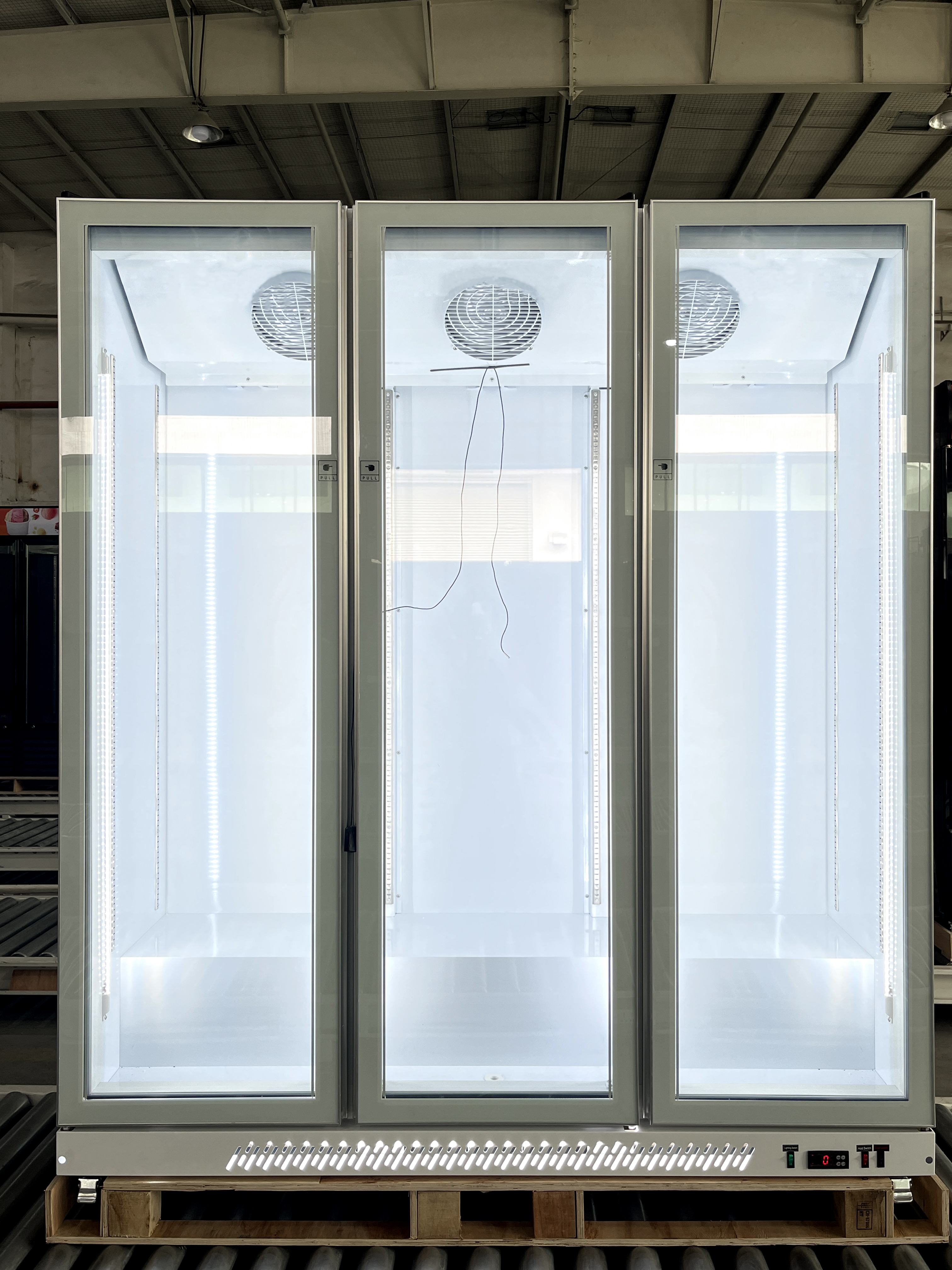
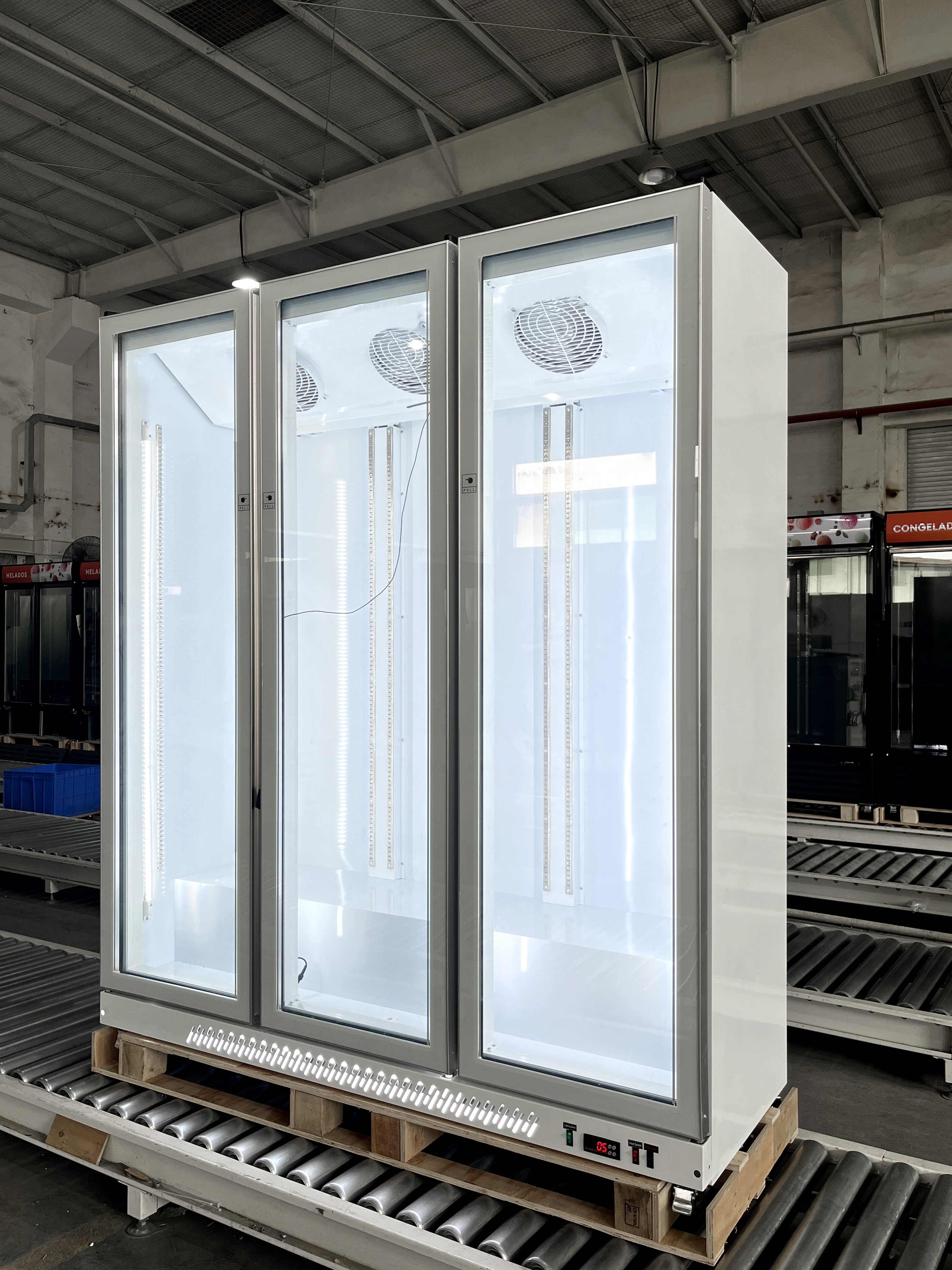

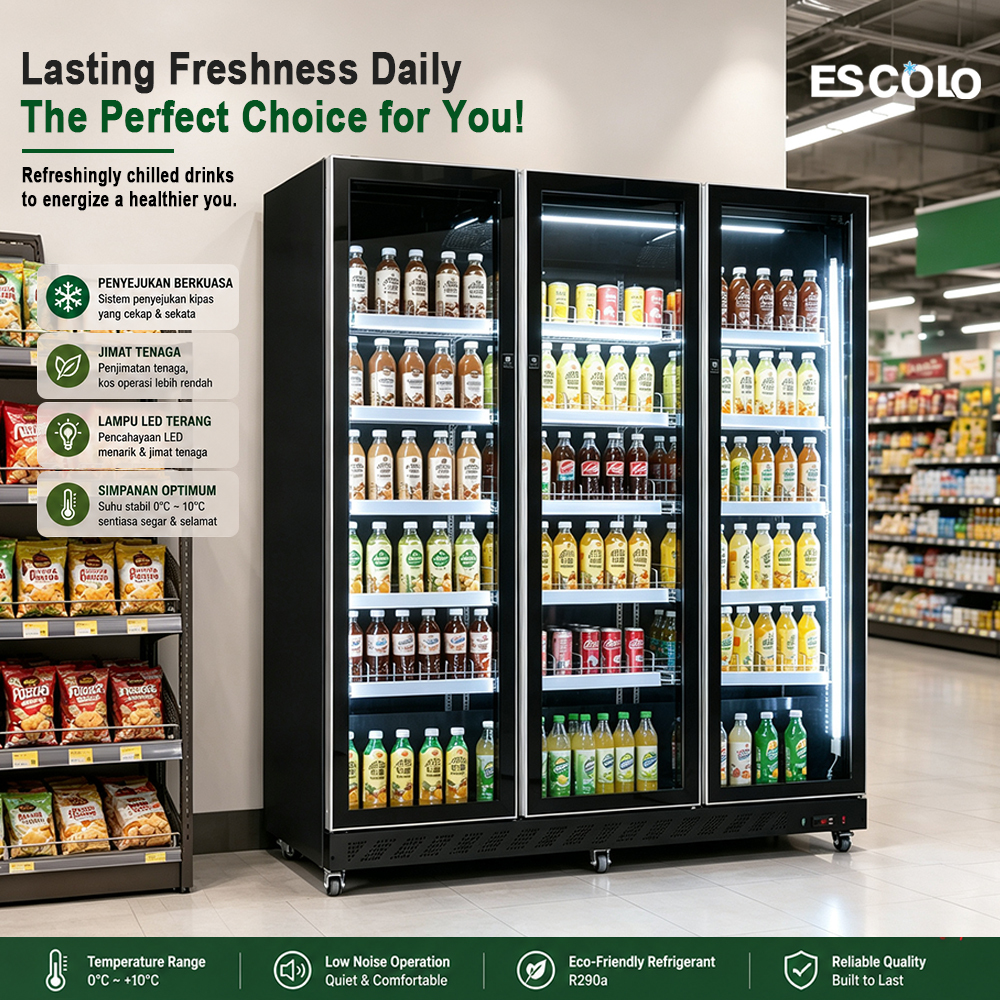
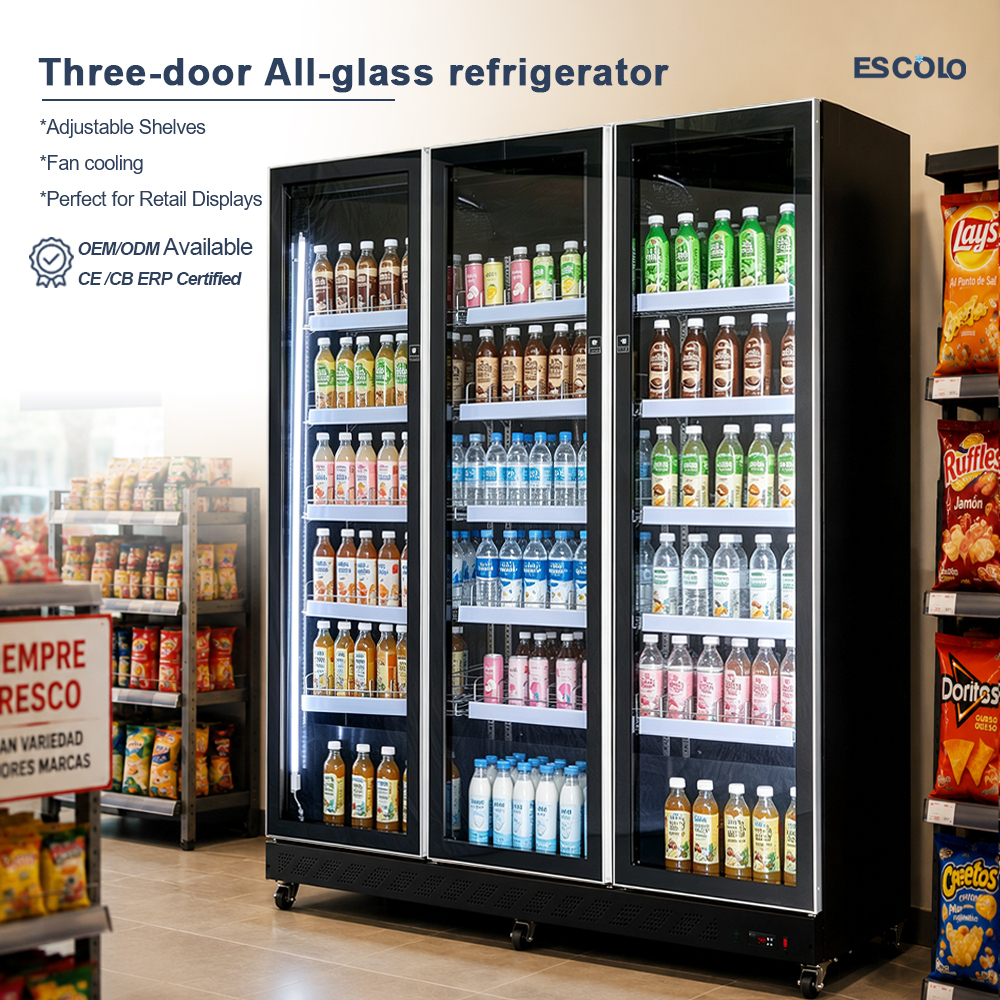
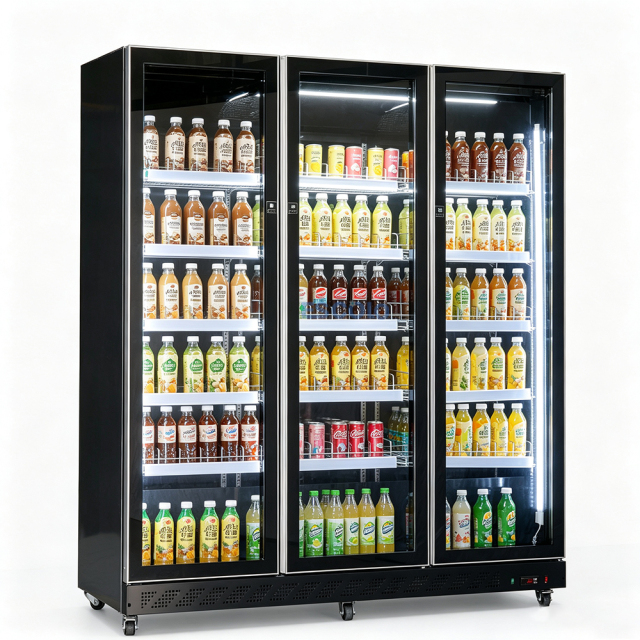
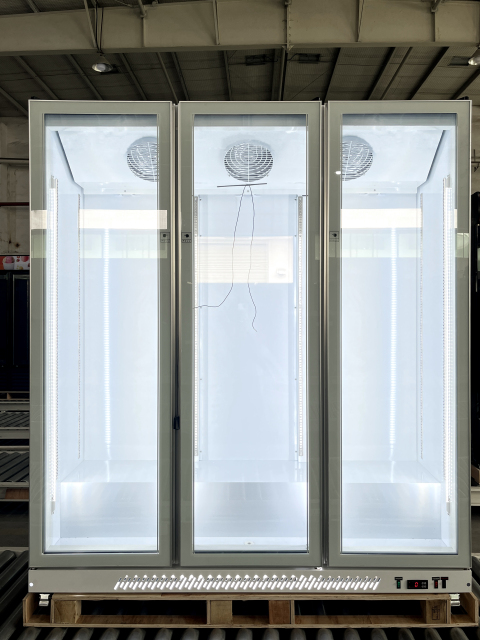
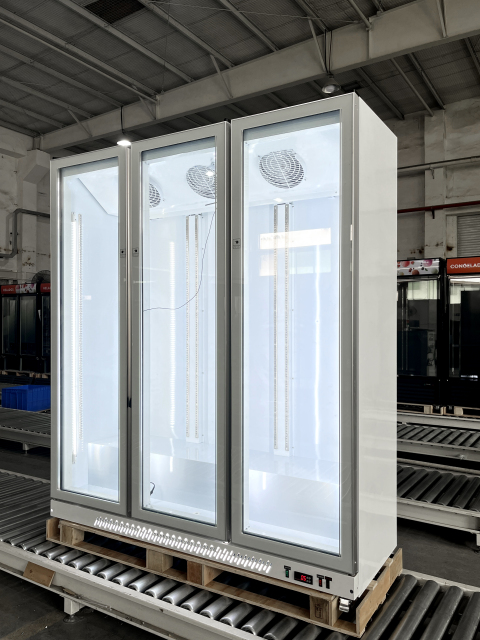
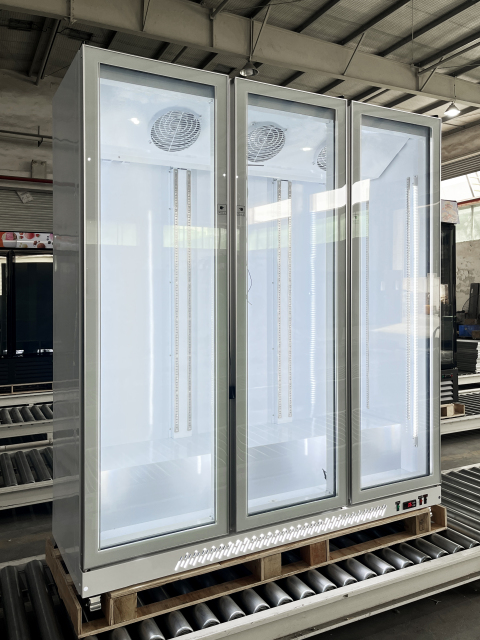
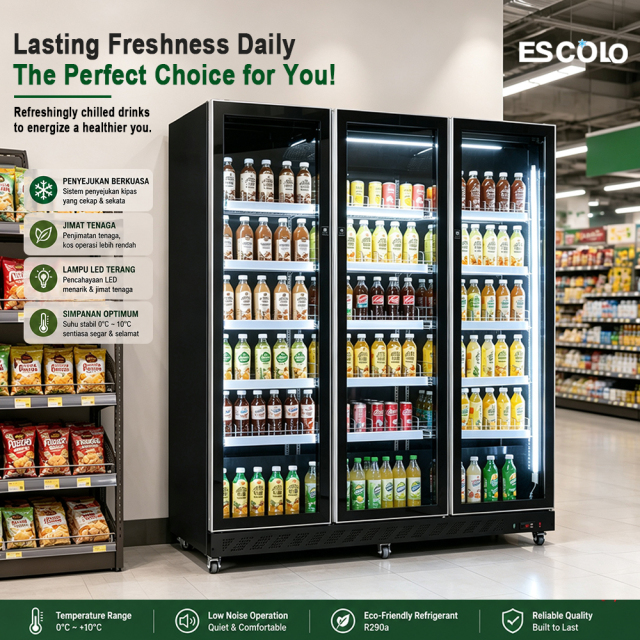
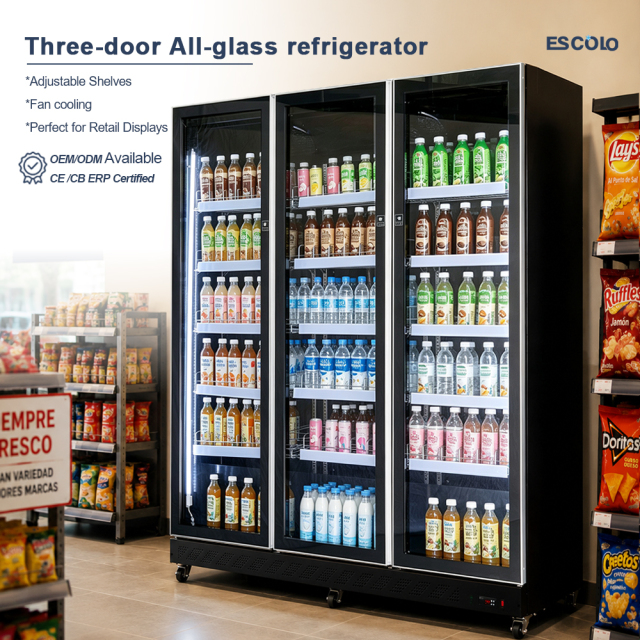
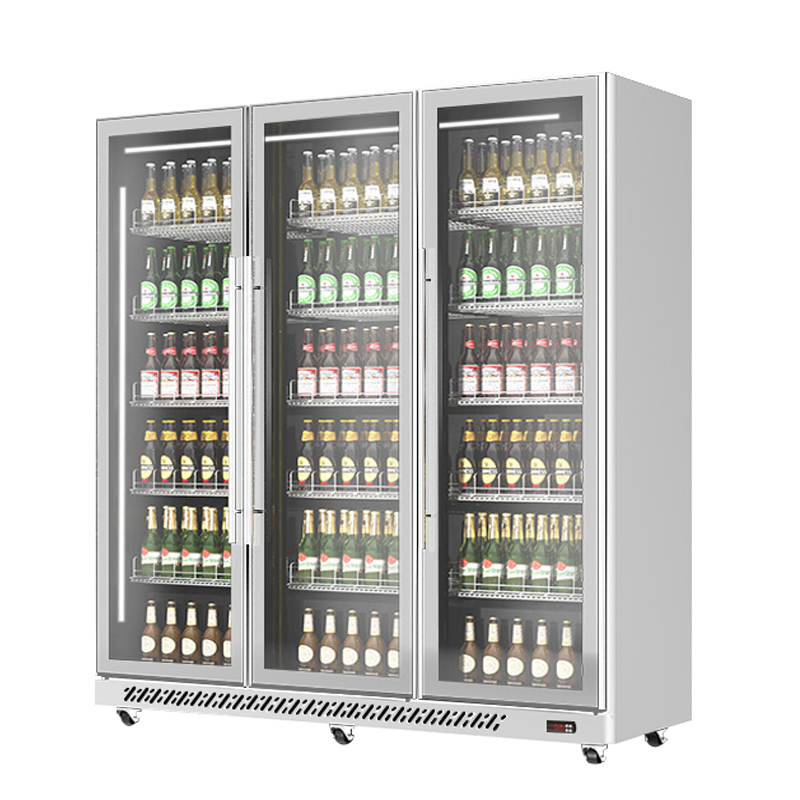
The ES1680-3M is a triple door commercial display refrigerator for shops that sell a lot of chilled drinks and want customers to serve themselves. Three full-height glass doors open onto 1,173 litres of shelving held between 0 °C and +10 °C — the working band for bottled water, soft drinks, energy drinks, milk, juice, yoghurt and packaged ready-to-eat food.
It is a high volume drink cooler for supermarket aisles, sized for the shop floor rather than a storeroom. The cabinet stands along a wall or at the end of a chilled aisle, faces the shopper, and lets two or three people browse at the same time instead of waiting behind one open door.
Day to day it behaves like part of the fixtures. Staff open one door, pull the facings forward, drop the price tag into the shelf holder and close it again. Because each door covers its own bank of shelves, a delivery can be worked section by section while the other two doors keep trading.
This glass door display cooler belongs to a four-size family that runs from a single-door cabinet up to a four-door unit, all on the same cooling layout, shelving pattern and control set — so a chain can put a three-door version on the main wall and a smaller one in a forecourt shop without retraining staff on how the cabinet works.
If you are replacing older closed storage, the change is immediate: stock that used to sit hidden in a back room becomes part of the shop floor, and the floor space it occupies starts earning. ESCOLO supplies the family as a 3 door display cooler supplier to distributors and chain buyers, which keeps shelves, tags and controls consistent across a store group. For cafés, the compact design lets the refrigerator fit into tight spaces while keeping cold drinks within easy reach of customers, and it still offers ample storage capacity for an assortment of beverages.
A glass door display cooler is judged from three metres away, by someone walking past with a basket. That is what the glazing is for.
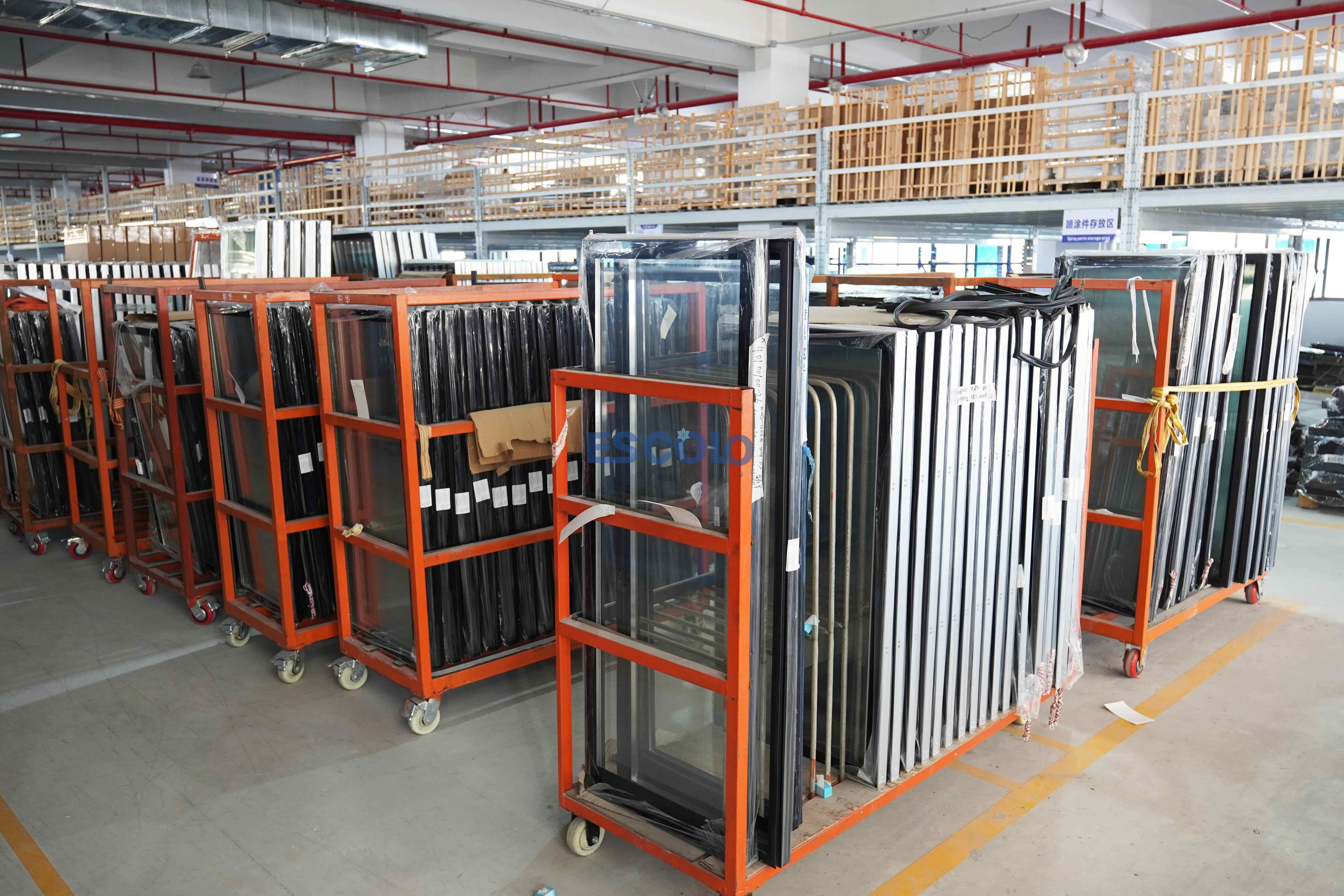
The doors are double tempered glass with a light transmittance above 90%, so packaging arrives at the shopper close to how it looks in the hand. The panes are clear edge to edge rather than heavily tinted, and because the doors run full height instead of stopping at a solid base, the bottom shelf stays visible from a standing position and product does not disappear behind a frame.
Condensation is the usual reason a glass door stops working as a display. Airflow across the inner pane and a defrost cycle that responds to humidity keep the view clear in normal trading. If your site runs humid — a coastal store, a shopfront that stands open to the street — say so when you ask your 3 door display cooler supplier for a quotation, so the door specification can be matched to the conditions.
The rest is housekeeping: a microfibre cloth and glass cleaner on the outside, a soft cloth inside, no abrasive pads on the door frames. Clean glass is the cheapest merchandising upgrade in the store.
What sits behind the glass finishes the job. Fast-moving lines at eye level across all three doors, slower lines above and below, price tags in the shelf holders so a shopper can decide without looking for a member of staff. Visibility is never only the glass — it is what you put behind it.
A commercial beverage cooler is at its most honest at two o'clock on a Saturday. Doors open every few seconds, warm air walks in, and the refrigeration has to pull the temperature back before the next shopper arrives.
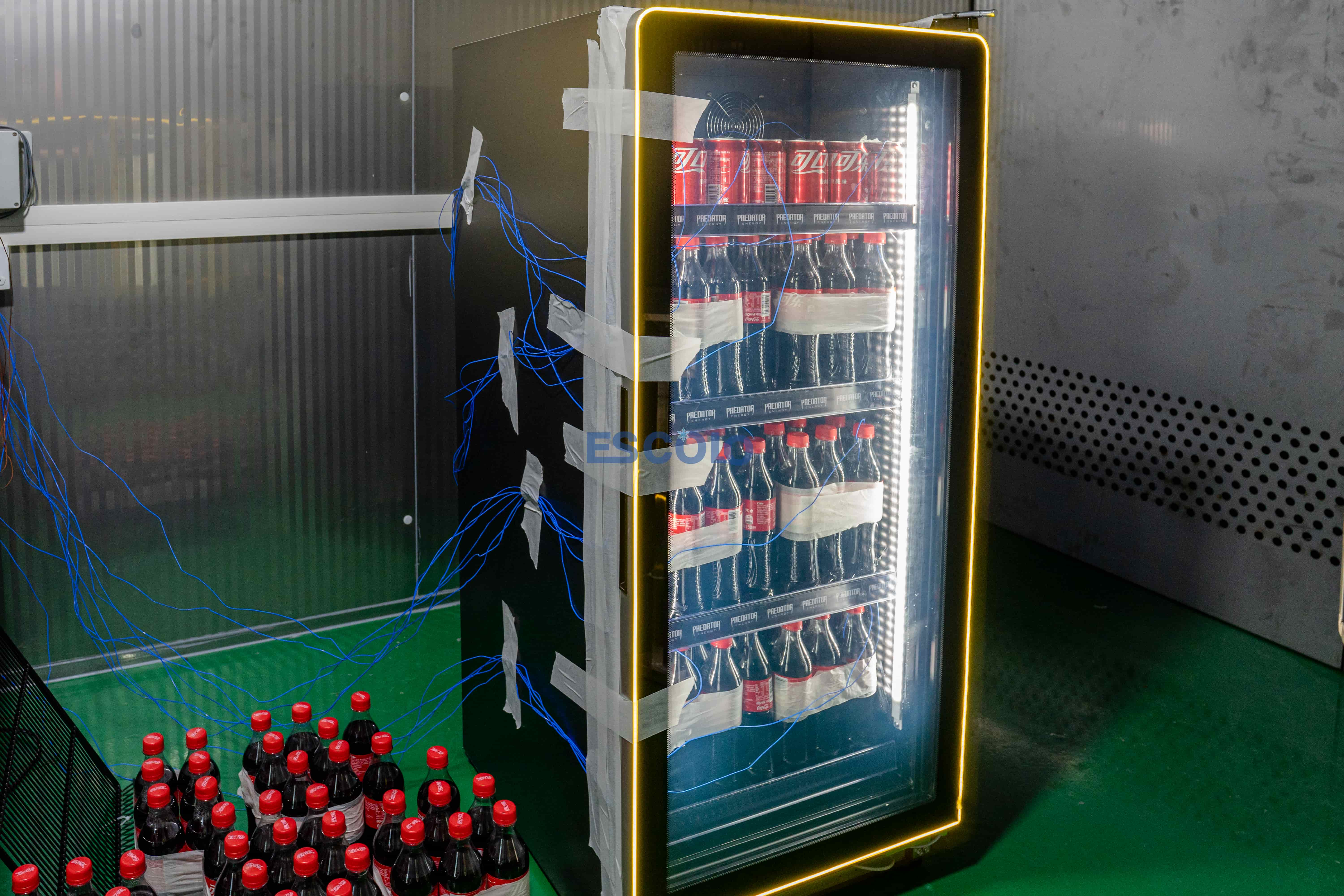
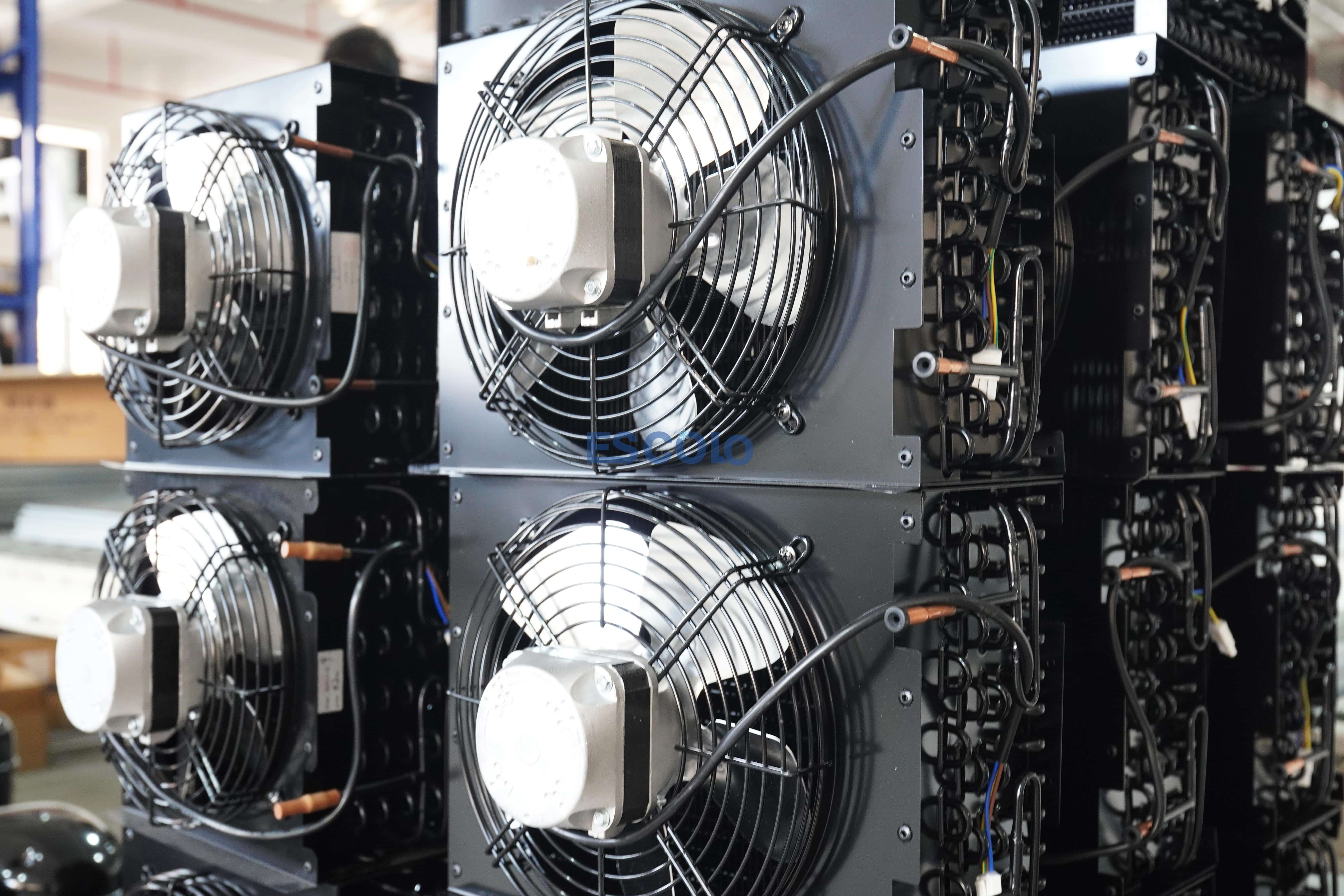
On a triple door commercial display refrigerator — a high volume drink cooler for supermarket aisles — the recovery work is split three ways. Each door is its own opening, so a shopper reaching for water at one end does not spill cold air across the whole cabinet. Multi-directional fan cooling keeps the spread across the shelves within about 1 °C, so a door opening at one end is not felt as a warm shelf at the other. Smart auto defrost runs from humidity and usage rather than a fixed timer, which keeps long defrost cycles out of the busiest hour, and the digital controller holds the set point instead of drifting a degree or two either side.
What the store does matters as much as what the cabinet does. Three habits keep temperatures steady: face up stock without pushing it past the front edge of the shelf, so air can fall back to the return; keep the air grilles at the back and base clear; and never load a warm delivery straight from the van.
The controller lock stops the set point being changed by anyone who is not authorised to change it, and the optional WiFi module lets a manager check cabinet temperatures from a phone instead of walking the aisle with a clipboard.
If a cabinet ever seems to run warm, the checks run in a fixed order: door left ajar, damaged gasket, blocked grille, dusty condenser, then the refrigeration circuit. Three of those five are fixed with a cloth or a closed door.
| Specification | Detail |
|---|---|
| Capacity | 1,173 L |
| Temperature range | 0 °C to +10 °C |
| Doors | 3 hinged, full-height glass |
| Door glazing | Double tempered glass, light transmittance above 90% |
| Overall dimensions (W × D × H) | 1,680 × 635 × 1,980 mm |
| Cooling | Multi-directional fan cooling with smart auto defrost |
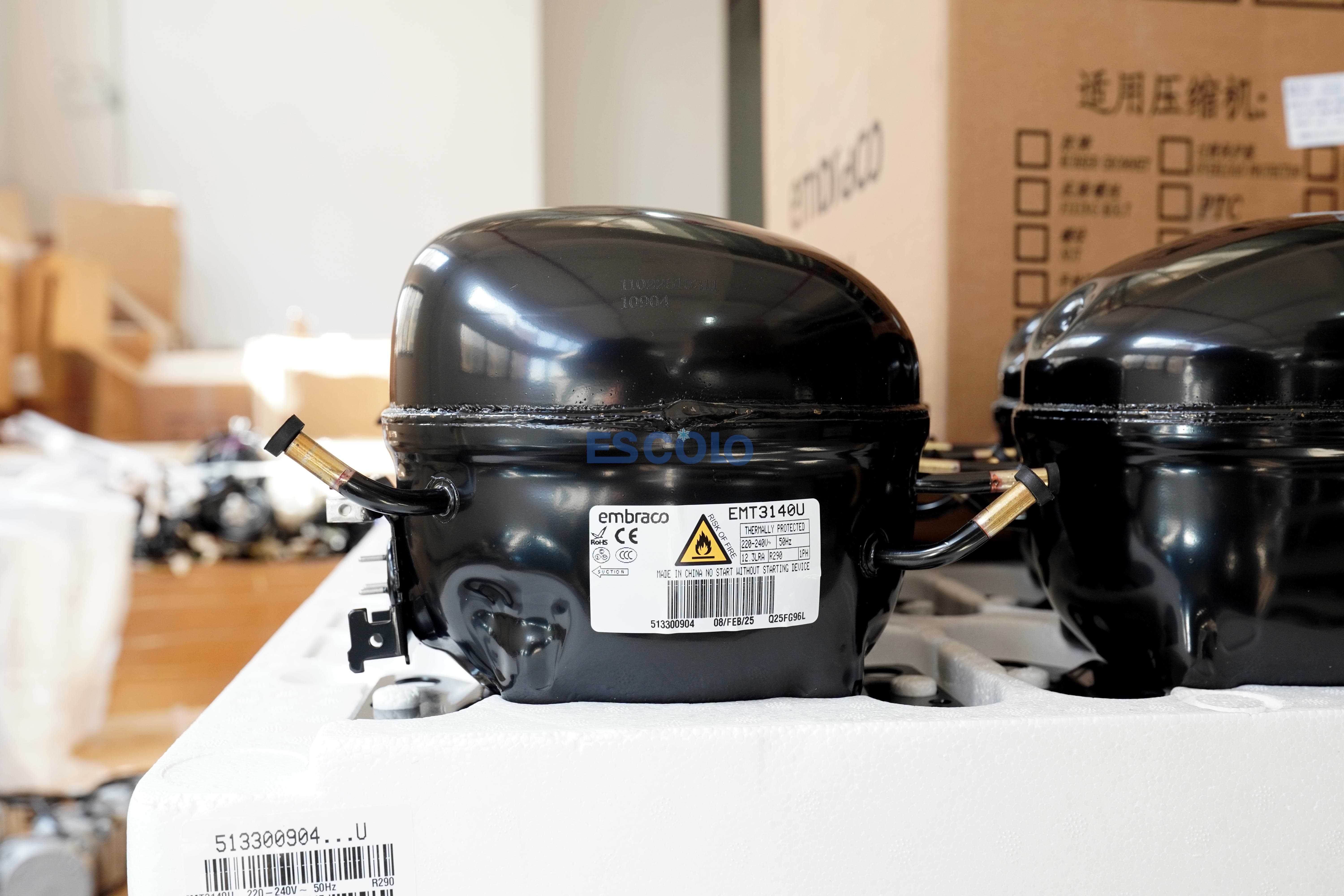
| Compressor | Donper |
| Refrigerant | R290a, GWP below 3 |
| Energy efficiency ratio | Above 1.8 |
| Fan motor | Industrial brushless, below 38 dB, 50,000+ hours running |
| Shelving | 5 PVC shelves per door, price tag holder and divider |
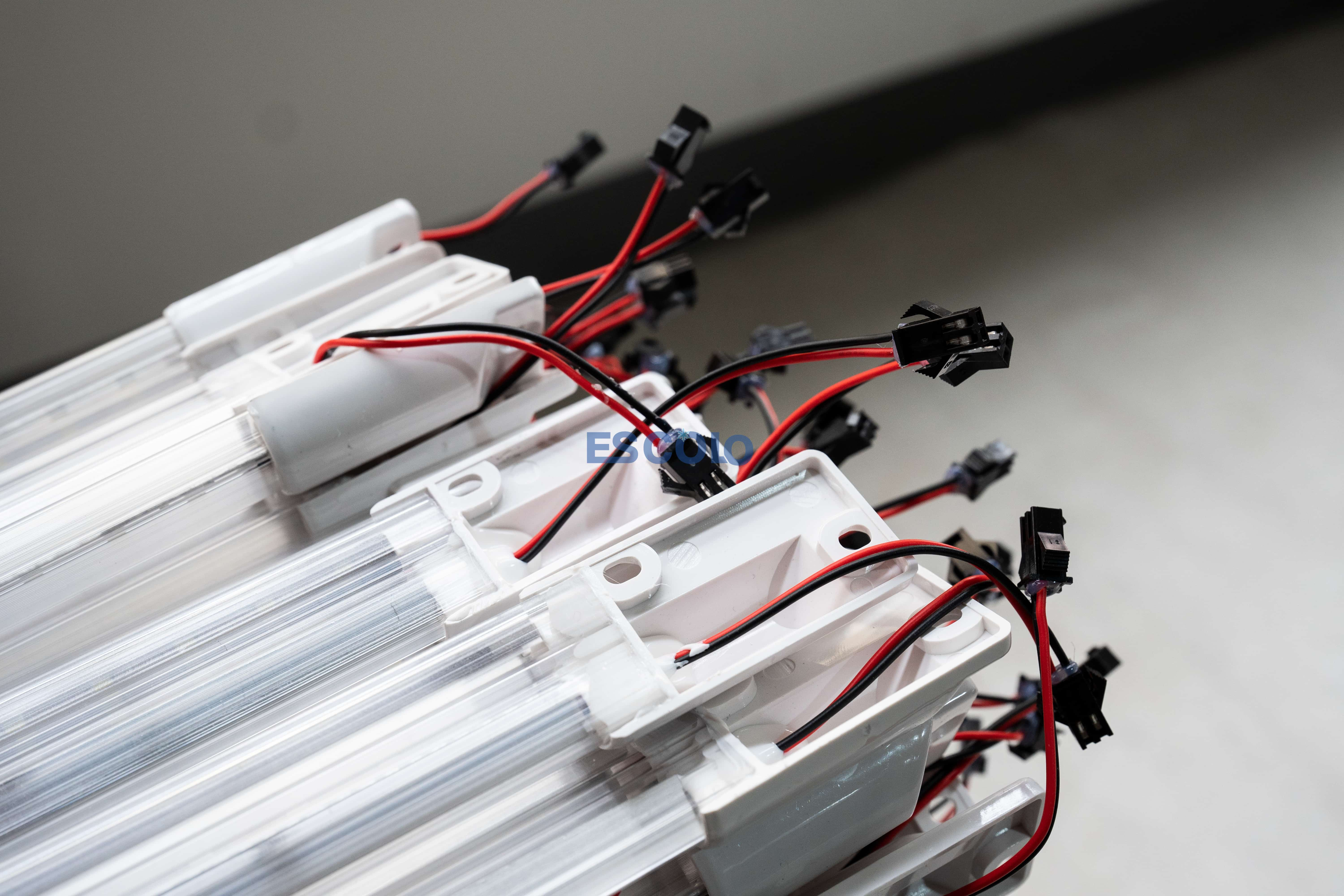
| Lighting | Vertical LED |
| Controller | Digital, 0.1 °C steps, lock function, optional WiFi remote management |
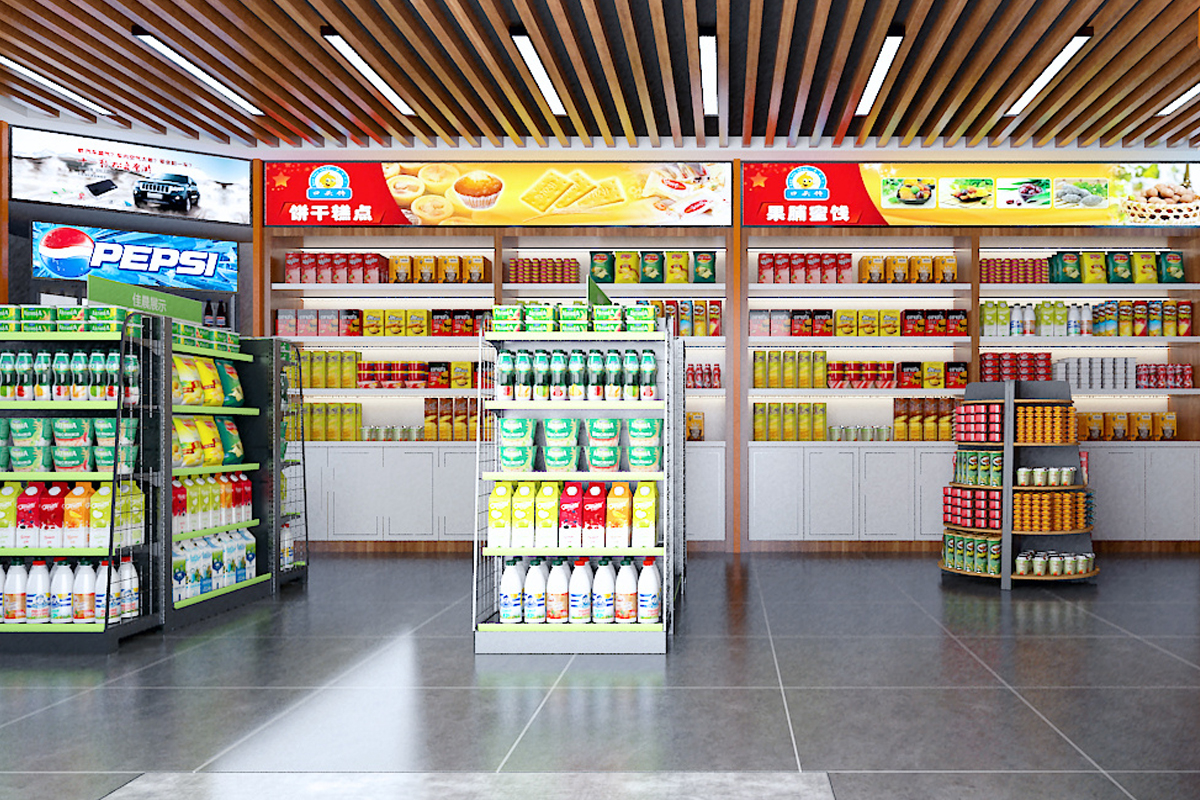
High traffic is three problems at once: more people opening doors, more stock leaving the shelf, and less room to work. A high volume commercial beverage cooler for supermarket aisles has to answer all three without asking staff to slow down.
The three-door layout answers the first two. Each door is a separate opening, so one shopper does not chill the whole cabinet, and two or three people can be served by the display at the same time. Behind the glass, five levels per door let the facings run deep enough to survive an hour of steady picking without a gap opening up.
Siting decides the rest. This cabinet earns its place at the end of a chilled aisle, on the route between the entrance and the checkouts, or as the cold anchor of a forecourt shop — anywhere the shopper already walks. Face the doors into the traffic flow, leave clearance to open them fully, and keep promotional bins from blocking the last door.
Restocking belongs before the peak, not during it. Working one section at a time keeps two-thirds of the display trading while a delivery is put away, and it keeps the air path through the cabinet undisturbed.
Doors take the knocks in a busy aisle, and handles, hinges and shelf edges are the parts that show wear first. They are also the parts that decide whether the cabinet still looks like display equipment after a year of Saturdays.

| Specification | Details |
|---|---|
| Key features | Donper compressor with R290a gas, fan cooling, vertical LED lighting, full glass doors, copper evaporators |
| Suitable for | Supermarkets, convenience stores and foodservice outlets |
| ES620-1M | 1 hinge door, 620×635×1980 mm, 387 L, 0 to +10 °C, 27/54 (20GP/40HQ) |
| ES1100-2M | 2 doors, 1120×635×1980 mm, 768 L, 18/38 (20GP/40HQ) |
| ES1680-3M | 3 doors, 1680×635×1980 mm, 1173 L, 9/20 (20GP/40HQ) |
| ES2240-4M | 4 doors, 2240×635×1980 mm, 1608 L, 9/18 (20GP/40HQ) |
This refrigerator comes with 5 PVC shelves per door, each equipped with a price tag holder and divider, so products stay organized and pricing is clear. Digital temperature control makes it easy to hold the desired temperature with precision, and the R290a refrigerant offers a more eco-friendly option that reduces environmental impact.
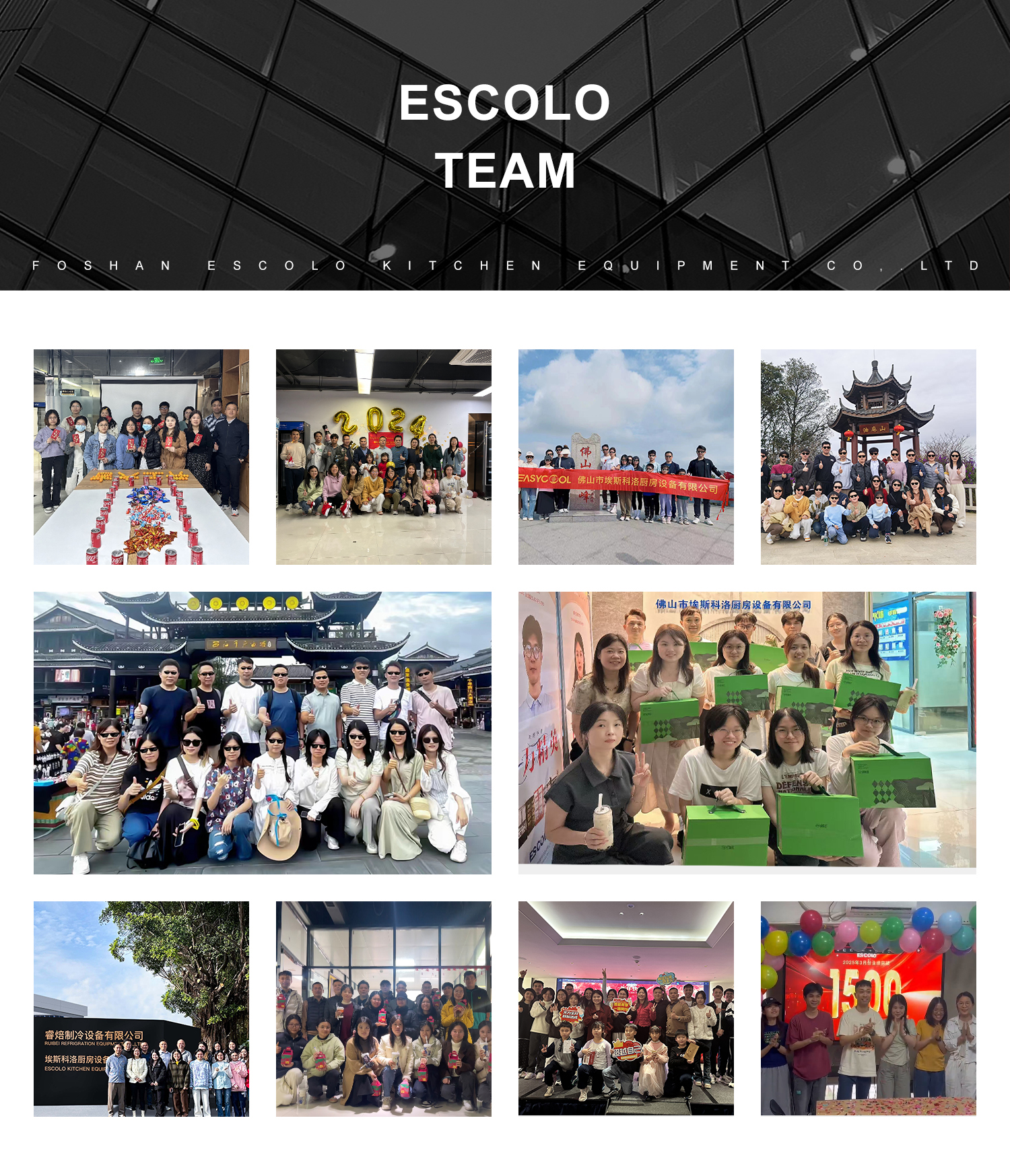
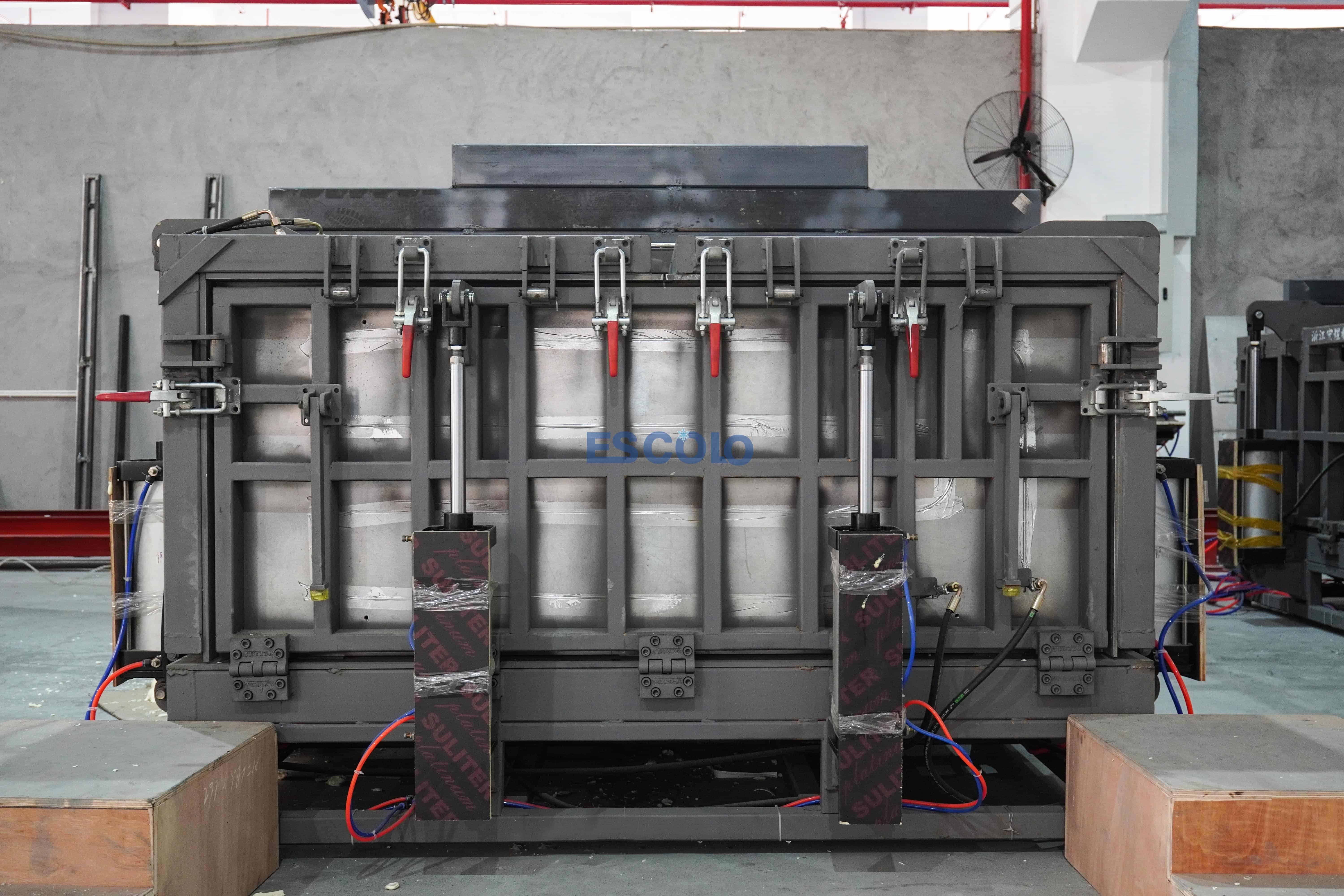
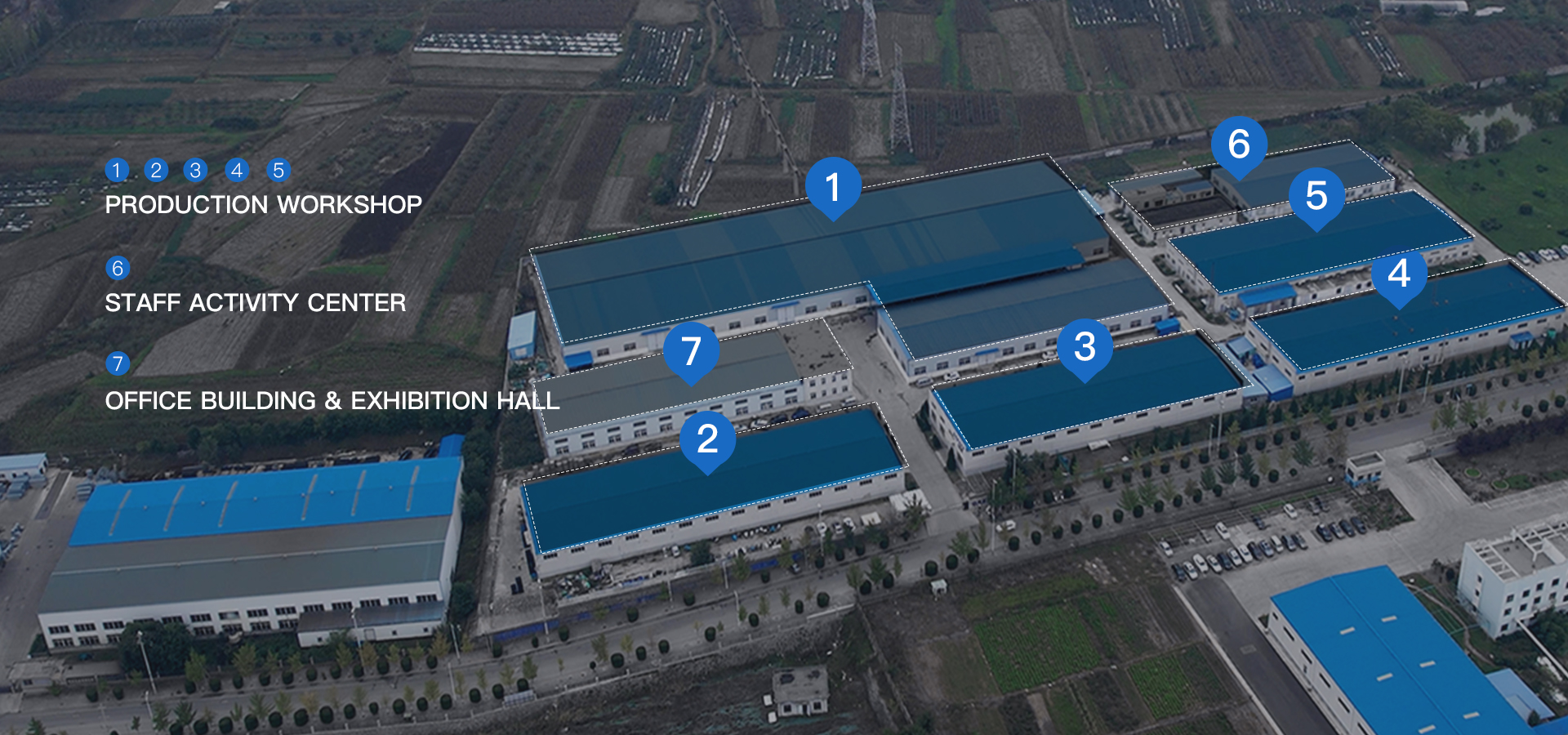
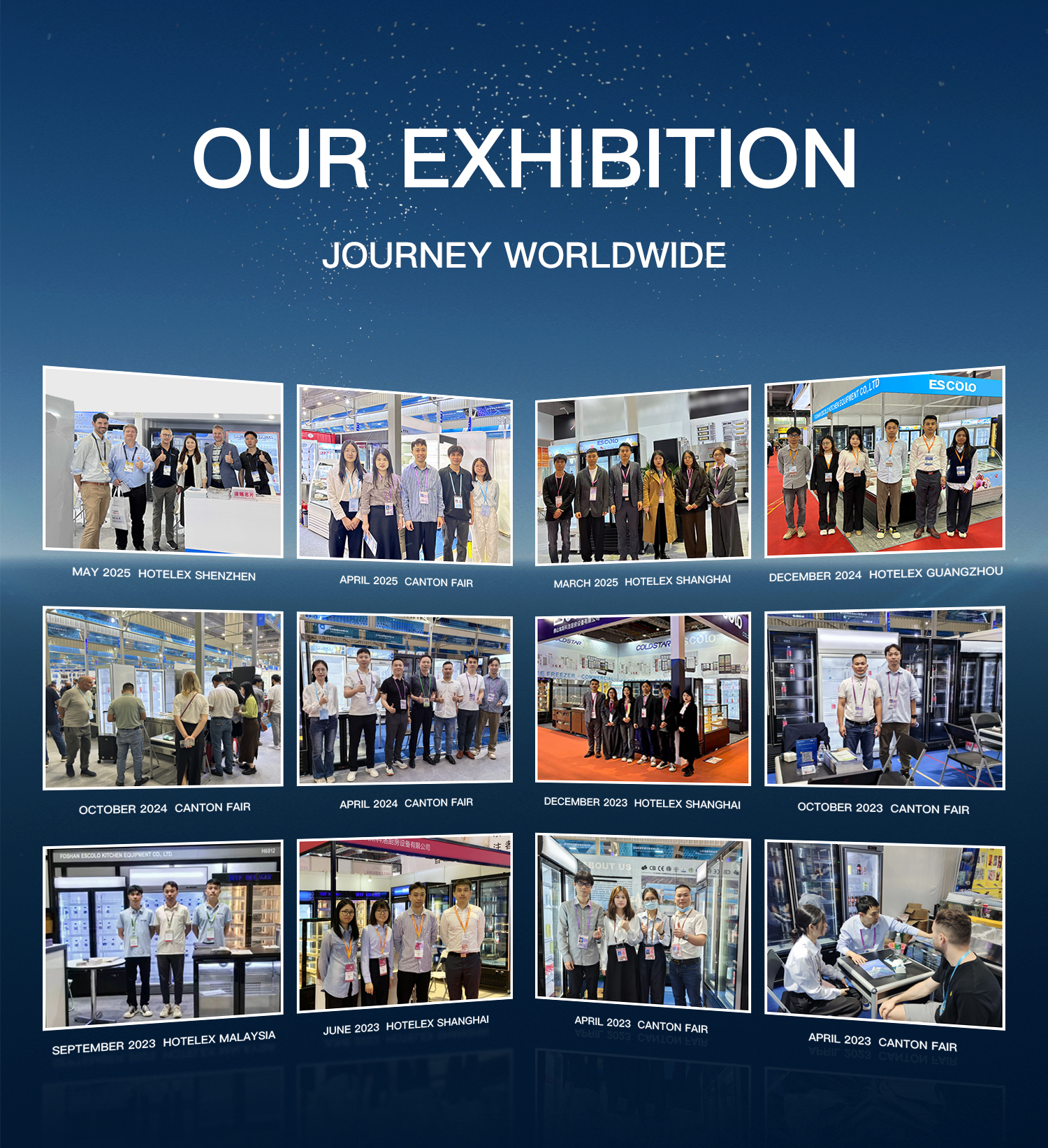
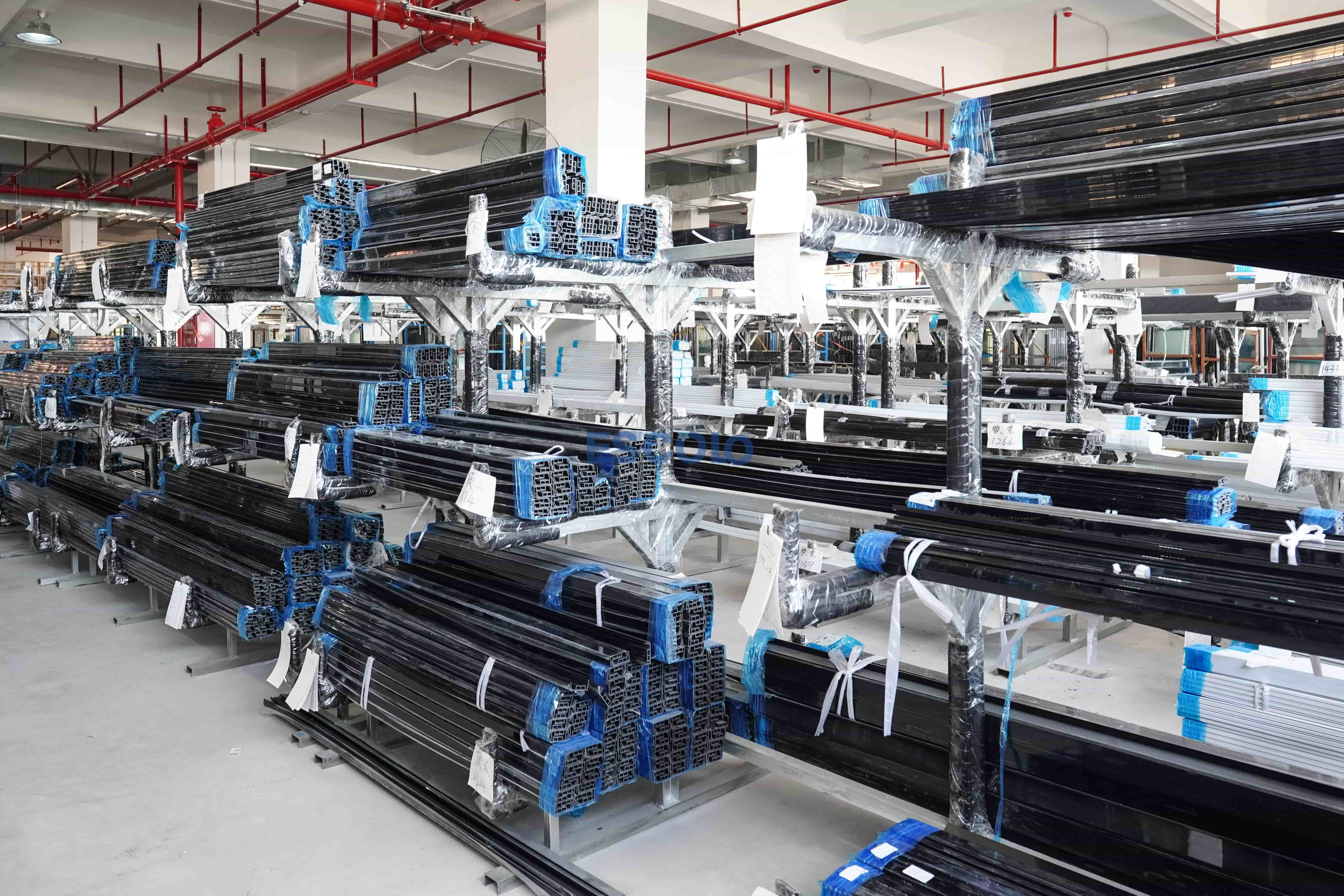
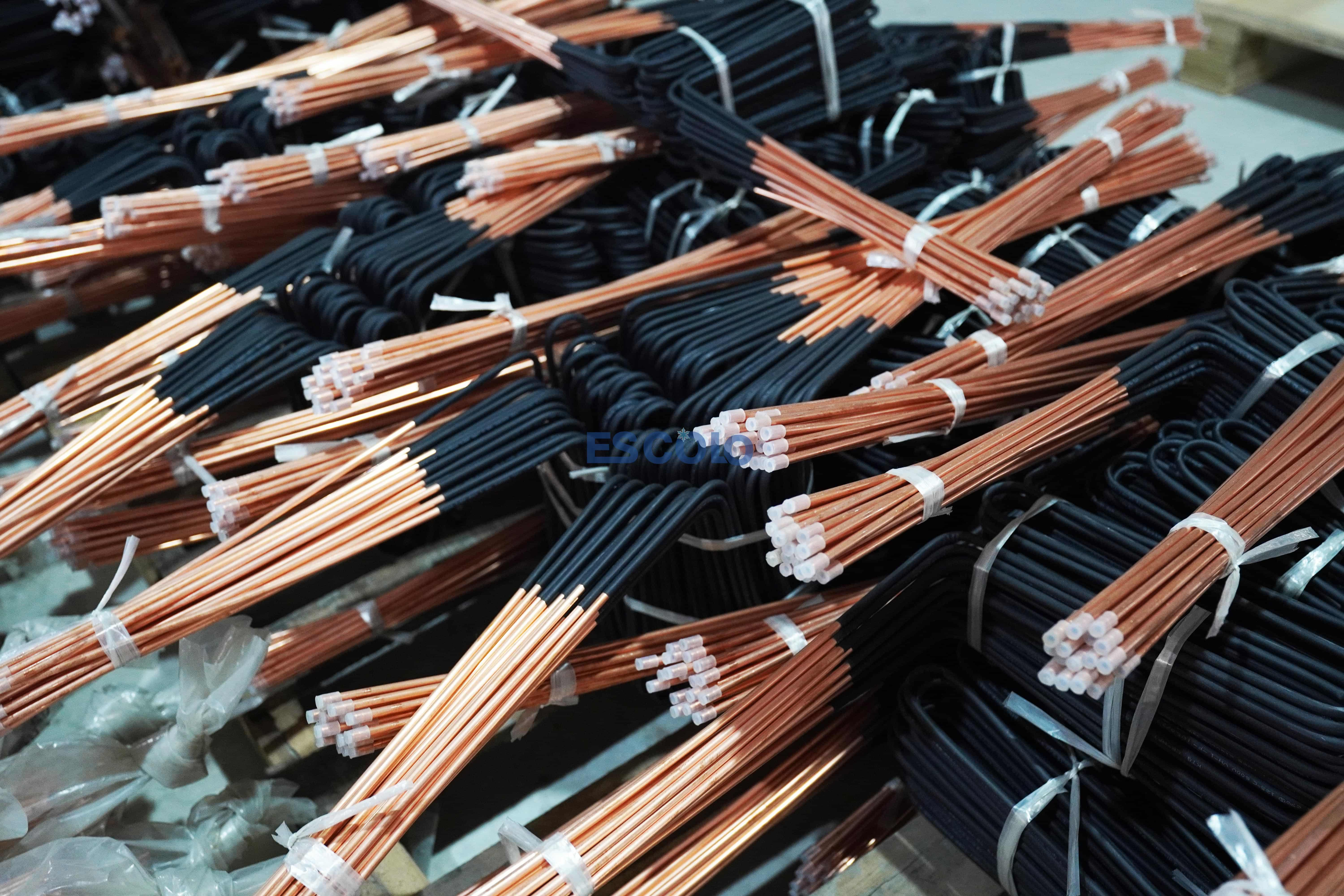
ESCOLO has manufactured commercial refrigeration equipment in Foshan, Guangdong since 2010, and the team now numbers more than 800 people. Fifteen-plus years in the trade, a network of 3,000+ qualified partner factories and an annual output of 200,000+ units let us run container-scale programmes and repeat orders for supermarket, convenience and foodservice buyers. OEM and ODM work is standard: size, colour, function and your own branding are set to the specification you send. Factory audit, pre-shipment inspection, consolidated shipping and after-sales support are handled in-house.
It holds a steady 0 °C to +10 °C, which covers bottled water, soft drinks, energy drinks, milk, juice, yoghurt and packaged ready-to-eat food. That is a chilled display band — it is not a freezer, so ice cream and frozen lines need a different cabinet.
Five PVC shelves sit behind each door, each with a price tag holder and a divider, so a three-door cabinet gives fifteen shelf positions in total. The standard pitch suits bottles and cans; if your range includes tall bottles or short pots, tell us before the order is placed and the shelf heights can be set around your mix.
Double tempered glass with a light transmittance above 90% and high impact resistance. Airflow across the inner pane and the smart auto defrost cycle keep the view clear in normal trading; on a humid or draughty site, raise it early so the door specification can be matched to the location.
The industrial brushless fan motor runs below 38 dB, so the cabinet can sit near a checkout, a café seating area or a service counter without becoming the noise people notice. The compressor cycles as the cabinet calls for cooling rather than running flat out all day.
The digital controller adjusts in 0.1 °C steps and has a lock function, so only authorised staff can change the set point. WiFi remote management is available as an option for managers who want to check cabinet temperatures from a phone.
Wipe the glass inside and out with a soft cloth, keep the air grilles at the back and base clear of stock, and have the condenser cleaned on a schedule that suits your dust level. Check the door gaskets at the same time — a hardened or torn gasket is the usual cause of a cabinet that seems to run warm.