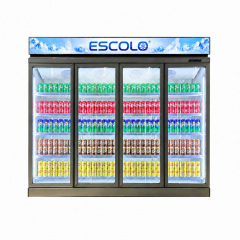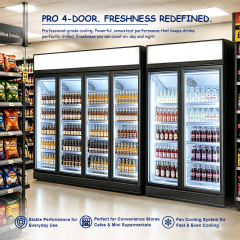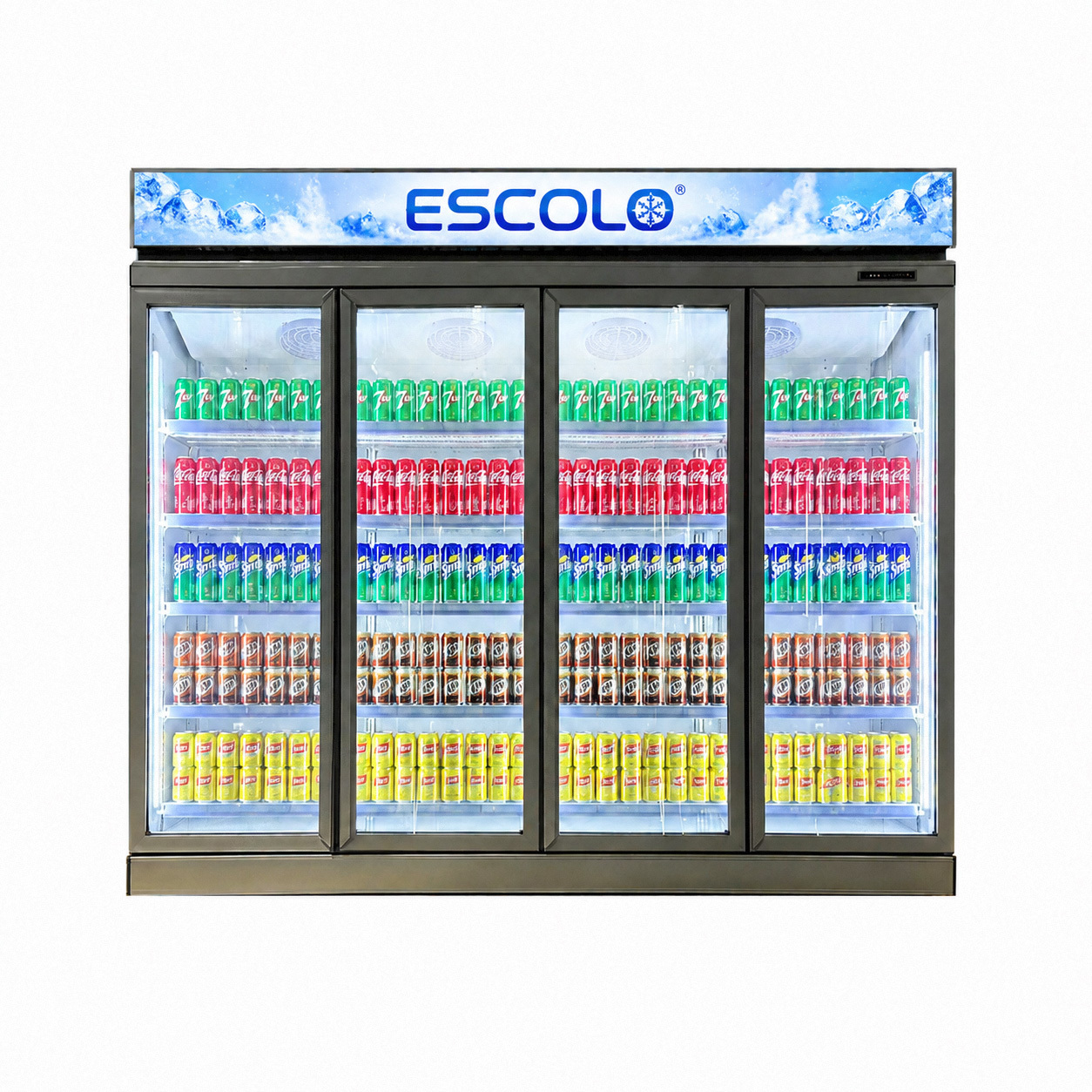


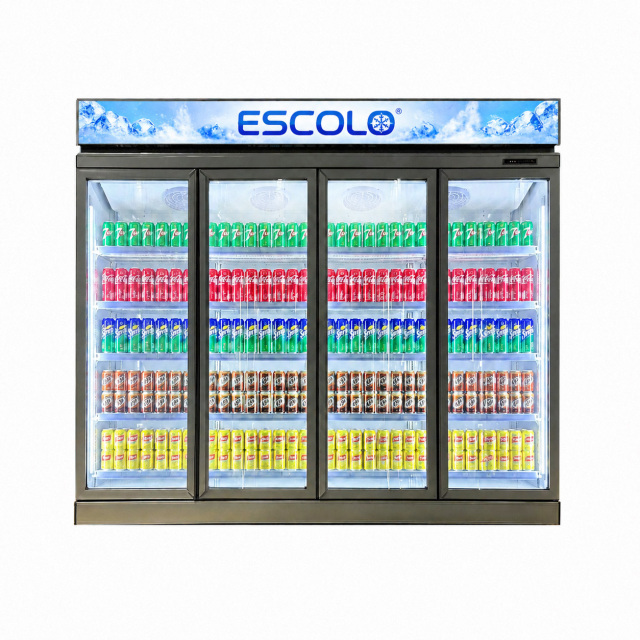

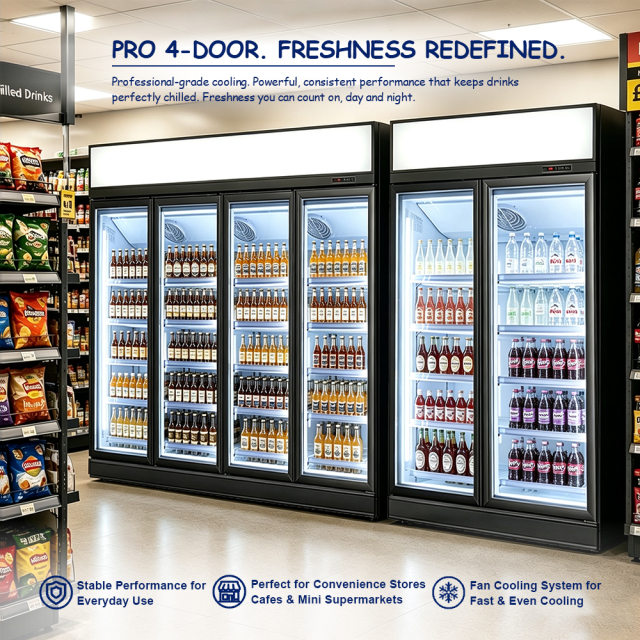


Four wide glass doors, 2000 litres of chilled stock and a footprint that reads as one continuous display: this is a cabinet for stores where the chilled aisle is a selling floor rather than a storeroom. The four-door layout lets a category run across the full width of the cabinet — dairy and chilled drinks on one side, packaged foods in the middle, fresh ingredients at the end — so a shopper can take in the whole range in a single glance.
We build and supply this 2000L four door commercial refrigerator for importers, chain buyers and shop-fitting contractors who are planning a store rather than buying a single appliance. It usually takes the place of two or three smaller coolers pushed together, and it removes the joins between them: one cabinet, one set of doors, one temperature zone.
Day to day, staff work a bay at a time. Open one door, load that bay, close it, and the other three carry on as they were. Shoppers browse through the glass without opening anything, which is why the shelves carry price-tag strips and the lighting runs vertically down the door pillars instead of from a single strip at the top.
We supply this 4 door commercial fridge wholesale to refrigeration distributors who add it to their chilled display line-up, and to chains that repeat the same cabinet across several stores so every branch reads the same way.
| Model | ES-D2500-4M |
|---|---|
| Door | 4 hinged doors |
| Dimensions (mm) | 2500 × 735 × 2090 |
| Temperature | 0 to +10 °C |
| Capacity | 2000 L |
| Loading (20GP/40HQ) | 6 / 12 |
| Body material | Painted steel, interior and exterior |
| Compressor position | Top-mounted |
| Refrigeration circuit | Painted steel web condenser and copper evaporator, copper ends on both |
| Cooling, defrost and control | Fan cooling, auto-defrost, digital temperature control |
| Door construction | Hollow glass in aluminium frames, no door heaters |
| Shelving | PVC shelves with price-tag strips |
| Lighting | Vertical LED down the door pillars |
| Voltage and plug | Matched to destination market, confirmed before production |
Four doors give you four merchandising bays, and that is where the planning should start. Rather than filling shelf by shelf across the whole cabinet, give each bay a category, a brand group or a promotion: a shopper standing at the left-hand door should be reading one kind of product, and the same applies at the right-hand door. On a large capacity display cooler for hypermarket floors, that bay-by-bay logic is what keeps a mixed chilled range shoppable instead of blurred.
Shelf height follows the pack, not the other way round. Keep the lower shelves for larger bottles, multipacks and family packs, put the lines you want noticed at eye level, and use the upper shelf for back-stock of those same lines. Because the shelves are adjustable PVC with price-tag strips, a bay can be reset for a new planogram in an afternoon without tools.
Measure the run before you confirm the order. The cabinet is a single wide block, so the space it needs is the space it occupies — there is no separate machine compartment to hide at the side. Check that the floor is level, that the wall or back panel behind it is sound, and that the aisle in front leaves room for a trolley to pass while a member of staff is working at a bay.
The compressor sits at the top of this 2000L four door commercial refrigerator, which is why the base of the cabinet is free and the shelving runs from the bottom upward. Leave clearance above the cabinet for warm air to leave the condenser, and keep the roof clear rather than using it as a stock shelf.
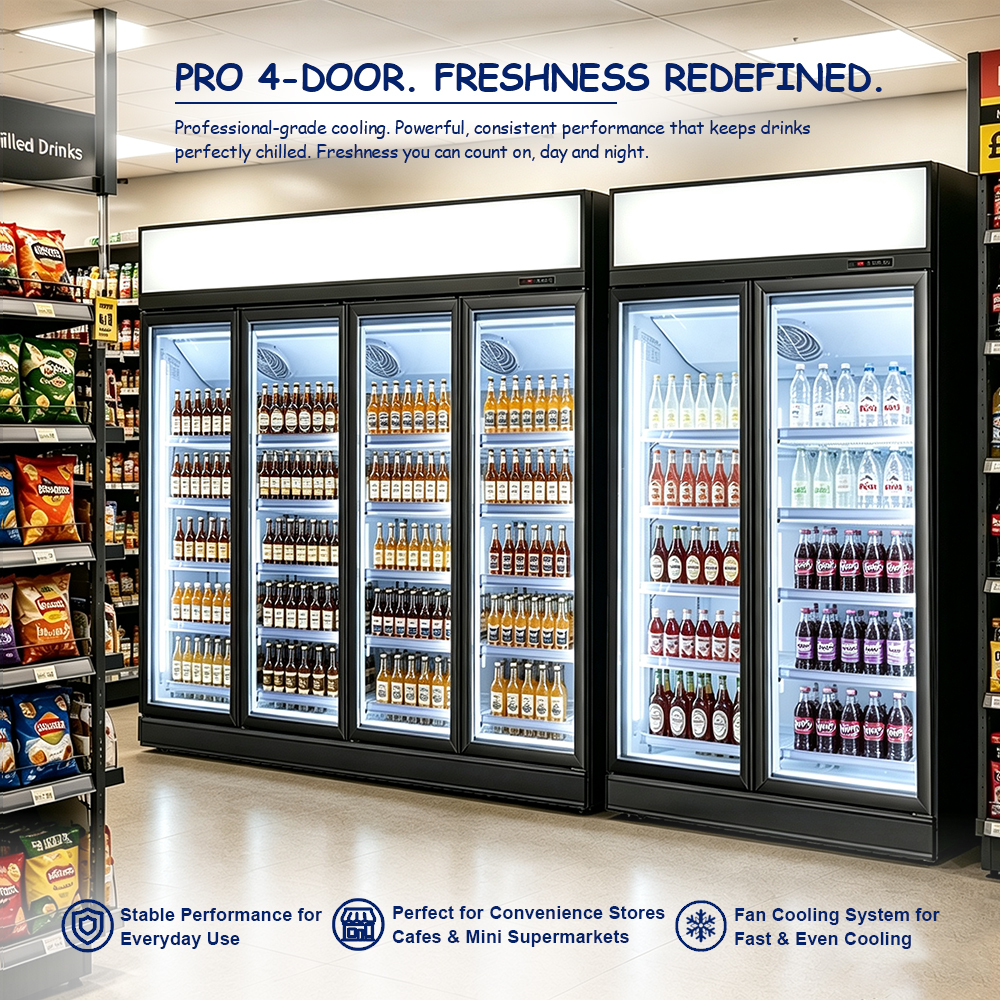
The fan system does the quiet work. Cold air is pushed through the cabinet and drawn back across all four bays, so the shelf nearest the door and the shelf at the back of a bay sit in much the same band. When a door closes after loading, the cabinet pulls back to its set point rather than staying warm until the next cycle — which is what matters in the hours when four doors are being opened every few minutes.
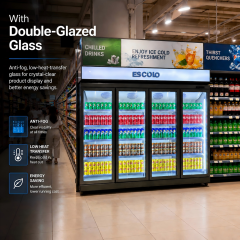
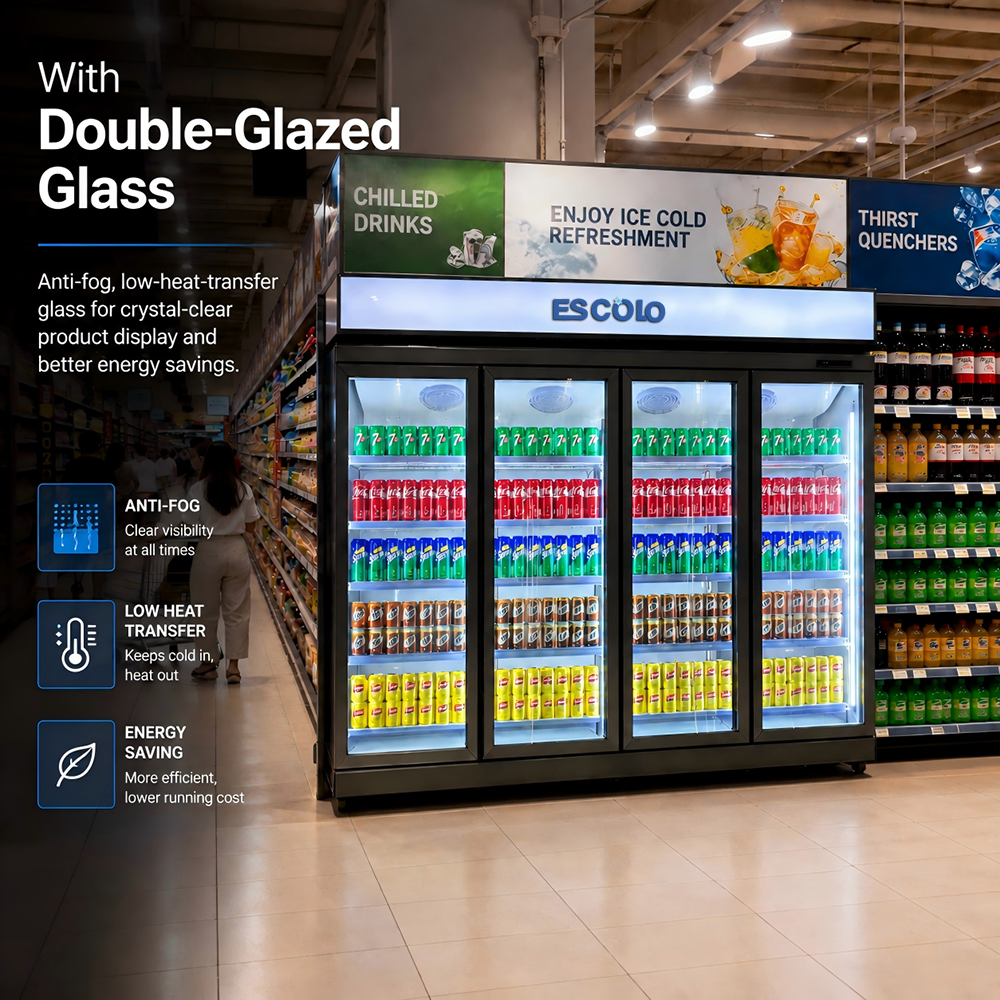
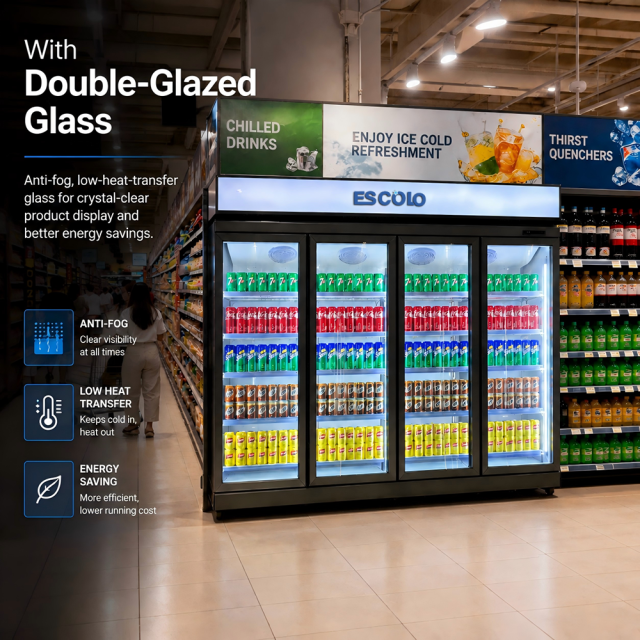
The doors are hollow glass in aluminium frames, without heaters. That keeps the build simpler and removes the electrical load that heated doors carry, and in a normally air-conditioned store the glass stays clear. In a very humid or open-fronted building, any cold glass surface can mist at the edges during the dampest hours; keeping the doors closed between shoppers, leaving the airflow path clear and siting the cabinet away from ovens, fryers and direct draughts does most of the work. If your store runs hot and humid all year, say so when you order so the specification can be checked against the site.
Set the temperature to suit what is inside rather than leaving it wherever it arrived. The digital panel moves the set point across the chilled range — the warmer end for drinks and packaged goods, the colder end for dairy and fresh ingredients — and a probe check at the start and end of a busy day tells you whether the doors are being left open too long.
Because the condenser sits at the top of the cabinet with the compressor, warm air leaves at the top rather than being pushed out at floor level, and the base stays free for shelving. Keep the roof clear and leave room above and behind for that warm air to escape.
ESCOLO has manufactured commercial refrigeration equipment in Foshan, Guangdong since 2010, and the team now numbers more than 800 people. Fifteen-plus years in the trade, a network of 3,000+ qualified partner factories and an annual output of 200,000+ units let us run container-scale programmes and repeat orders for supermarket, convenience and foodservice buyers. OEM and ODM work is standard: size, colour, function and your own branding are set to the specification you send. Factory audit, pre-shipment inspection, consolidated shipping and after-sales support are handled in-house.
A cooler. This 2000L four door commercial refrigerator holds 0 to +10 °C, the band for chilled dairy, drinks, packaged foods and fresh ingredients. Frozen stock needs a freezer cabinet running a sub-zero band, so the two are not interchangeable.
Bottled and canned drinks, dairy, chilled packaged foods, desserts and the fresh ingredients a store or kitchen keeps cold for the day's prep. The four bays let you keep those groups apart, and the set point can be moved within the chilled range to suit the mix.
The four doors are hinged and swing outward, so the aisle has to take an open door as well as a trolley. Mark the cabinet's footprint on the plan first, then check the aisle at the busiest door. If the aisle is tight, send us the layout and we will confirm the clearance this door type needs.
Yes. The shelves are adjustable PVC with price-tag strips, so they can be reset bay by bay for bottles, cans, tubs or packs. Set the heavy and tall lines low, the lines you want seen at eye level, and leave a little headroom so air can move between shelves.
The electrical side of this cabinet is not a fixed item — it is set to the market the unit is going to. When you place an order, tell your sales contact the voltage, frequency and plug type your customers use, and the cabinet is built to that specification rather than shipped in a generic version that has to be adapted on arrival.
It is worth settling this early, because it touches more than the plug. The compressor, the control panel, the lead and the carton label are all matched together, so a late change ripples through the whole run. If your market's inspection asks for a particular marking or a particular plug standard, raise it at the same point and the production run can be aligned with it.
Distributors who repeat the model should keep the agreed electrical specification on file and quote it on the next order. Repeat runs then come out identical to the first, which matters when a chain expects every branch to be fitted the same way and serviced from the same spares.
If you are unsure what to specify, send a photo of the socket and the rating label of a comparable appliance you already sell, and your contact can work from that. Ask for the confirmed electrical details to appear on the quotation and the commercial invoice, so your customs broker and your own service team see the same information before the container lands.