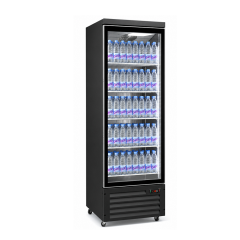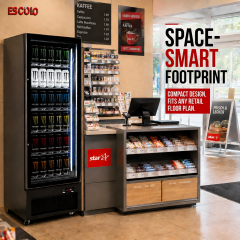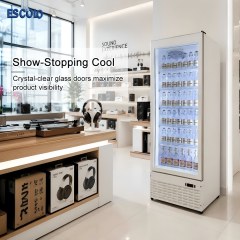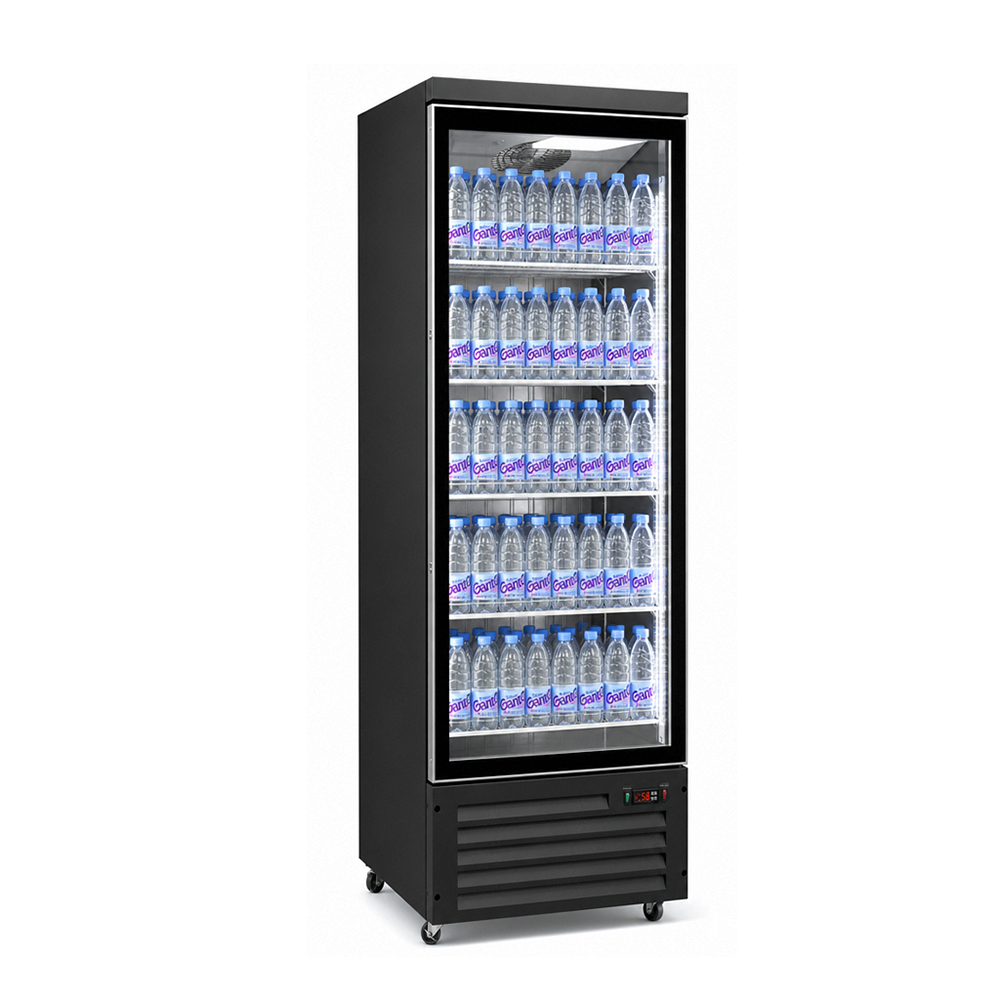
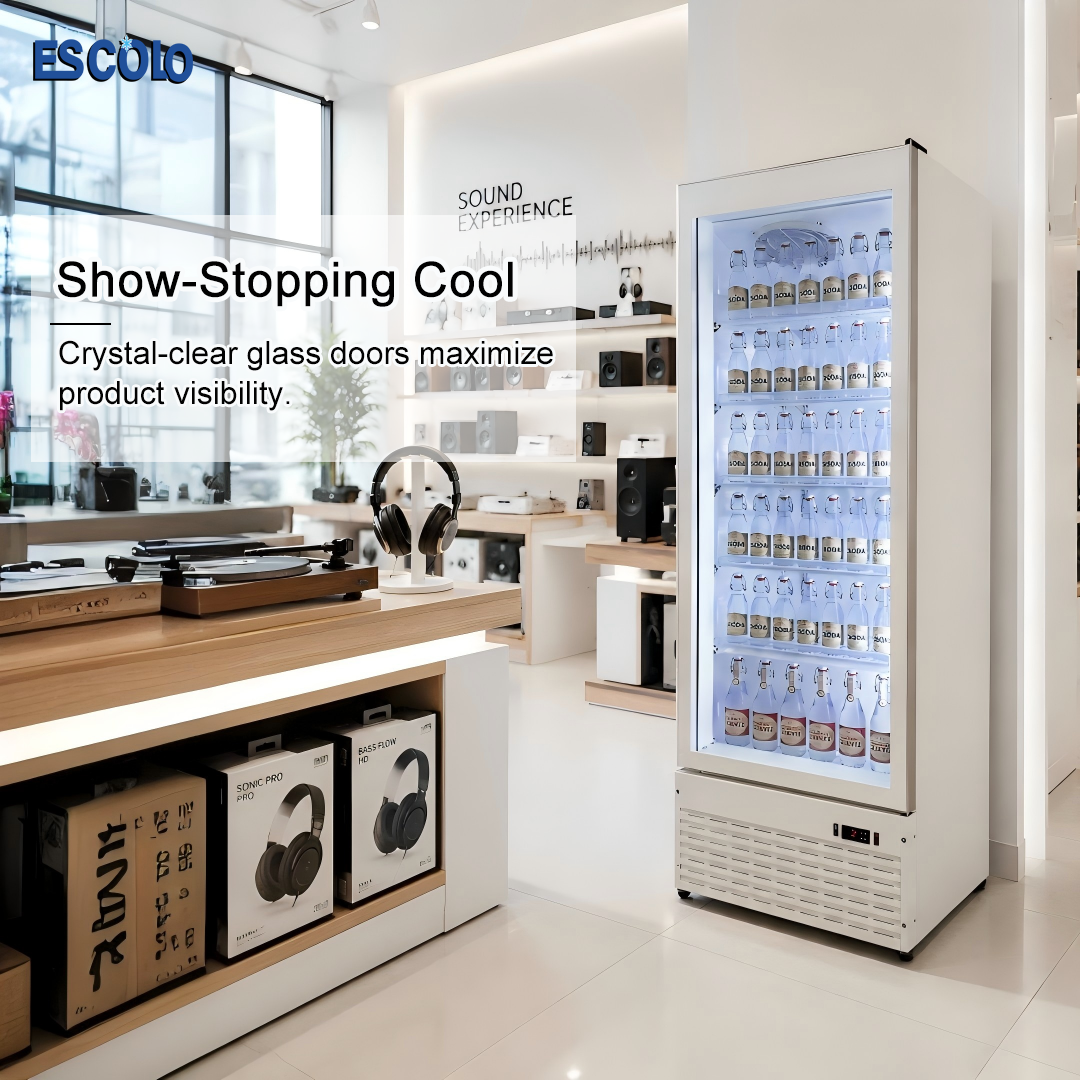
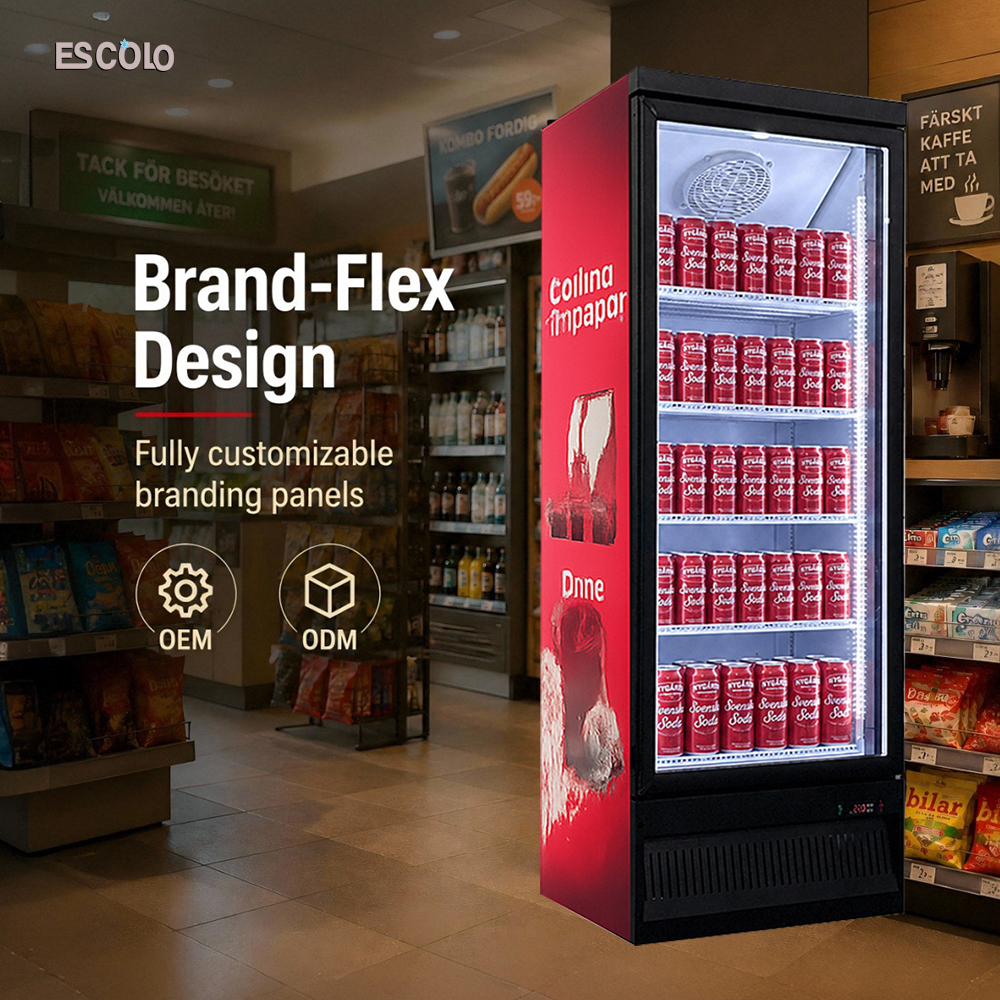
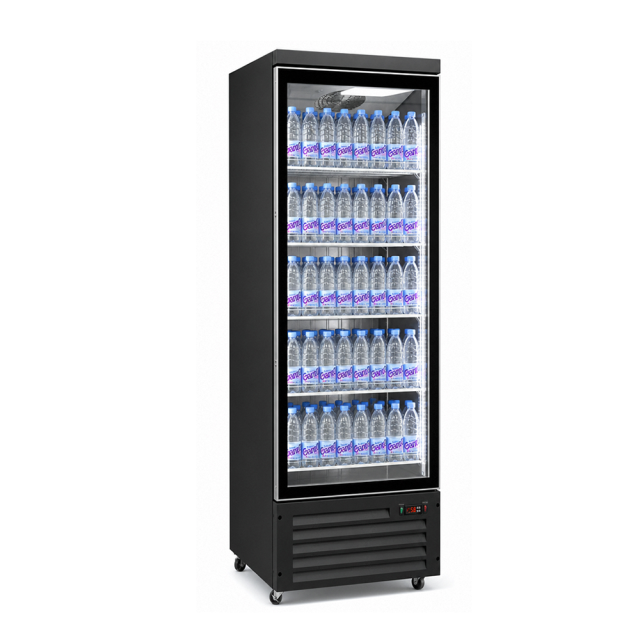
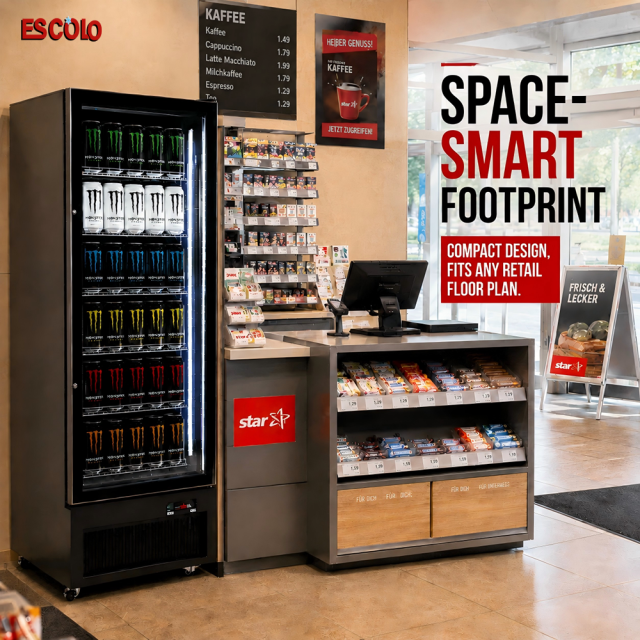
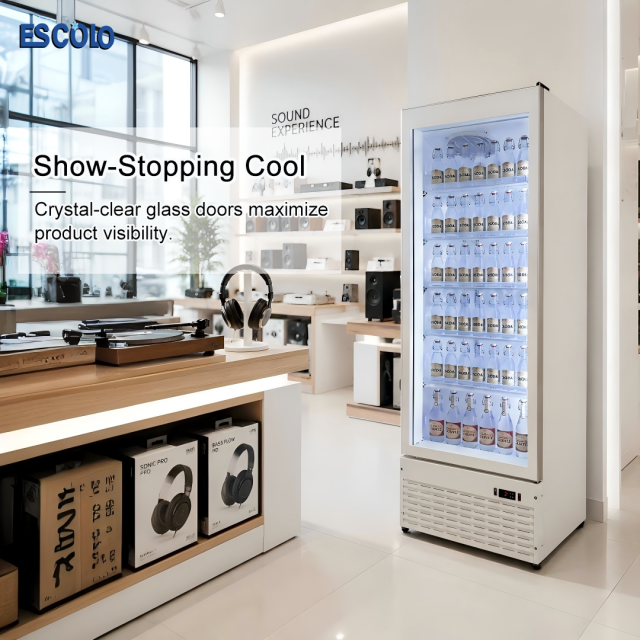
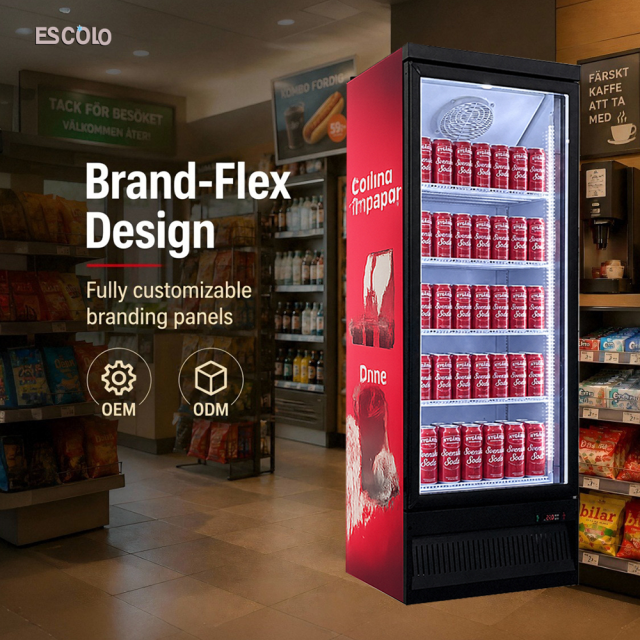
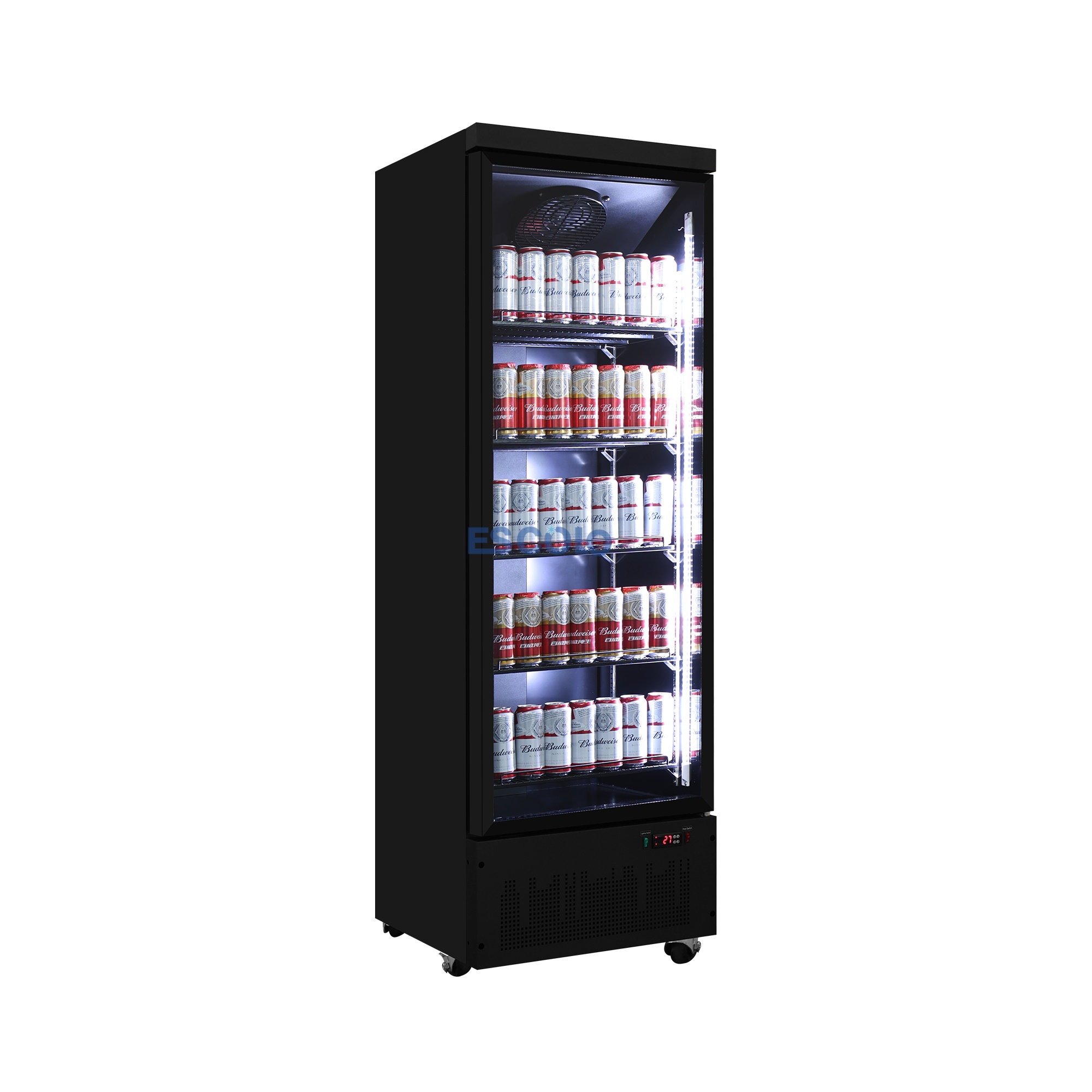
Built by a single glass door cooler manufacturer, the ES-P series is a drink fridge for convenience store floors, supermarket beverage bays and beverage shops, keeping chilled stock visible behind a single hinged glass door, with the compressor sitting at the base of the cabinet rather than on top.
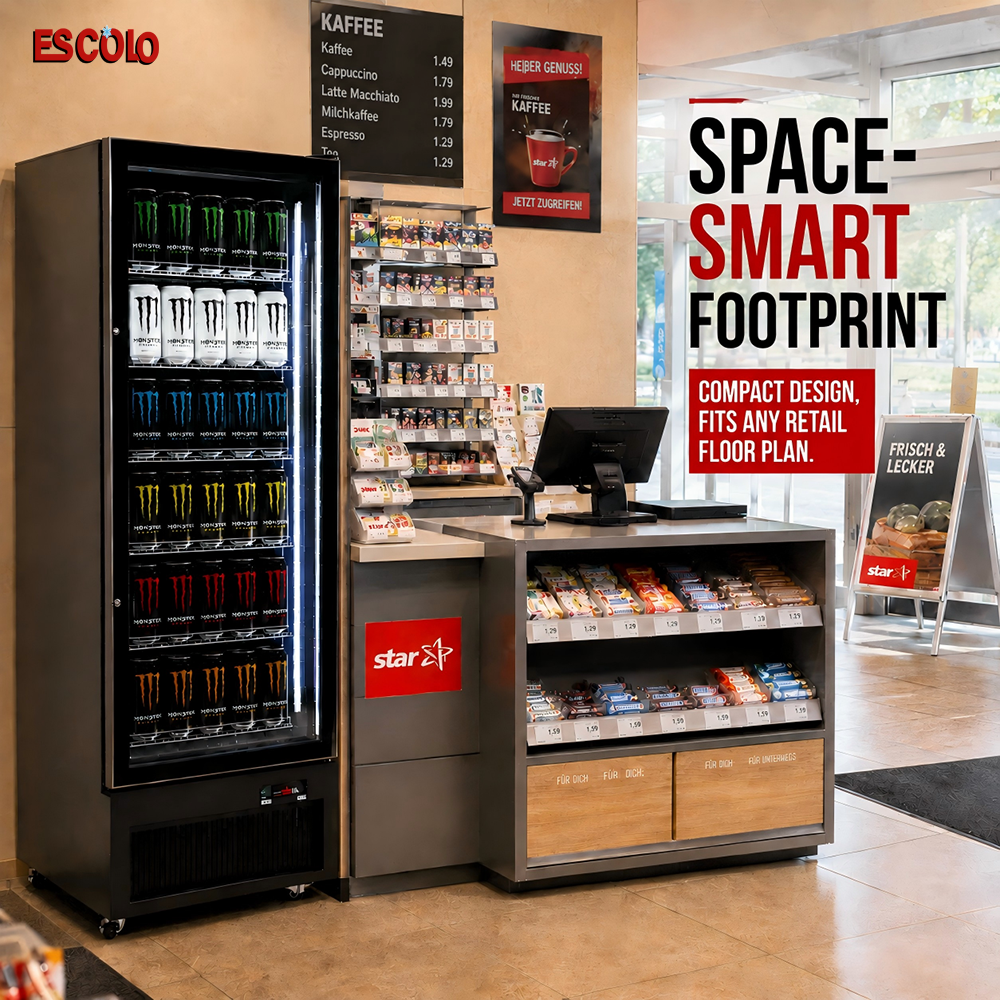
The format is deliberately simple: one door, one viewing panel, one place for staff to restock. Everything loads from the front, shoppers reach in from the aisle, and the cabinet can stand in a bay that would be too narrow for a multi-door merchandiser. Capacities run from 380 L to 800 L on the same principle, so a forecourt shop with one spare bay and a supermarket beverage section can run the same cabinet with a different amount of stock behind it.
The temperature band is set for drinks served chilled rather than frozen. Between 0 °C and +10 °C the cabinet covers soft drinks, bottled water, beer, canned coffee and dairy, and the set point can be moved as the range changes with the season or with a promotion, without changing the cabinet.
| Door | 1 |
| Door type | Hinge door |
| Temperature range | 0~+10 °C |
| Capacity range | 380 L to 800 L |
| Cabinet material | Painted steel, interior and exterior |
| Evaporator | Copper, with copper ends |
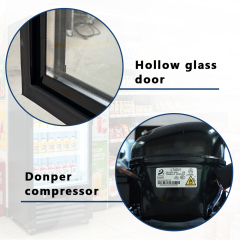
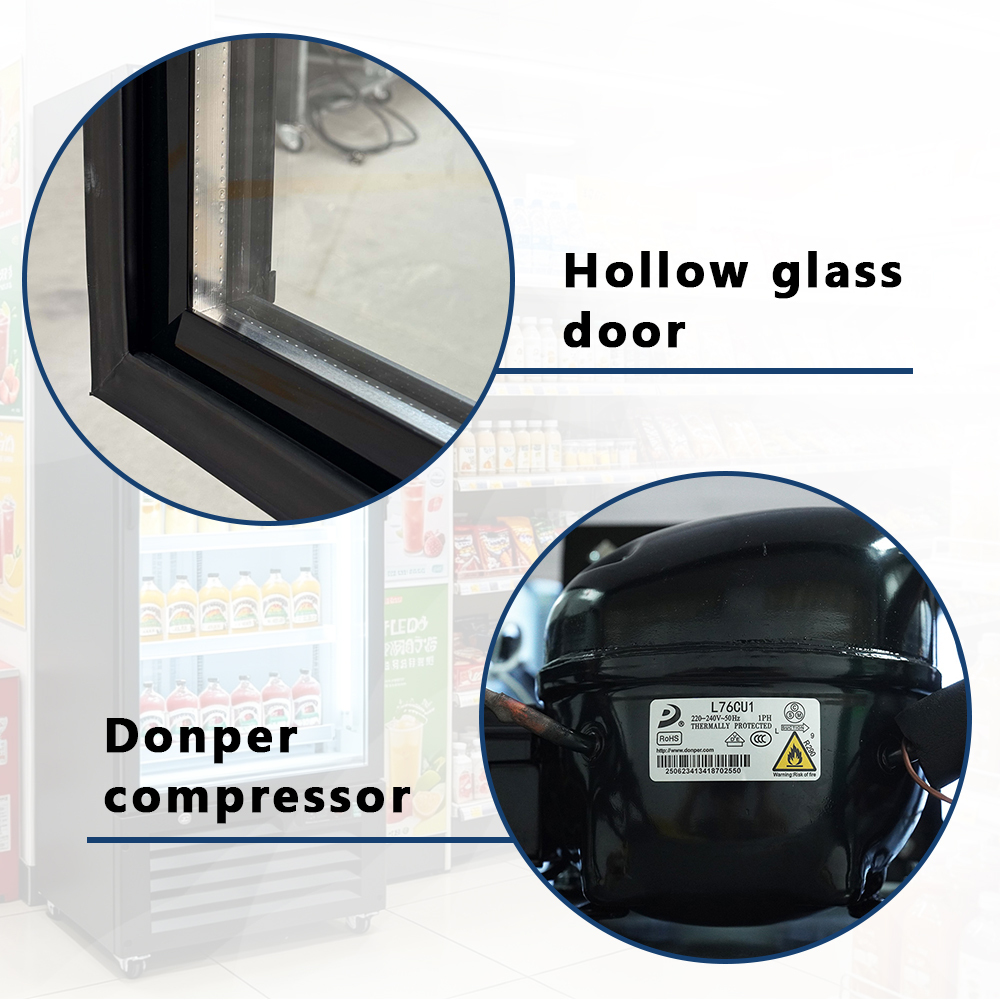
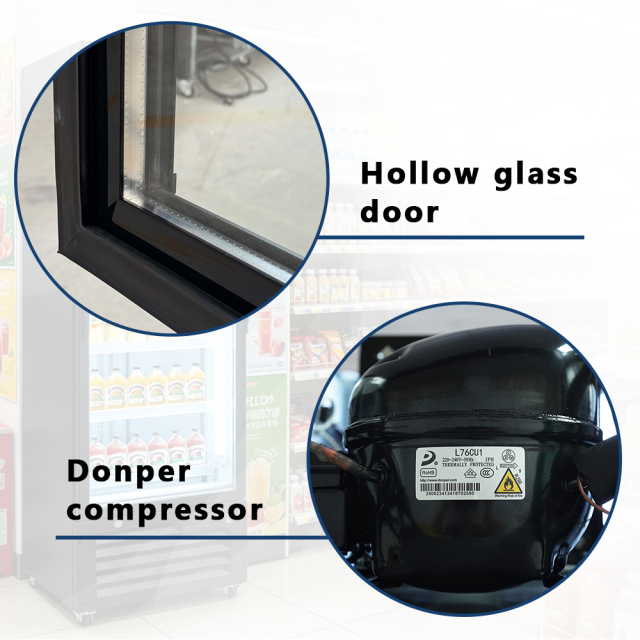
| Door construction | Hollow glass, PVC frame |
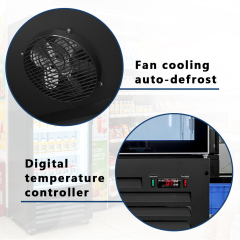
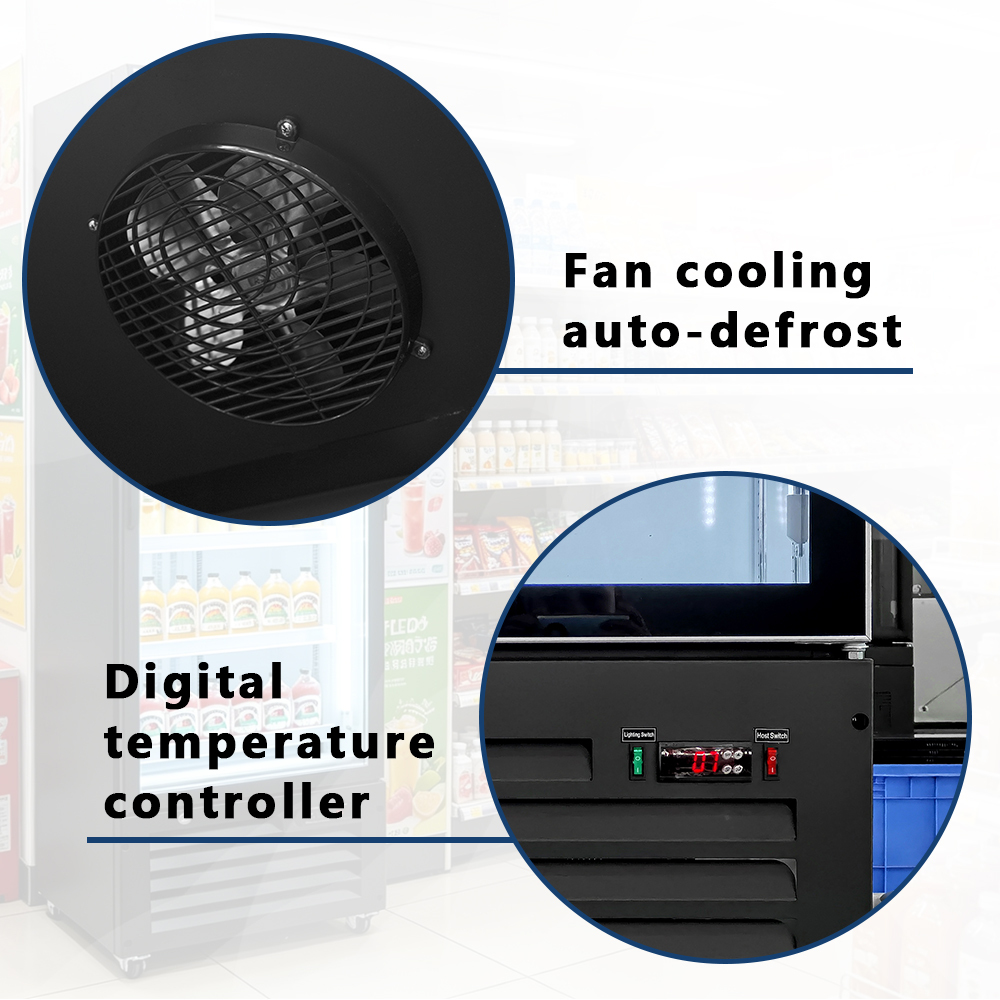
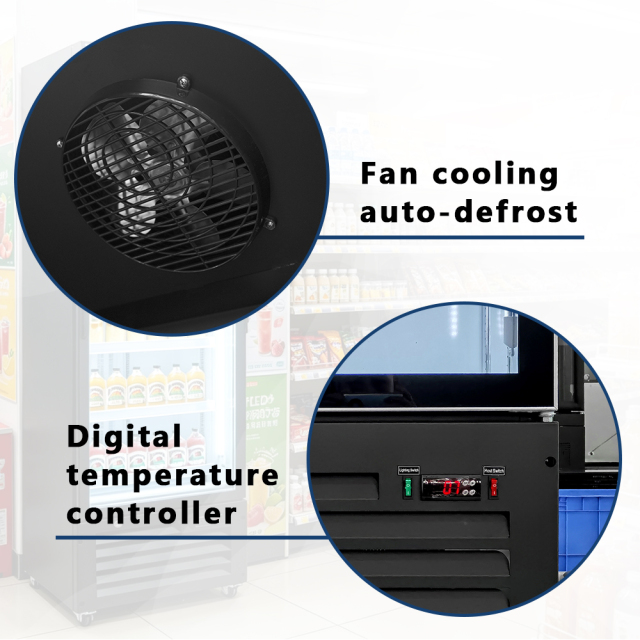
| Cooling system | Fan cooling |
| Shelving | PVC shelves with price-tag holders |
| Interior lighting | Vertical LED |
| Condensate handling | Self-evaporating water tray |
| Temperature control | Digital controller |
A commercial beverage display cooler is judged in the third year, not the first week, and most of that judgement comes down to how the cabinet is assembled rather than to what is printed on the label.
The bottom-mounted arrangement is the quiet efficiency argument. Putting the refrigeration circuit at the base keeps the working weight low, so the cabinet does not rock when a full door is pulled open in a hurry, and it leaves the full height of the front as glass instead of machinery housing. A technician reaches the working parts from the front of the cabinet, which means a service visit does not require dragging a full unit out of a tight bay and taking that bay out of service for a day.
The panels are the parts customers touch without noticing. Painted steel wipes clean with a damp cloth, resists the knocks that come with crates and trolleys, and keeps its colour under shop lighting. Nothing on the outside needs polishing and nothing inside needs a protective liner, so the daily clean comes down to the glass, the shelf edges and the door frame.
As a single glass door cooler manufacturer we build all six sizes on one line to one specification. That shows up in the practical details: shelving, door frame and controller carry across the range, so a second cabinet ordered for another store months later is set up the same way as the first, and the staff who learned one unit already know the next one.
| Model | Capacity | Dimensions (mm) | Loading (20GP/40HQ) |
|---|---|---|---|
| ES-380P | 380 L | 540×580×1900 | 36/95 |
| ES-400P | 400 L | 620×610×1970 | 27/71 |
| ES-450P | 450 L | 620×655×1970 | 27/66 |
| ES-600P | 600 L | 700×660×2000 | 24/51 |
| ES-700P | 700 L | 700×760×2000 | 21/45 |
| ES-800P | 800 L | 800×750×2030 | 18/39 |
Most orders for this cabinet travel with other equipment for the same store. The range covers a single glass front display cooler for a second bay, a double glass door freezer and an upright glass showcase cooler for frozen and chilled categories, a black painted steel open chiller with a self-closing glass door for high-traffic aisles, and an R290 upright freezer built for kiosk and station sites. Beverage service can be equipped from the ice maker range, which runs from high-capacity ESK cube machines to compact space-saving models and ice storage freezers with a built-in bin. Bakery and dessert counters are served by a two-layer cake display and a commercial ice cream freezer in rectangle or curved glass. Buying a fit-out as one package keeps one specification standard, one spare-part route and one point of contact across the whole store.
Keep your drinks perfectly chilled with the single-door beverage refrigerator built for everyday commercial service. The cabinet is intended to hold a consistent cold display so customers can choose a properly chilled drink without waiting. Please confirm the exact temperature range and cooling performance for your store with our team.
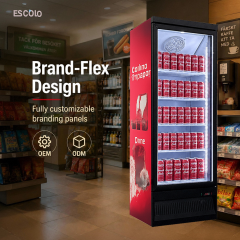
ESCOLO has manufactured commercial refrigeration equipment in Foshan, Guangdong since 2010, and the team now numbers more than 800 people. Fifteen-plus years in the trade, a network of 3,000+ qualified partner factories and an annual output of 200,000+ units let us run container-scale programmes and repeat orders for supermarket, convenience and foodservice buyers. OEM and ODM work is standard: size, colour, function and your own branding are set to the specification you send. Factory audit, pre-shipment inspection, consolidated shipping and after-sales support are handled in-house.
Drinks served chilled rather than frozen: soft drinks, bottled water, energy drinks, beer, canned coffee and dairy. A drink fridge for convenience store ranges usually carries a mix of all of these, and the 0 °C to +10 °C band keeps every category at drinking temperature without freezing cans or splitting dairy. The digital controller lets you move the set point as the mix changes, so a beer-led range can run colder than a dairy-led one.
With any upright drinks fridge, the clearance that matters most is in front: the door is a hinge door and swings outward, so leave enough aisle for it to open and for a shopper to stand back from the glass. Leave a gap at the rear and the sides so air can move around the cabinet, as you would with any commercial cooler. Check the width and depth of the size you are ordering against the fit-out drawing before the installation date is set.
For a convenience store, forecourt shop or beverage counter, yes. A single door beverage cooler keeps the range in one line of sight and lets staff restock between customers without walking around the cabinet. If your aisle regularly has three or four shoppers at the glass at the same time, a multi-door cabinet from the same range serves them faster. Capacity is the other half of the question: the 380 L model suits a tight bay, while the 800 L model carries a fuller range in the same single-door format.
No. Condensate from the cooling cycle collects in a self-evaporating water tray and evaporates inside the cabinet, so there is no drip container to empty at closing time and no drain to plumb. A commercial beverage display cooler still needs a level floor and a dry position, and during the weekly clean it is worth checking that the tray area is clear and wiping the door frame and shelf edges.
Wipe the glass with a soft cloth and a mild detergent, and avoid abrasive pads or solvent cleaners on both the glass and the painted steel panels. The PVC shelves and their price-tag strips lift out for a wash, which is the quickest way to clear a sticky spill. In humid weather, condensation on the outside of the glass is wiped off during the normal cleaning round; the hollow glass door and PVC frame do the insulating work.