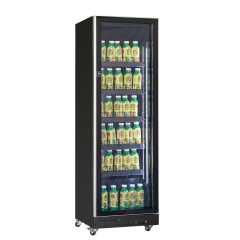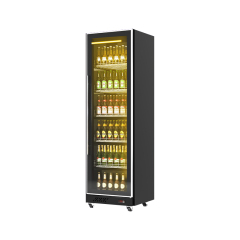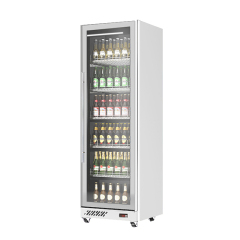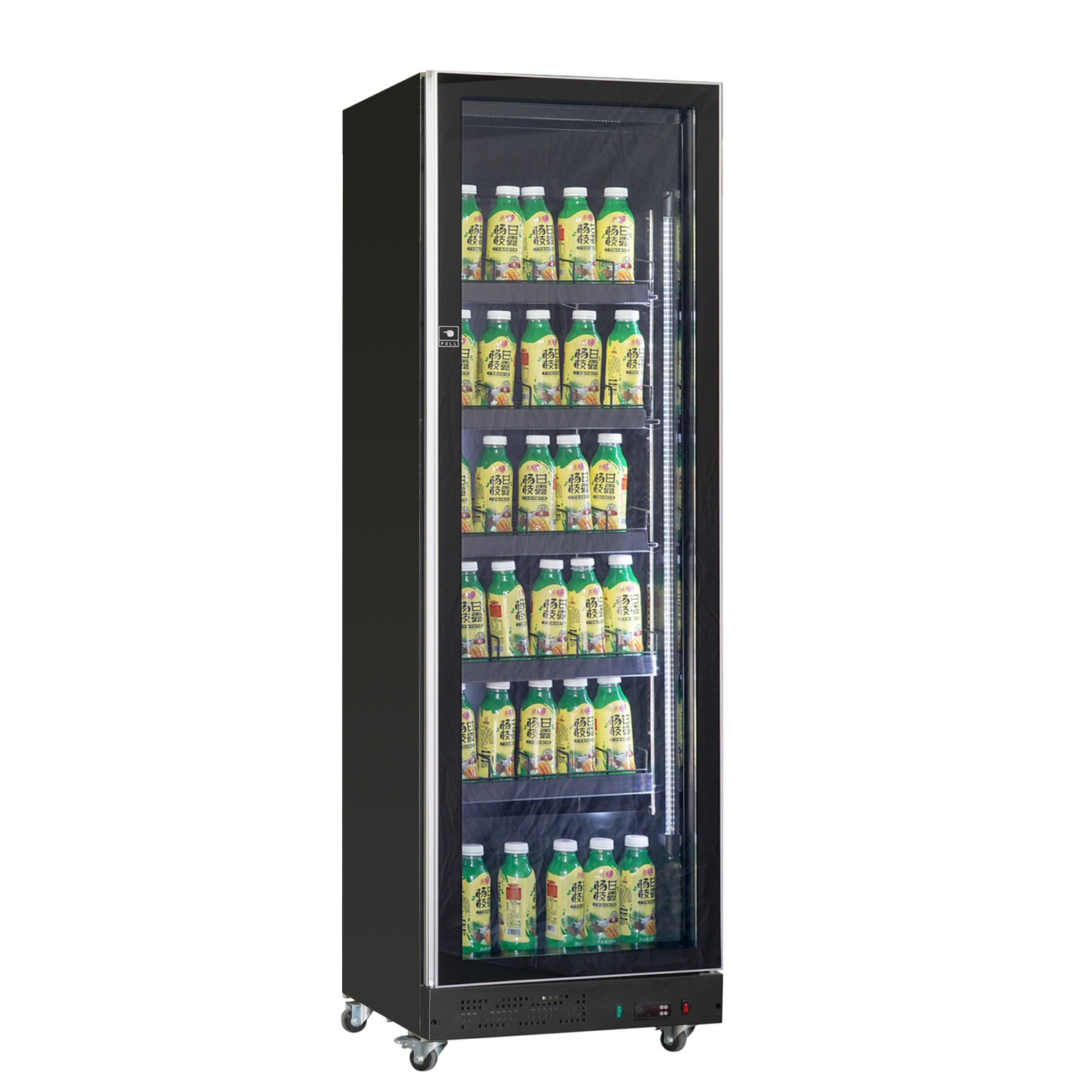
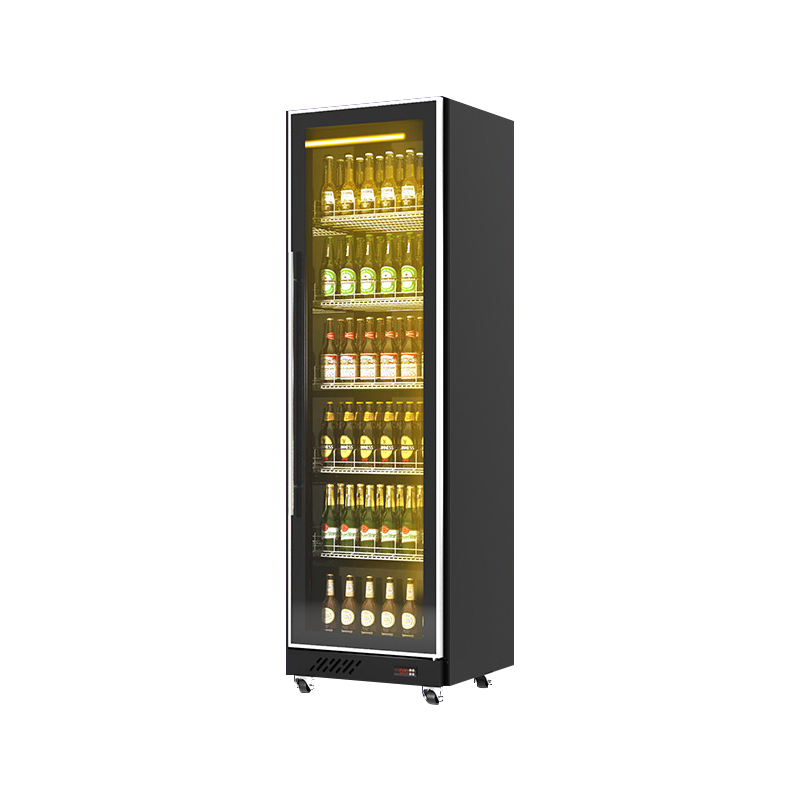
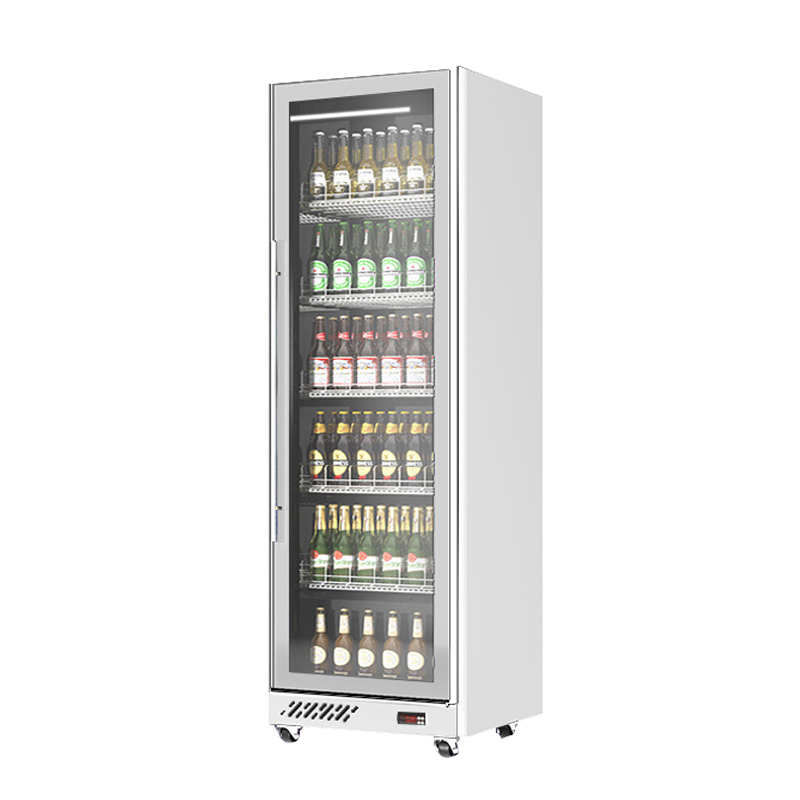
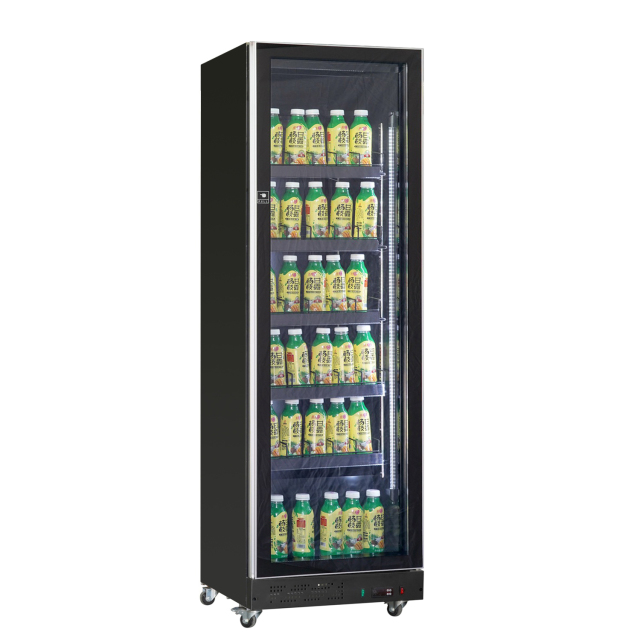
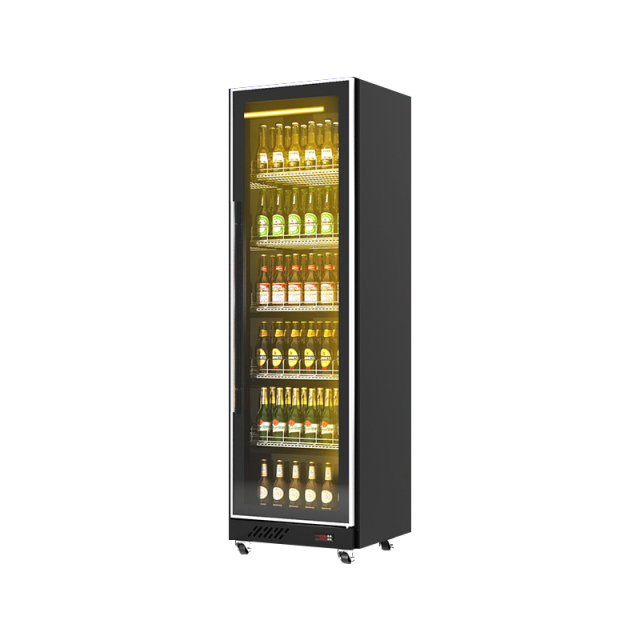
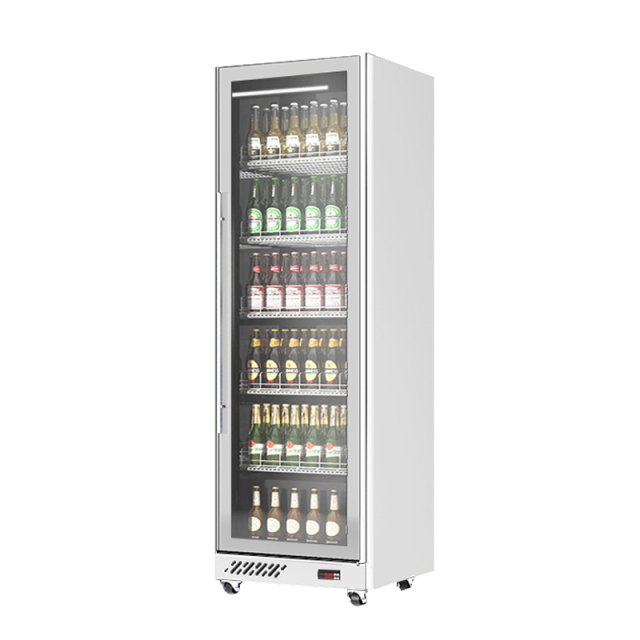
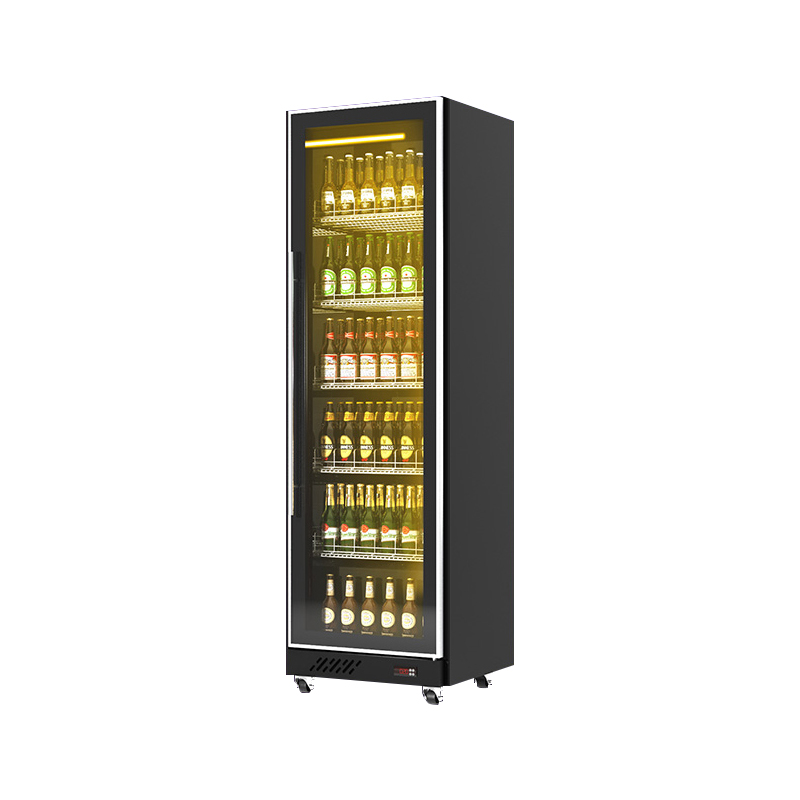
The ES620-1M is a 387-litre, single-door chilled display cabinet for drinks and packaged chilled food. A full-height glass door covers the entire front, so the range is visible from the aisle and a customer can decide before opening anything. Inside, the layout is a straight vertical stack of PVC shelves, a digital controller and a vertical LED strip — which is what most small-format commercial floors actually need: clear sightlines, a short walk to restock, and a cabinet that does not require a technician to run it.
A display cabinet, not a storage fridge. The full glass door beverage display refrigerator format changes how the cabinet earns its space. A solid-door fridge hides stock and turns every purchase into a question; here the customer reads the label through the glass, opens the door once they have decided, and the door is closed again within seconds. That habit keeps the cabinet usable on a busy Saturday and keeps staff out of the aisle answering questions about what is in stock.
Day to day it runs like any chilled display: loaded from the front, held at one chilled band, and left to cycle on its own defrost. It suits cafés, convenience stores, forecourt shops and the smaller chilled zones of a supermarket, and it is the compact end of a series that continues through two-, three- and four-door versions. If you are sourcing through a glass door display cooler supplier for a refit or a replacement programme, this is the size that fits where a wider commercial drink cooler will not.
| Model | ES620-1M |
|---|---|
| Capacity | 387 L |
| Temperature range | 0 °C to +10 °C |
| Door | Door type |
| Dimensions (W × D × H) | 620 × 635 × 1980 mm |
| Compressor | Donper |
| Refrigerant | R290a |
| Evaporator | Copper, with copper ends |
| Cooling | Fan cooling with auto defrost |
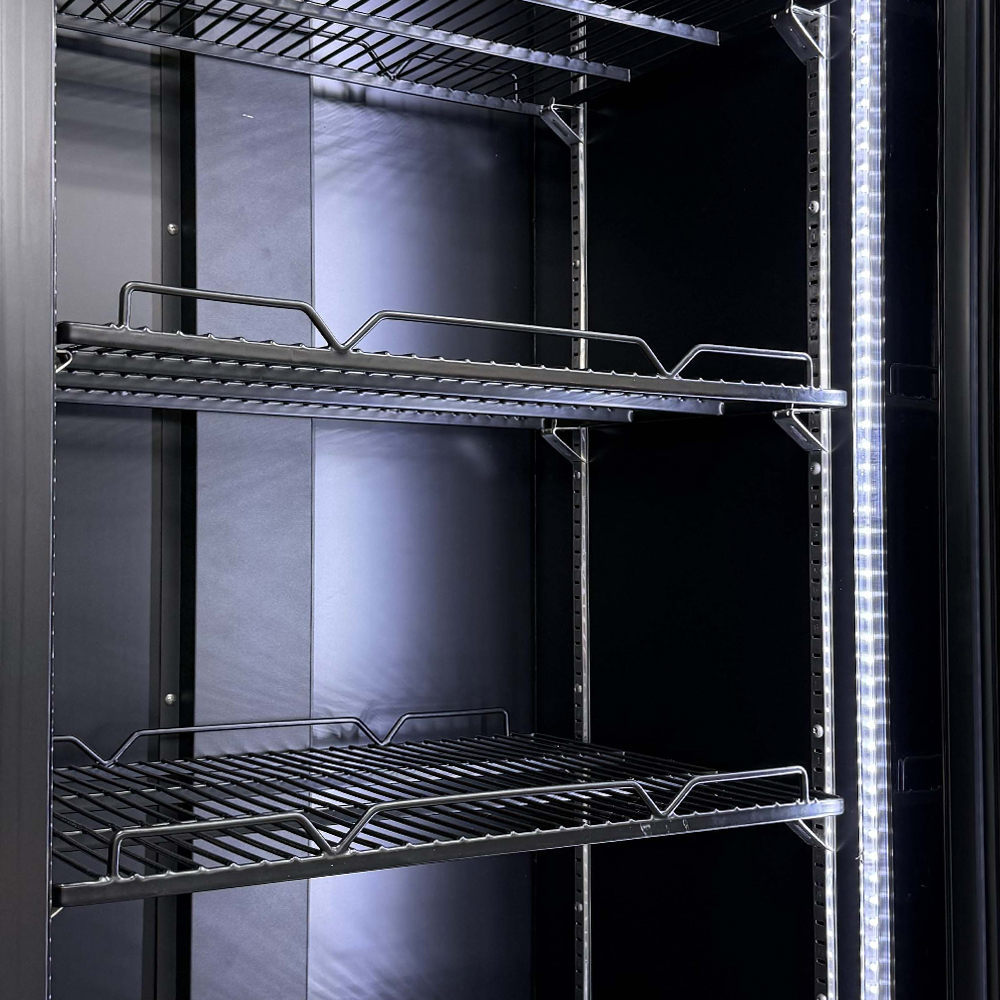
| Shelves | 5 PVC shelves per door, with price tag and divider; adjustable |
| Lighting | Vertical LED |
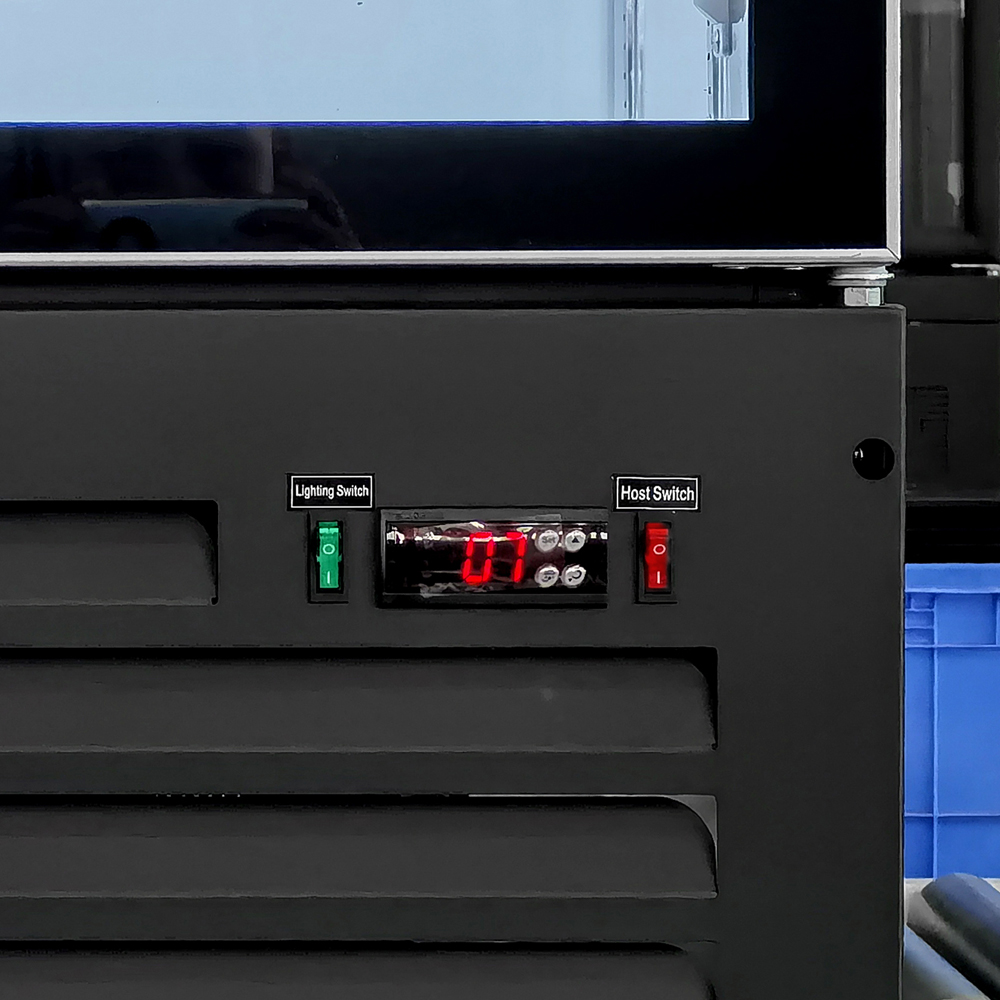
| Temperature control | Digital controller |
| Loading (20GP/40HQ) | 27 / 54 units |
| Larger versions in the series | 768 L two-door, 1173 L three-door, 1608 L four-door, same cabinet height |
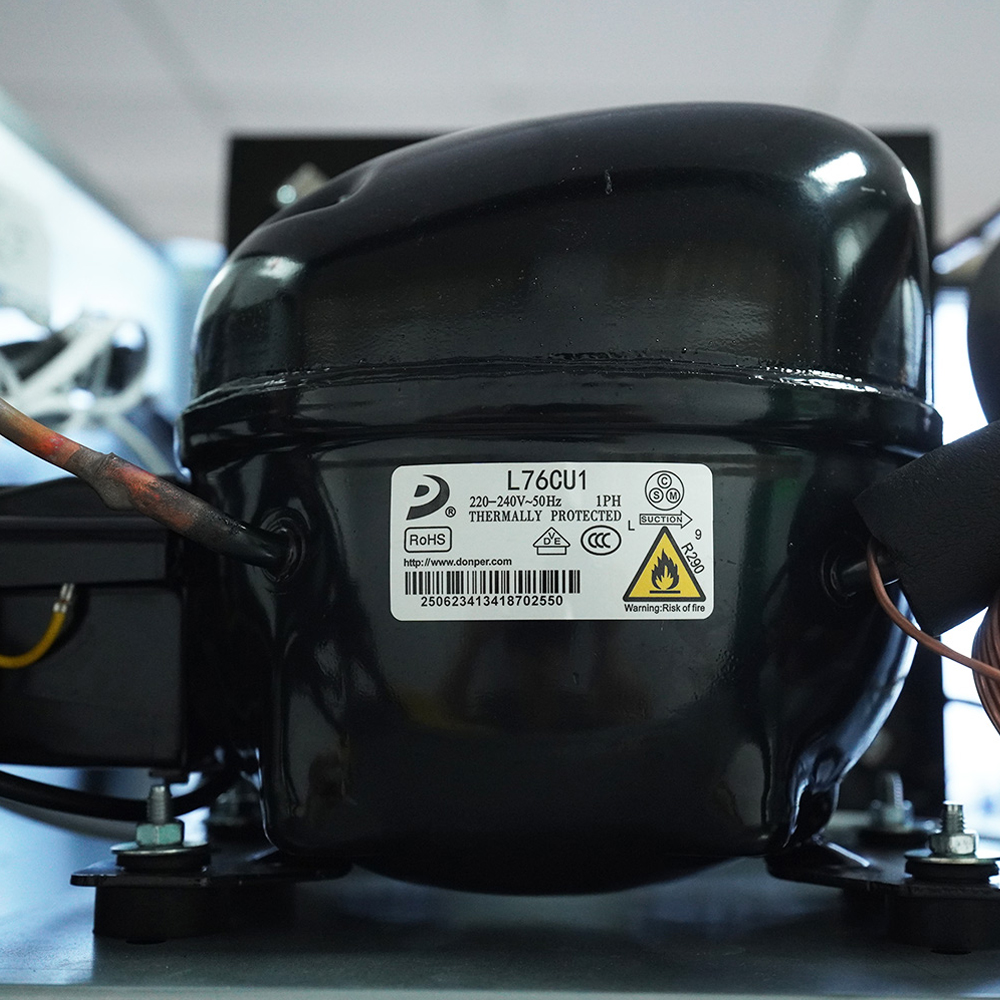
The refrigeration work is done by a Donper compressor running R290a refrigerant. R290a carries heat efficiently at a low charge and is the refrigerant commercial display cabinets have largely moved to; it lets the cabinet hold its band without a constant heavy draw. The evaporator is copper with copper ends at the connections — copper brazes cleanly and stays sealed through years of cycling, so the joints that decide how long a refrigeration circuit lasts are not the weak point.
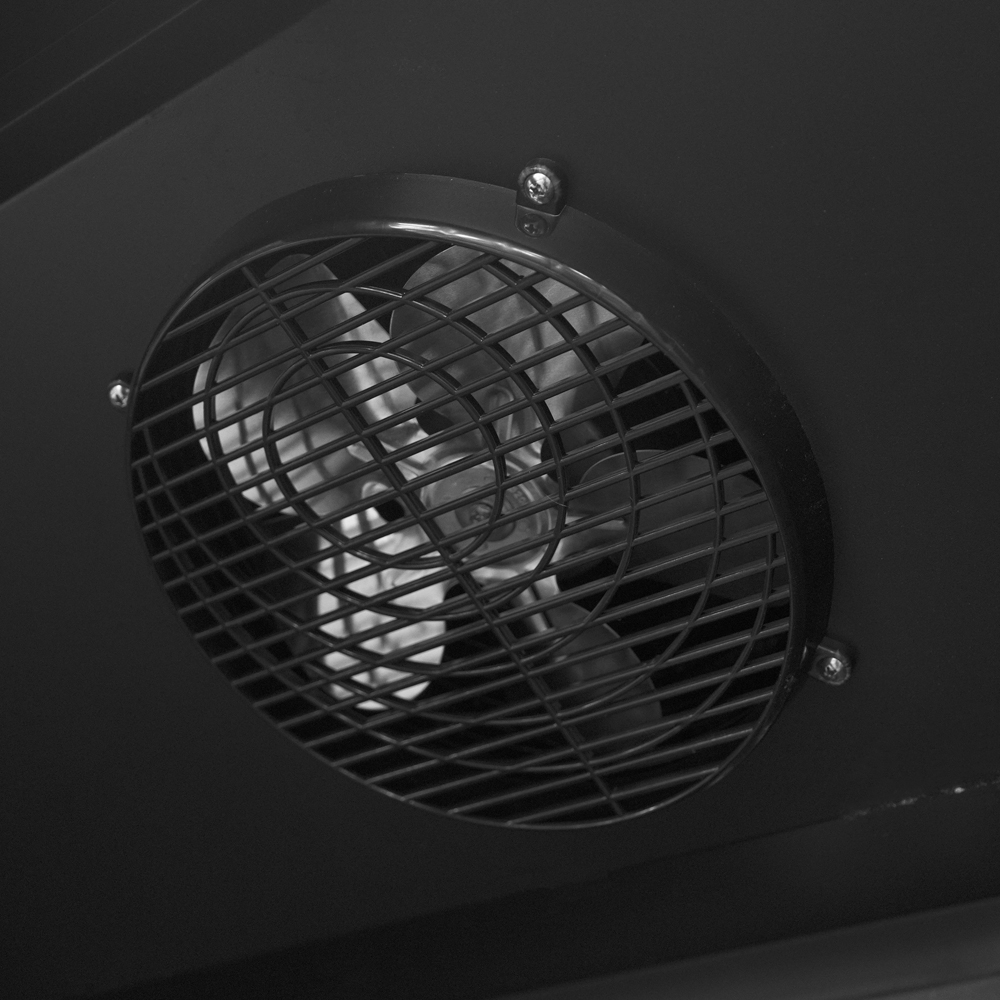
Fan cooling handles distribution. Instead of letting cold air settle at the bottom of the cabinet, a fan pushes it through the shelving so the top shelf sits at the same temperature as the bottom one, and the cabinet pulls back to its setpoint after the door has been open. Auto defrost deals with the moisture that enters every time the door opens: the cycle runs on its own, so ice does not build on the coil and slowly strangle the airflow.
The controller is digital and sits where staff can read the setpoint and change it without tools. That matters more than it sounds. A single-door cabinet in a small shop is often asked to hold a slightly different mix from one season to the next, and the setpoint has to be adjustable by whoever is on shift — not by a service technician with a laptop.
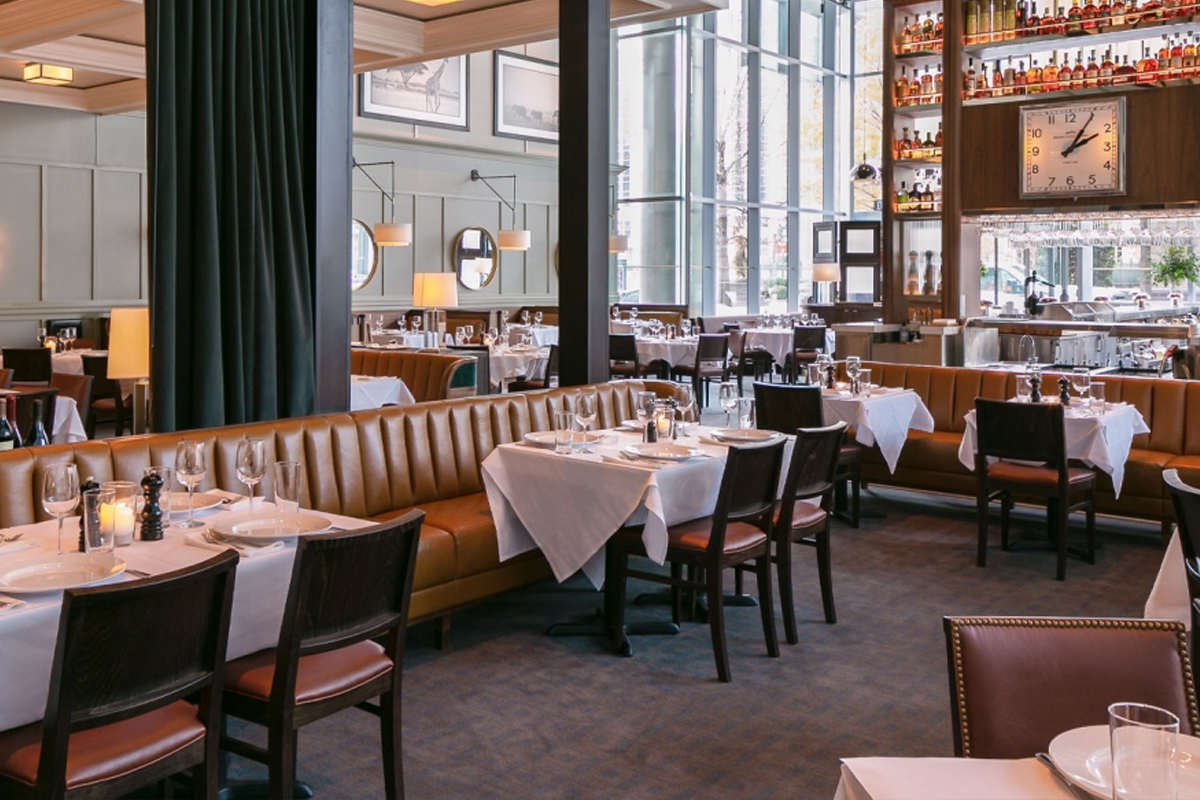
Behind a café counter the cabinet usually ends up beside the espresso bar or the cake showcase, where customers queue and pay. That position rewards a glass front: someone waiting for a coffee sees the bottled water, the cold brew and the juice without asking, and the decision is made before they reach the till. It works as an LED commercial drink fridge for café counters of this kind — bright enough to read in warm café lighting, and narrow enough to keep the walkway behind the bar clear.
For a café buying through a glass door display cooler supplier, the useful discipline is a short range with deep facings. A single door beverage cooler this size holds a tight edit well: still and sparkling water, a couple of soft drinks, cold brew, juice and a dairy option, each on its own shelf. Staff restock between rushes rather than during them, and because everything is readable through the door, the customer never has to ask what is available.
The cabinet also does quiet merchandising work for the brand around it. Bottles lined up behind clean glass, lit from the door edge, read as part of the counter rather than as back-room storage — which is the difference between a drink that is bought on impulse and one that is simply available.
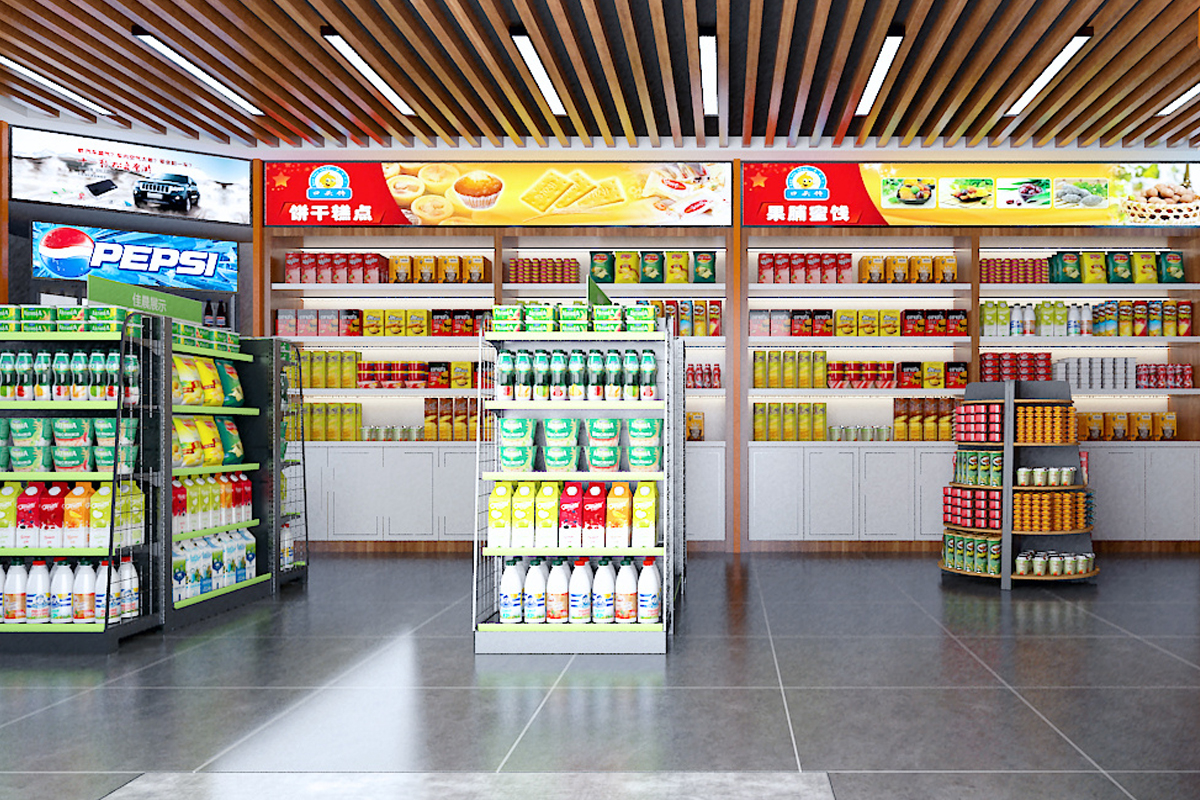
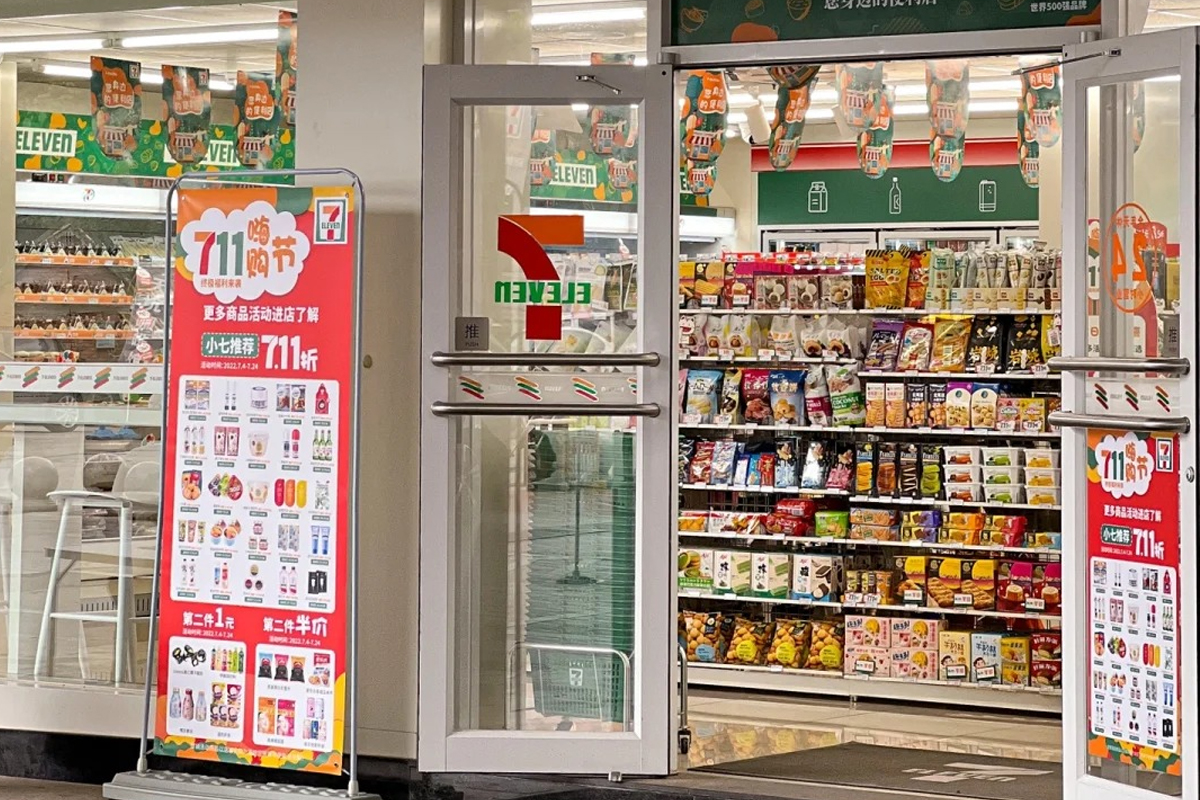
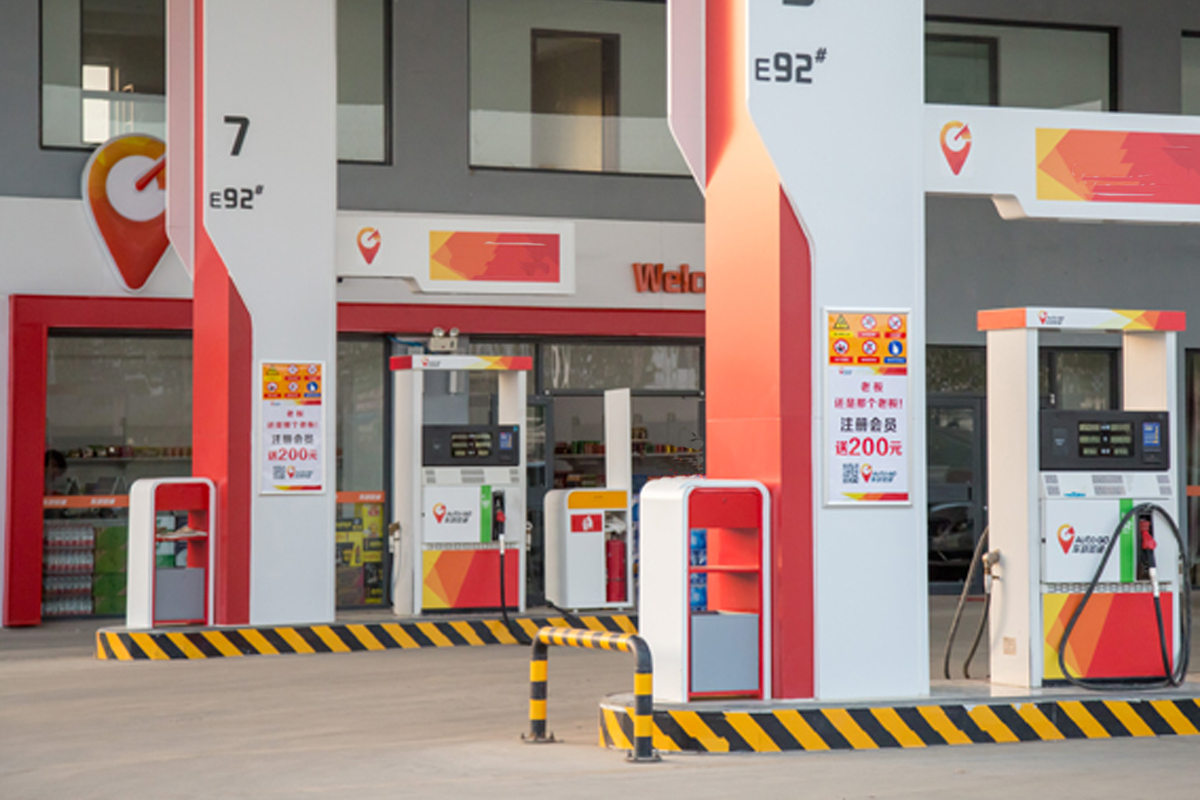
What the 0 °C to +10 °C band is for. This single door beverage cooler is a chilled display, not a freezer, so the stock that belongs inside is bottled water, soft drinks, energy drinks, canned beer, juices, dairy, sandwiches, desserts and other packaged food that is sold cold. Ice cream, frozen meat, frozen seafood and frozen desserts do not belong here; they need a cabinet running below zero. Nor is it the right place for hot food, chemicals, or products that suffer from chilling injury — bananas and whole tomatoes, for example, blacken or lose texture in a chilled cabinet and are better held warmer. It is also not a validated medical or laboratory cold chain, so do not use it for vaccines, medicines or samples.
Load it so the cold air can move. A commercial drink cooler performs most efficiently when cartons and overstock stay below the top shelf line and away from the air path at the back; a cabinet packed tight will run longer and still leave warm spots. Put new stock behind or below existing stock, never in front of the air grille, and close the door fully after each restock. Do not set the controller below 0 °C to try to turn it into a freezer — the cabinet is built to hold a chilled band, and forcing it colder will not freeze stock safely.
The weekly routine. Wipe the door gasket with warm soapy water and dry it, then check that the seal grips a strip of paper all the way round; a gasket that has stopped sealing shows up first as condensation on the glass. Clean the glass inside and out with a glass cleaner and a soft cloth, and wash the shelves, dividers and price-tag strips in warm soapy water. Brush or vacuum the condenser grille and the floor area around the cabinet, because dust and cardboard against the air path make the compressor work harder. Check the drain area under the cabinet for standing water after a defrost cycle, and confirm the controller still reads the setpoint you set. Tighten a loose hinge or door closer rather than forcing the door shut, and do not hose the cabinet down — the controller and compressor compartment should stay dry.
This beverage display refrigerator runs on a Donper compressor with R290a refrigerant, an eco-friendly and energy-efficient solution for a busy drinks display. Fan cooling moves air evenly through the cabinet so every shelf holds a consistent, ideal temperature for longer, while the copper evaporator with copper ends adds durability and performance through years of daily use. Vertical LED lighting runs down the cabinet, brightening labels and liquid colours and turning the unit into an inviting, modern display that draws customers in.
The range comes in four door configurations. The single hinge-door ES620-1M measures 620×635×1980 mm, holds 387 L and runs at 0 to +10 °C, loading 27 units in a 20GP and 54 in a 40HQ. The two-door ES1100-2M measures 1120×635×1980 mm with 768 L capacity and loads 18 per 20GP and 38 per 40HQ. The three-door ES1680-3M measures 1680×635×1980 mm with 1173 L, loading 9 and 20, and the four-door ES2240-4M measures 2240×635×1980 mm with 1608 L, loading 9 and 18. Running temperatures for the two-, three- and four-door models can be confirmed with our team against the conditions in your store before you order.
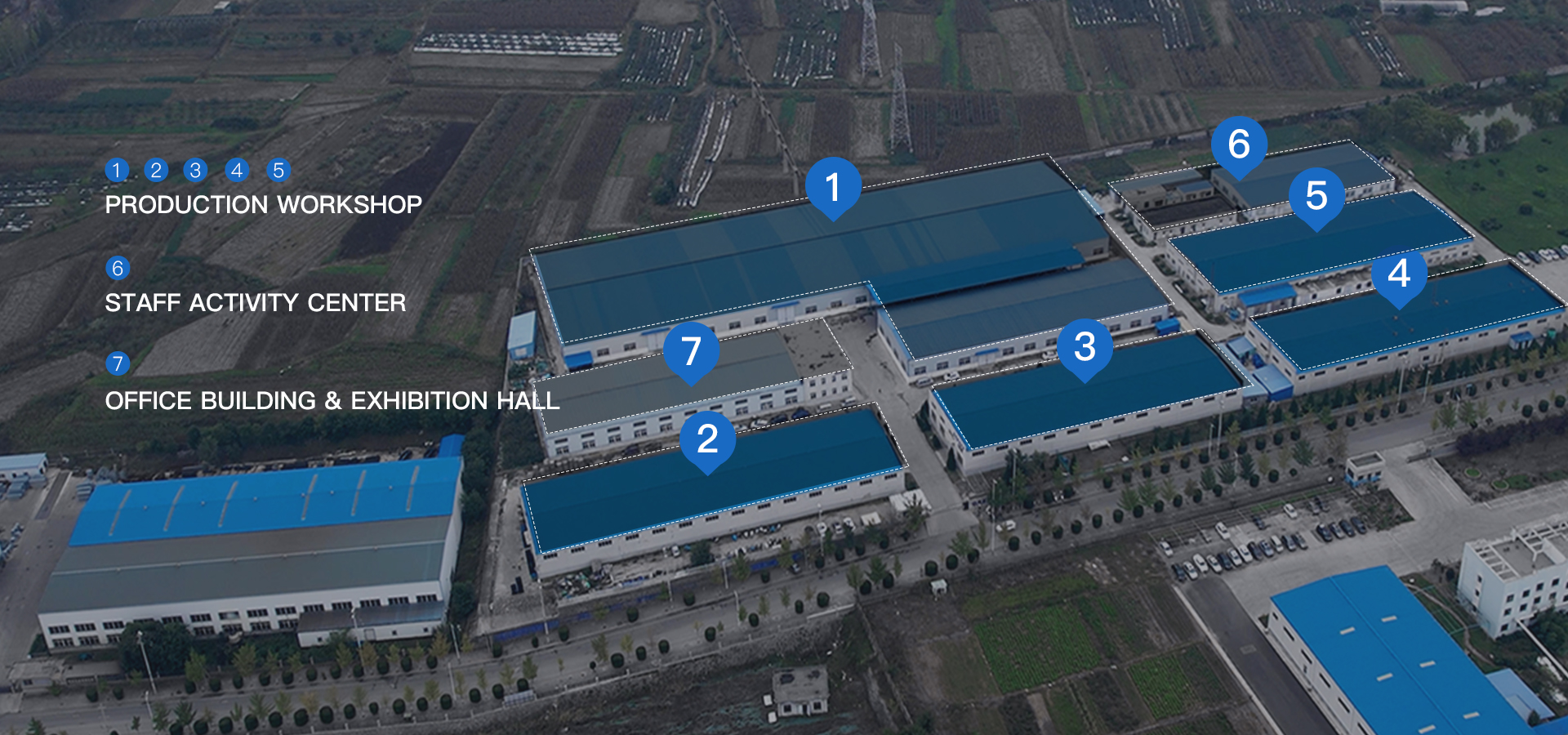
ESCOLO has manufactured commercial refrigeration equipment in Foshan, Guangdong since 2010, and the team now numbers more than 800 people. Fifteen-plus years in the trade, a network of 3,000+ qualified partner factories and an annual output of 200,000+ units let us run container-scale programmes and repeat orders for supermarket, convenience and foodservice buyers. OEM and ODM work is standard: size, colour, function and your own branding are set to the specification you send. Factory audit, pre-shipment inspection, consolidated shipping and after-sales support are handled in-house.
Chilled drinks and packaged chilled food: bottled water, soft drinks, energy drinks, canned beer, juices, dairy, and ready-to-eat items such as sandwiches and desserts. This full glass door beverage display refrigerator is a chilled cabinet rather than a freezer, so ice cream and frozen goods belong in a frozen model. If a product needs a tighter tolerance than a chilled band allows, tell us before ordering and we will confirm whether this cabinet suits.
A storage fridge keeps stock cold out of sight; this cabinet is built so the customer sees the range before deciding. The glass front, the vertical lighting and the way the shelves are set out are the point of it. If you need back-of-house capacity, a solid-door cabinet holds more in the same footprint; if the sale has to happen on the shop floor, the glass door is what does the work.
Yes. The shelves sit on adjustable runners, so spacing can be set to the tallest pack in each category and changed when the range changes. Most operators keep one shelf shallow for cans and one deeper for litre bottles, then leave the rest at a uniform pitch so the facings stay easy to read from the aisle.
Wipe the glass inside and out with a soft cloth and a standard glass cleaner, and lift the shelves out for a wash in warm soapy water. Avoid abrasive pads on the glass and the door frame, and do not hose the cabinet down — the controller and the compressor compartment sit behind panels that should stay dry. Keep cartons and cleaning equipment away from the air path around the cabinet, and check that the door gasket runs clean and seals all the way round.
This model is supplied with a full glass door. Heated glass is specified on some cabinets in our range for humid sites and for stores where air conditioning blows directly across the front; whether you need it depends on your climate and the air movement in your shop. Describe the site to your sales contact and we will confirm what suits before the order is placed.