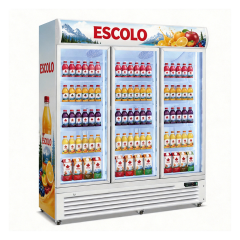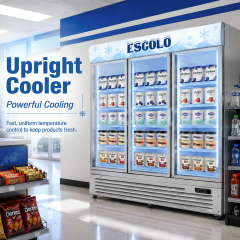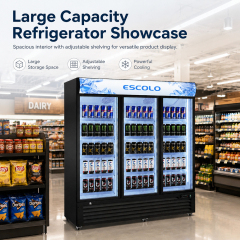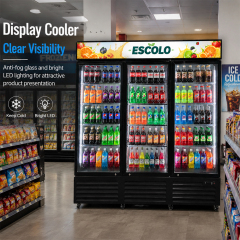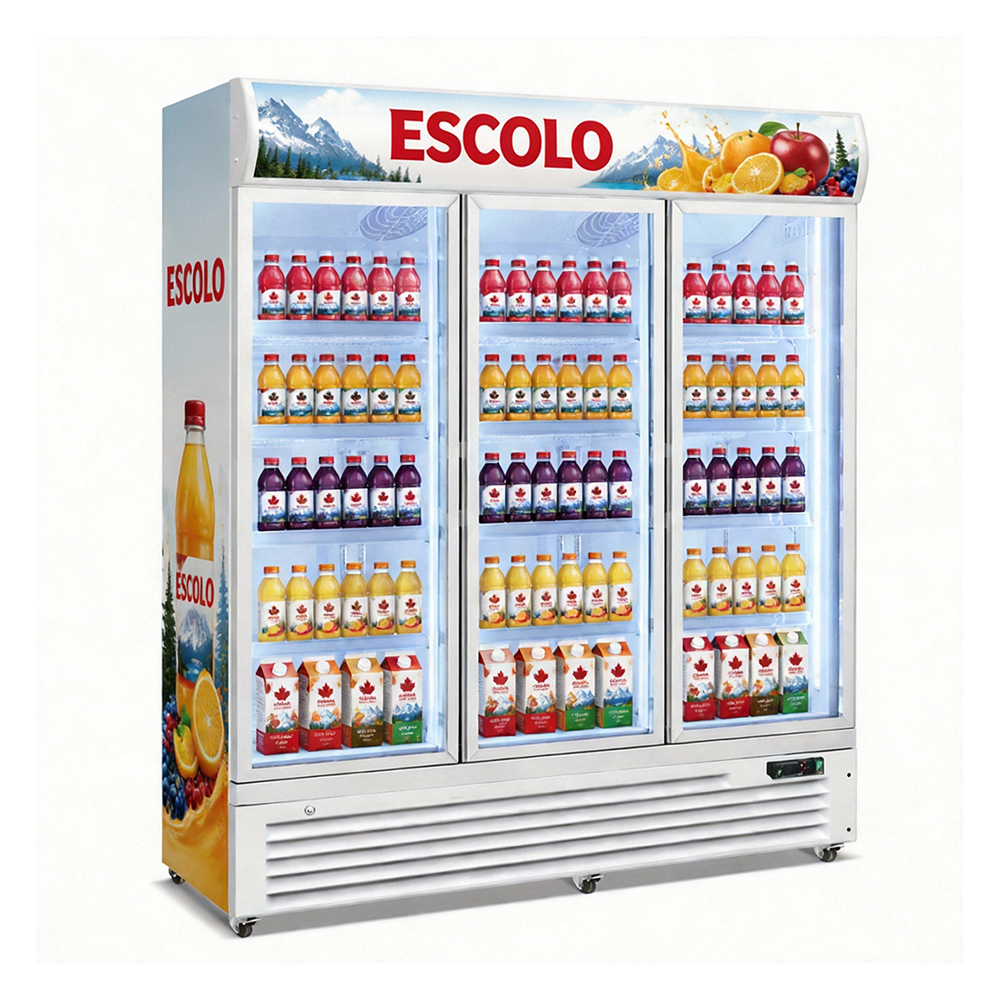
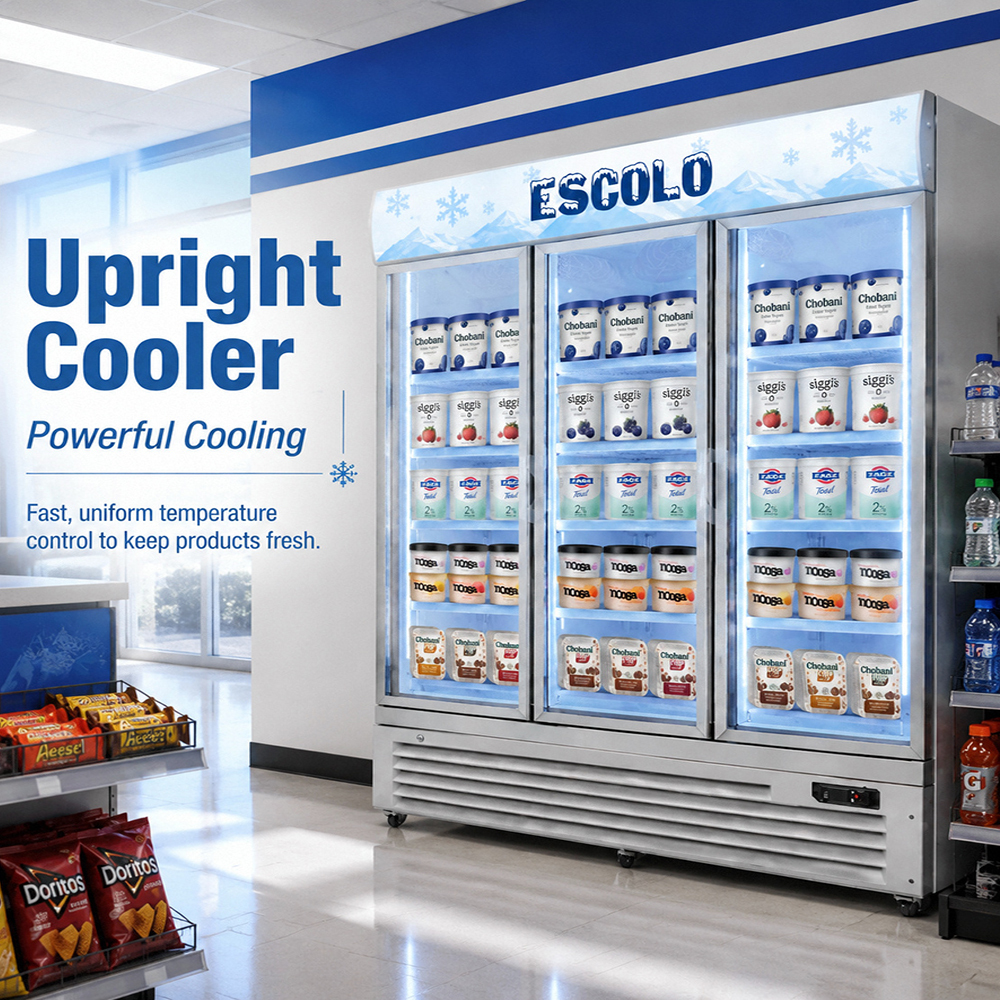
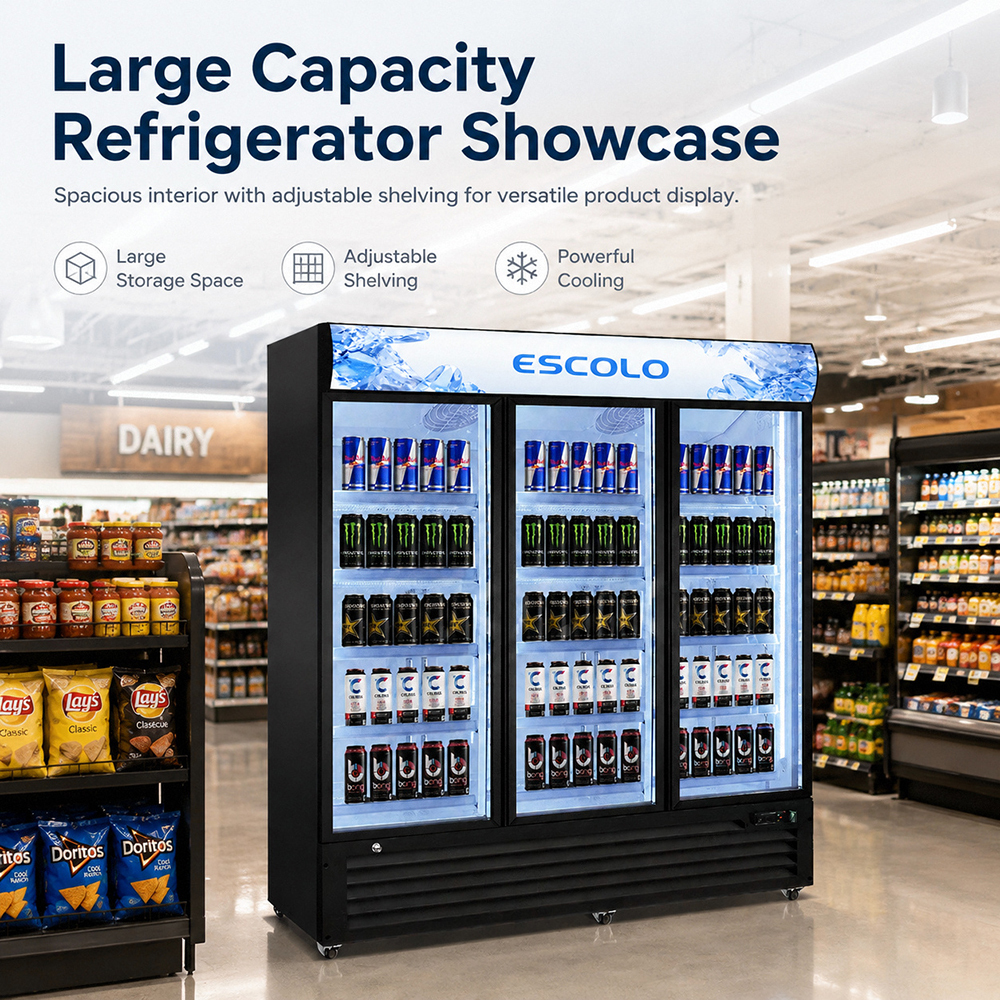
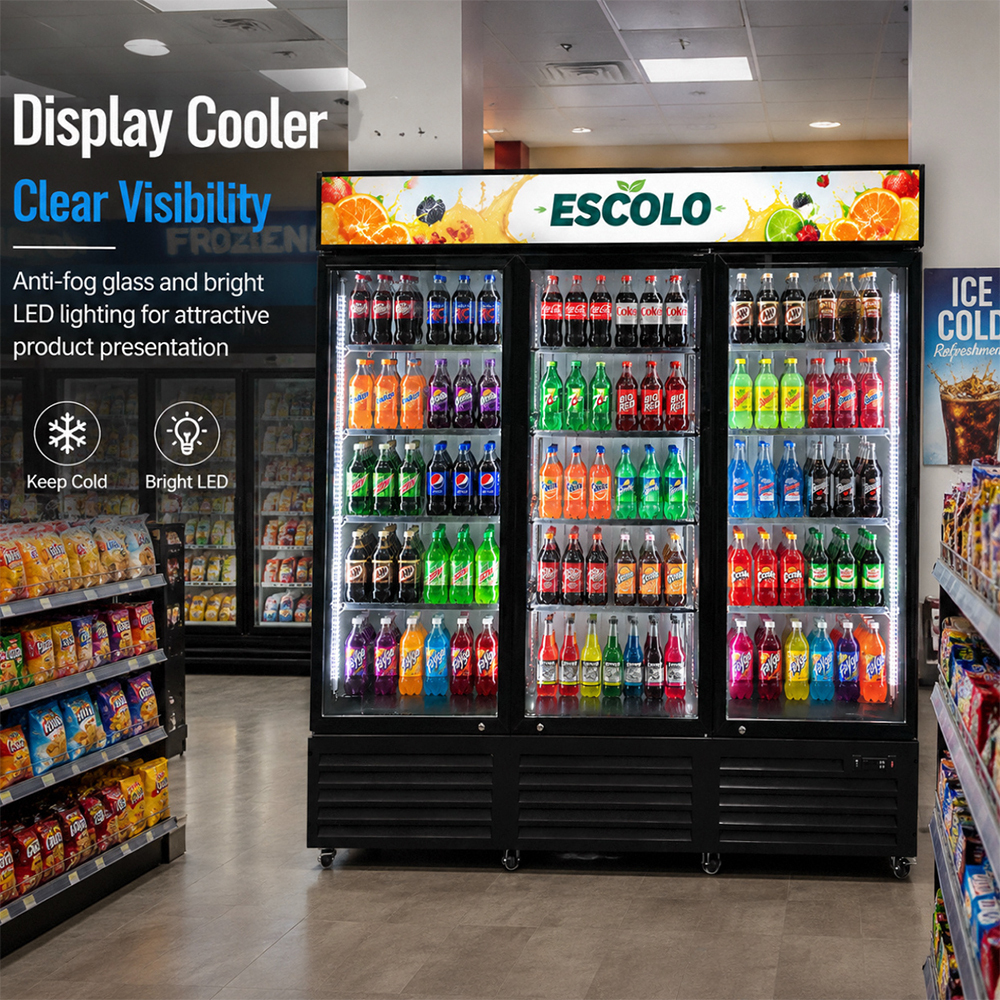
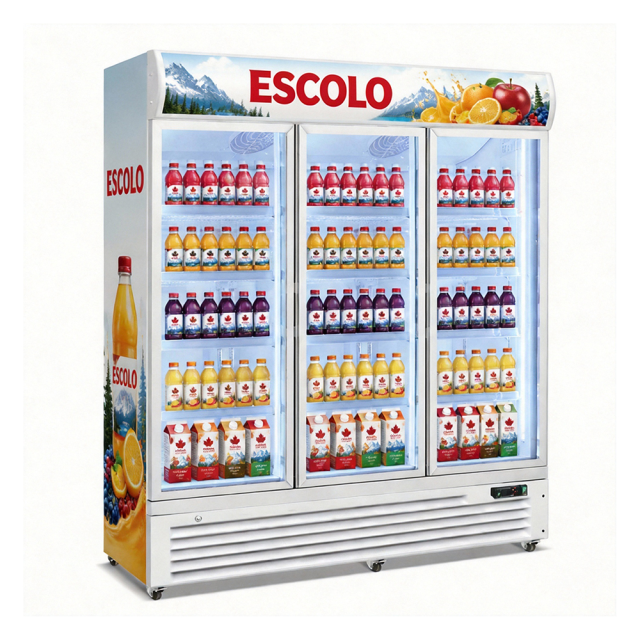
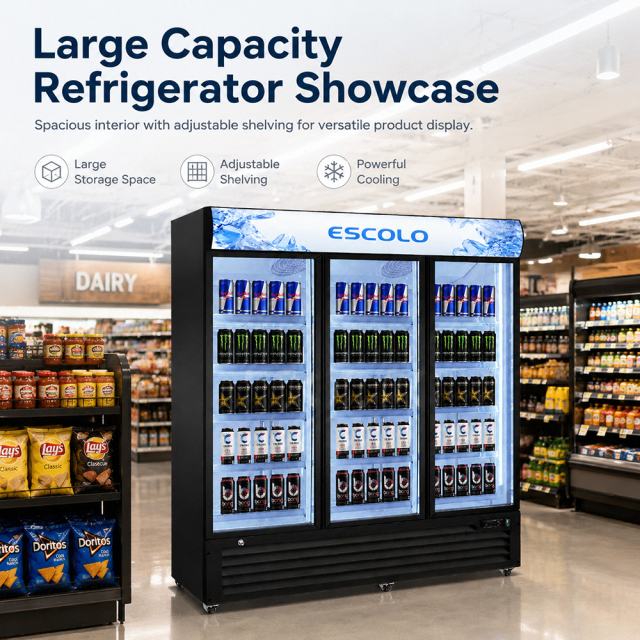
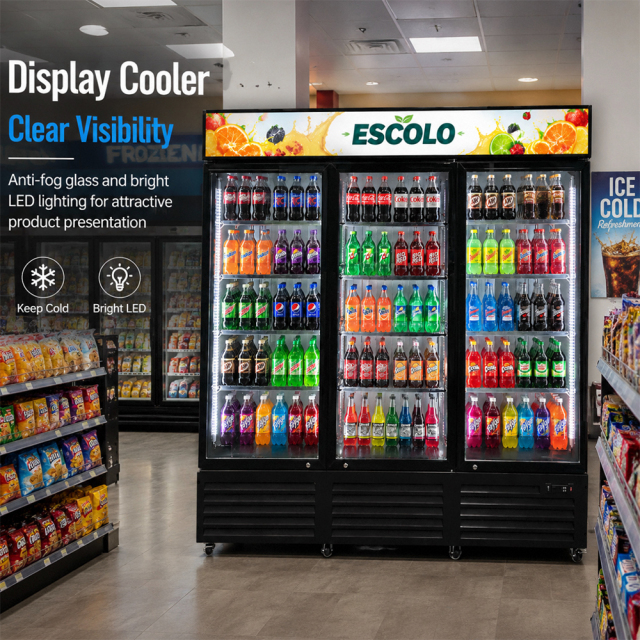
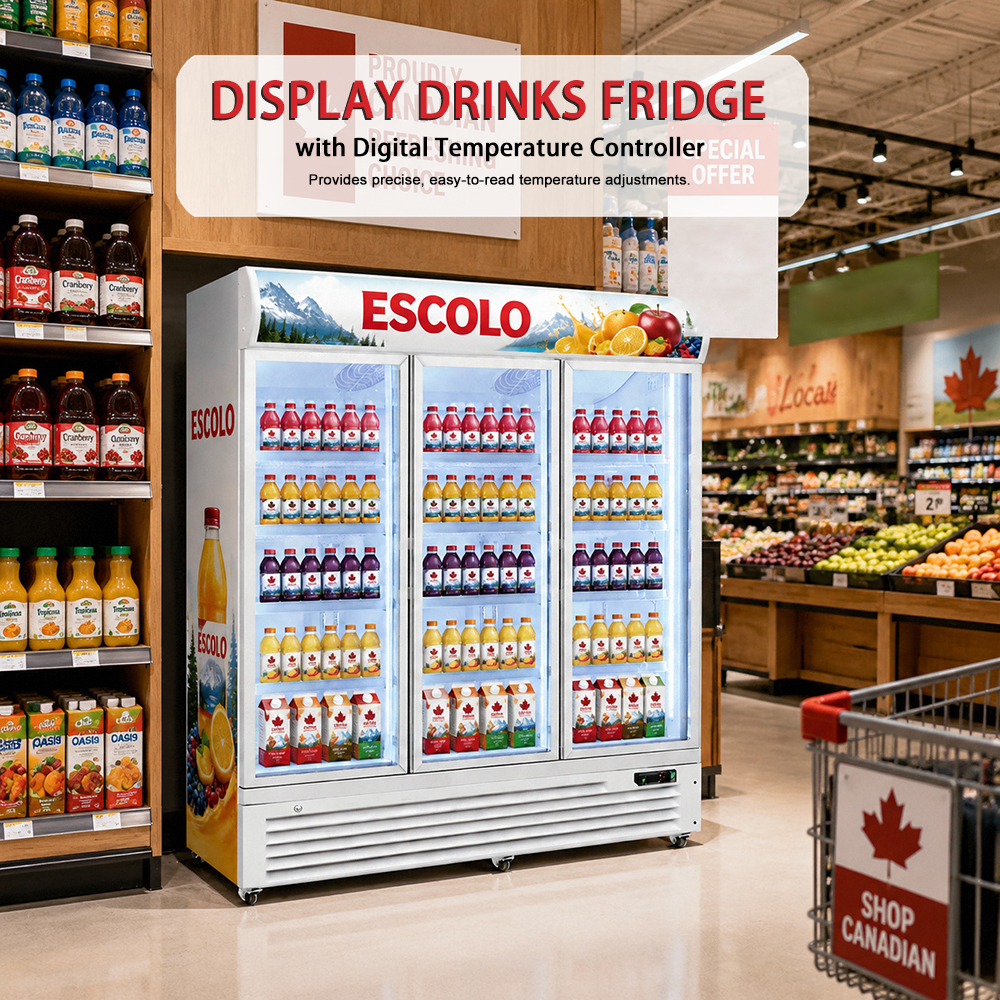
The ES-1680HB is an upright, three-section chilled merchandiser for stores that sell drinks from the shop floor. Its 1680 L is divided behind three hinged glass doors, so soft drinks, water, juices, energy drinks or dairy can each hold their own block instead of sharing one long mixed shelf.
The cabinet runs between 0 °C and +10 °C, the working band for chilled beverages, and it is built to stay there through a full trading day of doors opening and closing. Staff fill it from the front, customers read the shelves through the glass and take what they want, and the cabinet settles back to its set temperature between visits.
Owners and buyers who want the drinks section to sell itself come to a commercial refrigeration display supplier for a cabinet like this one, whether the site is a supermarket aisle, a convenience store chiller run, a forecourt shop, a café counter or a beverage speciality store. It takes the place of a closed storage fridge plus a separate open display, combining both into one glass-fronted run that is straightforward to merchandise and quick to clean. The cabinet is specified as a high-visibility refrigeration solution for supermarkets, convenience stores and beverage display environments, keeping products fully visible while holding stable cooling conditions through continuous commercial operation. Its three-door structure creates segmented storage zones so drinks can be grouped by category, brand or promotional theme, which helps shoppers find what they want without working through the whole cabinet. Model ES-1680HB is supplied with hinge doors.
| Model | ES-1680HB |
|---|---|
| Door | 1 |
| Door type | Hinge door |
| Dimensions (mm) | 1680*655*1975 |
| Capacity | 1680L |
| Temperature range | 0 °C to +10 °C |
| 20GP / 40HQ loading | 10 / 20 units |
| Glass door sections | Three |
| Cabinet material | Painted steel, interior and exterior |
| Evaporator | Copper with copper ends |
| Condenser | Web-type painted steel |
| Shelving | PVC with price tag holders |
| Interior lighting | Vertical LED |
| Temperature control | Digital controller |
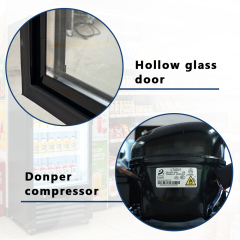
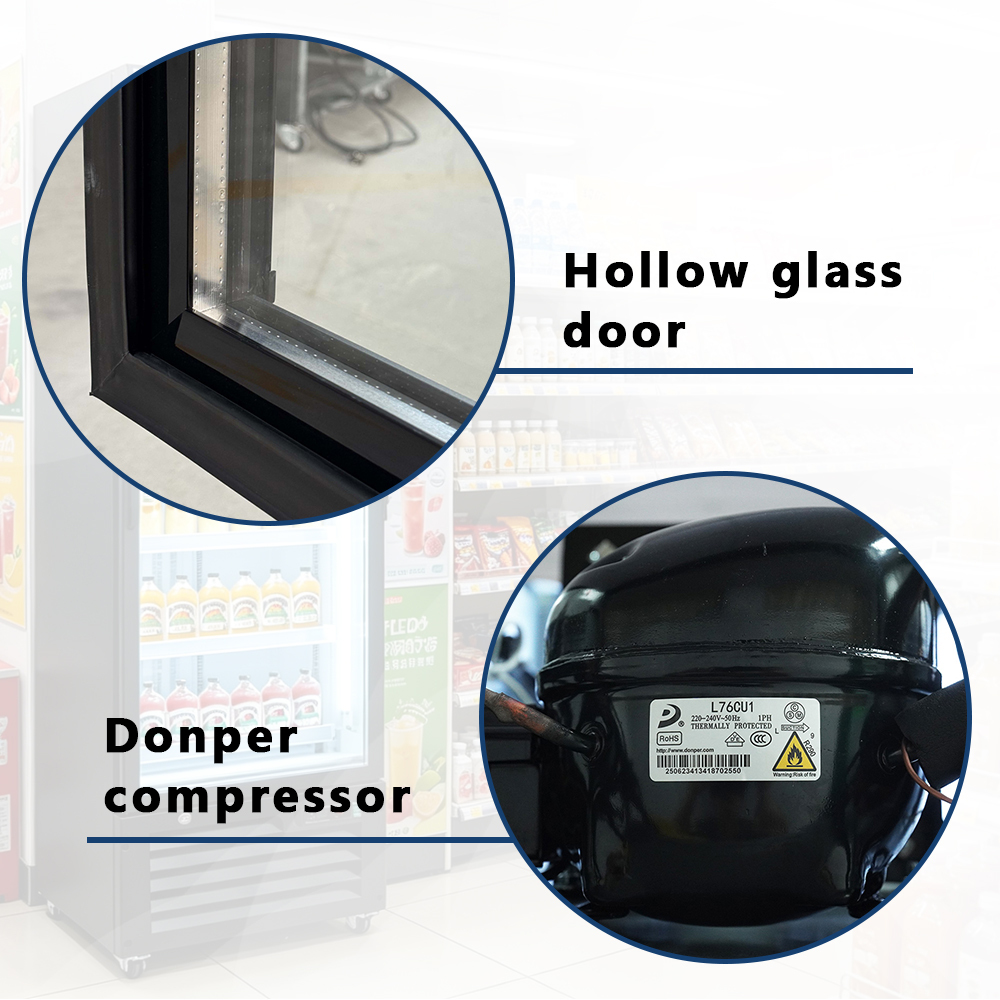
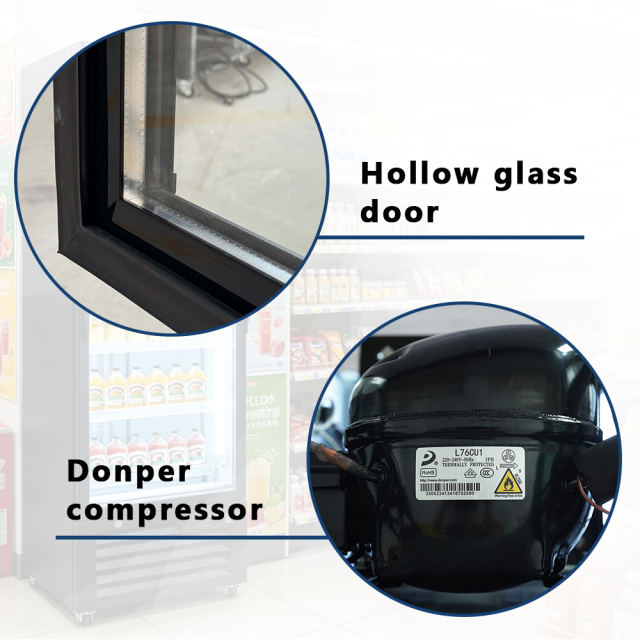
Body and doors. Interior and exterior are both formed in painted steel, so the cabinet behaves as one rigid box rather than a frame with liners dropped in. Panels, door frames and shelf supports are sized for a sales floor where a door can open every few seconds. The three doors are hollow glass set into PVC frames: the sealed cavity adds an insulation layer between the cold interior and the shop air, and the frame keeps the glass edge protected when cages and trolleys pass.
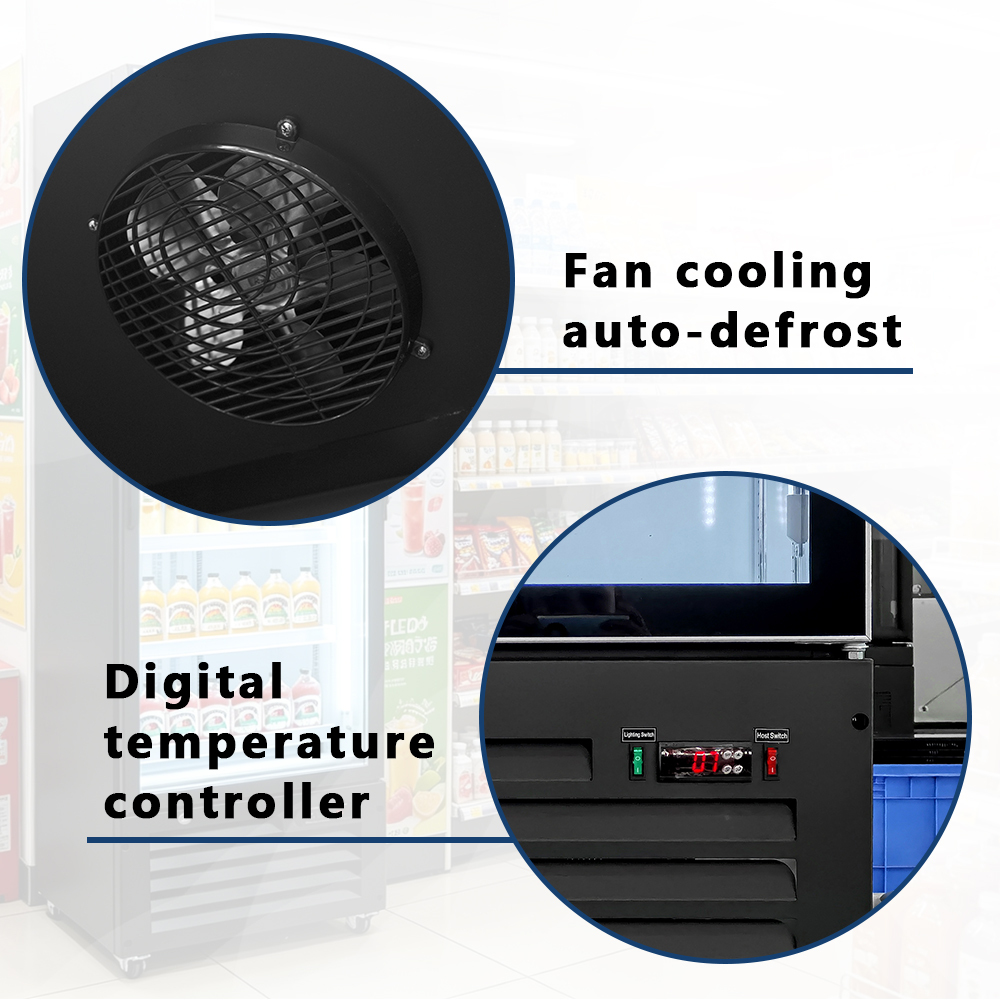
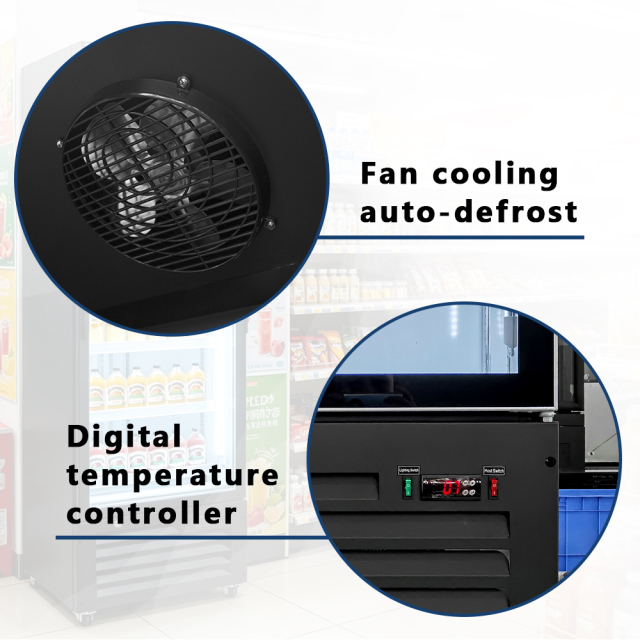
Refrigeration path. Cooling comes from a copper evaporator with copper ends, matched to a web-type painted steel condenser that also carries copper ends. The copper ends protect the tube joints, which are the first place a cooling circuit usually gives trouble in a busy store. The condenser's wire-and-fin surface lets air pass freely and sheds dust, while a fan pushes cold air through all three compartments rather than letting it settle at the base.
Interior fit-out. Shelving is PVC with a price tag holder on the shelf edge. PVC does not rust if a bottle leaks, and it lifts out for washing. Vertical LED strips run down each section so the light falls on the products rather than on the cabinet walls. Condensate collects in a self-evaporating tray at the base, so no one has to empty a drip bucket during the day.
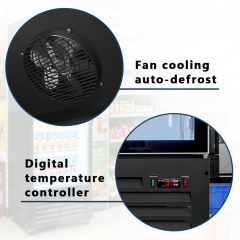
Control. A digital temperature controller gives the staff one place to read and adjust the cabinet. Because the set point is visible, a shift supervisor can confirm the cabinet is running normally without opening a door.
Three doors are also three merchandising decisions, and the cabinet rewards a store that plans them. A common arrangement puts the fastest-moving single-serve lines at eye level across the middle section, bulk multi-packs on the lower shelves where they are easy to lift, and a rotating promotion or seasonal line in the end section where it can be changed without disturbing the rest of the run.
Keeping a whole brand block inside one door makes the range legible from a few metres away and gives the supplier's own packaging room to work. Facings matter more than volume here: a solid front row with the second row behind it reads as a full shelf and sells faster than a half-empty row spread wide.
Because each section opens independently, one person can restock the middle door during trading while the other two keep serving customers. Shelf plans are easier to hold when the price tags live on the shelf edge, and a layout change becomes a note on the planogram rather than a reprint of glass stickers.
The same approach carries across a small chain: if every store blocks the run the same way, a shopper recognises the drinks section immediately in each branch, and a category manager can compare performance between sites without guessing how the cabinet was filled.
Cold drinks are bought on sight. A shopper who can see the range, read the prices and reach the door without asking for help spends less time deciding and more time buying, and a wide glass front gives the category a presence that a closed cabinet cannot.
For a supermarket or convenience operator, that presence does real work. It gives the drinks offer a defined home in the store, supports the price image when the tickets are clean and current, and reduces the number of times staff are pulled away from the till to answer whether there is more stock in the back.
A run of this size also changes how the store plans stock. With a day's volume of fast movers on display, the replenishment rhythm becomes a morning fill and a mid-afternoon top-up rather than a continual shuttle, which matters most during the hours when the aisle is busiest.
Consistency is the quieter benefit. As a commercial refrigeration display supplier working with multi-site operators, we build the same cabinet to the same configuration for each store in a rollout, so a chain gets one display standard, one shelf plan and one service routine across every branch.
The three-door structure is the first answer. Each section behaves as its own zone, so a category or brand block keeps its place when the store is busy, and staff can top up one section without disturbing the other two. The wide glass front means the range is read from the aisle instead of through an opened door.
Air movement is the second. A fan-assisted system pushes cold air through all three compartments rather than letting it pool at the bottom, which evens out the shelf-to-shelf difference that makes a top row feel warm.
Light is the third. Vertical LED strips put the light on the products, so a shopper standing a couple of metres back can still read labels and prices. That is the difference between browsing and walking on, especially in a store with bright overhead lighting.
Defrost runs automatically, so nobody is clearing ice off a coil at closing time, and the digital controller gives the shift a single number to check instead of a guess. Shelves with tag holders keep the merchandising consistent from one layout change to the next.
For a 3 glass door fridge in commercial beverage environments, these are the details that decide whether the drinks section runs itself or needs attention all day. This commercial upright beverage display unit is put together so that the daily routine is: fill it, check the controller, and move on.
Cabinets are built under controlled production management intended for export markets, with standard procedures applied to each batch rather than to a sample. Sheet metal is cut and bent on automated equipment so panels and door frames line up the same way from cabinet to cabinet, and the coating line gives a consistent finish that holds its colour across repeat orders.
Insulation is foamed under controlled pressure and mixing so the density stays even through the cabinet, which is what keeps the chilled band stable and the structure rigid. Before a design goes into volume production, it is tested in-house for cooling performance, door-seal integrity and electrical safety, and the results are documented.
As a commercial refrigeration display supplier, we keep records through production so a component can be traced back if a question ever arises after delivery. Certification documentation and export compliance information can be provided according to the requirements of your project and the standards of the destination market — tell us which documents your import process needs and we will confirm what applies to this model. Accessibility and category organisation come from the segmented compartment layout, while fan cooling circulation keeps cold air evenly distributed through the cabinet so one busy door section does not pull the rest out of balance. LED lighting lifts visibility across every product layer, and the automatic defrost system removes the manual cleaning downtime that would otherwise interrupt trading hours. A digital temperature controller gives store staff a simple way to watch cabinet performance day to day, and PVC shelves with price tag holders keep pricing and shelf presentation consistent across categories.
This cooler is made for self-service merchandising: customers choose from the display themselves, so the cabinet has to keep every product line visible while its doors are opened and closed all day long. Supermarkets, convenience stores and beverage specialists use this layout because it puts stock where the customer already is, instead of in a back room where it cannot sell.
Three separate door sections let a store run several merchandising stories side by side — by category, by brand or by promotion — inside a single footprint, so a shopper can scan one section rather than the whole cabinet. Because the unit runs continuously through trading hours, plan its position with room for door swing and access for cleaning, and confirm the cabinet dimensions, door configuration and power supply for your site with the sales team before ordering.
The cabinet is built in painted steel inside and out, so the body holds up under the long shifts and constant handling of a commercial sales floor. It is engineered for the door-opening cycles of a high-traffic store rather than for occasional use.
The refrigeration circuit pairs a copper evaporator with copper ends and a web-type painted steel condenser with copper ends, a combination chosen for stable heat exchange and consistent cooling while the unit runs continuously. Each of the three compartments has its own hollow glass door in a PVC frame, so shoppers can see the full range without interrupting the cooling cycle. Inside, PVC shelves with integrated price tag holders let staff build structured merchandising by category and keep prices at the point of decision.
ESCOLO has manufactured commercial refrigeration equipment in Foshan, Guangdong since 2010, and the team now numbers more than 800 people. Fifteen-plus years in the trade, a network of 3,000+ qualified partner factories and an annual output of 200,000+ units let us run container-scale programmes and repeat orders for supermarket, convenience and foodservice buyers. OEM and ODM work is standard: size, colour, function and your own branding are set to the specification you send. Factory audit, pre-shipment inspection, consolidated shipping and after-sales support are handled in-house.
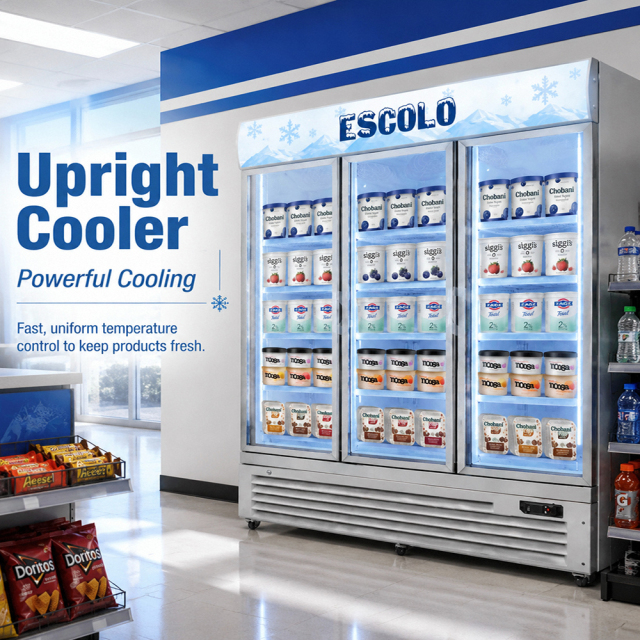
It is a chiller, so the working range suits canned and bottled soft drinks, water, juices, energy drinks, dairy and packaged chilled foods. It is not built for frozen products such as ice cream or frozen meat, which need a glass door freezer working well below zero. Set the controller to suit the most sensitive product on the shelf and keep the whole range inside the band.
The doors are hollow glass in PVC frames, and that sealed cavity helps hold back condensation on the outer pane. Performance still depends on the room: a store with high humidity, strong temperature swings, or a cabinet placed beside a doorway or an air-conditioning vent will see more fogging than a settled indoor aisle. If your site runs humid, tell us before ordering so we can confirm the right door specification for that location.
The shelving is PVC with price tag holders, and it is arranged to suit the can and bottle formats you actually sell — single-serve cans on one level, taller bottles on another. Send us your shelf plan or product list before the order is placed and we will advise on the shelf spacing that fits it.
The cabinet is 655 mm deep and 1680 mm wide, so it sits neatly along an aisle or a wall run without eating the walking width. The doors are hinged, so plan their swing plus turning space for a trolley or cage in front, and keep the rear clear enough for airflow and for a technician to reach the refrigeration side.
No. This commercial upright beverage display unit is a chilled cabinet running between 0 °C and +10 °C, and its job is drinks and chilled food. A three-door glass door freezer looks similar from the aisle but runs at sub-zero temperatures and is specified differently. If your range is frozen, ask for the freezer equivalent rather than running this cabinet below its band.
The cabinet is built to the voltage and plug standard of the destination market rather than to a single fixed specification. Confirm the supply available at the site with your sales contact when you place the order, so the unit arrives ready for your electrician instead of needing an adapter.