• Bottom Compressor Mounted Display Cooler; 1/2/3/4 Glass Door Optional
  • Bottom Compressor Mounted Display Cooler; 1/2/3/4 Glass Door Optional
  • Bottom Compressor Mounted Display Cooler; 1/2/3/4 Glass Door Optional
  • Bottom Compressor Mounted Display Cooler; 1/2/3/4 Glass Door Optional
  • Bottom Compressor Mounted Display Cooler; 1/2/3/4 Glass Door Optional
  • Bottom Compressor Mounted Display Cooler; 1/2/3/4 Glass Door Optional
  • Bottom Compressor Mounted Display Cooler; 1/2/3/4 Glass Door Optional
  • Bottom Compressor Mounted Display Cooler; 1/2/3/4 Glass Door Optional
  • Bottom Compressor Mounted Display Cooler; 1/2/3/4 Glass Door Optional
  • Bottom Compressor Mounted Display Cooler; 1/2/3/4 Glass Door Optional
  • Bottom Compressor Mounted Display Cooler; 1/2/3/4 Glass Door Optional
  • Bottom Compressor Mounted Display Cooler; 1/2/3/4 Glass Door Optional

Bottom Compressor Mounted Display Cooler; 1/2/3/4 Glass Door Optional

No.ES-B380-1M;ES-B620-1M;ES-B700-1M;ES-B800-1M;
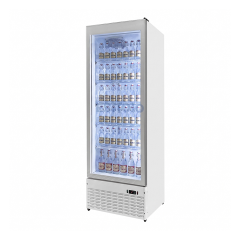
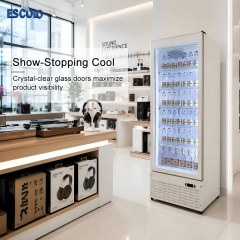
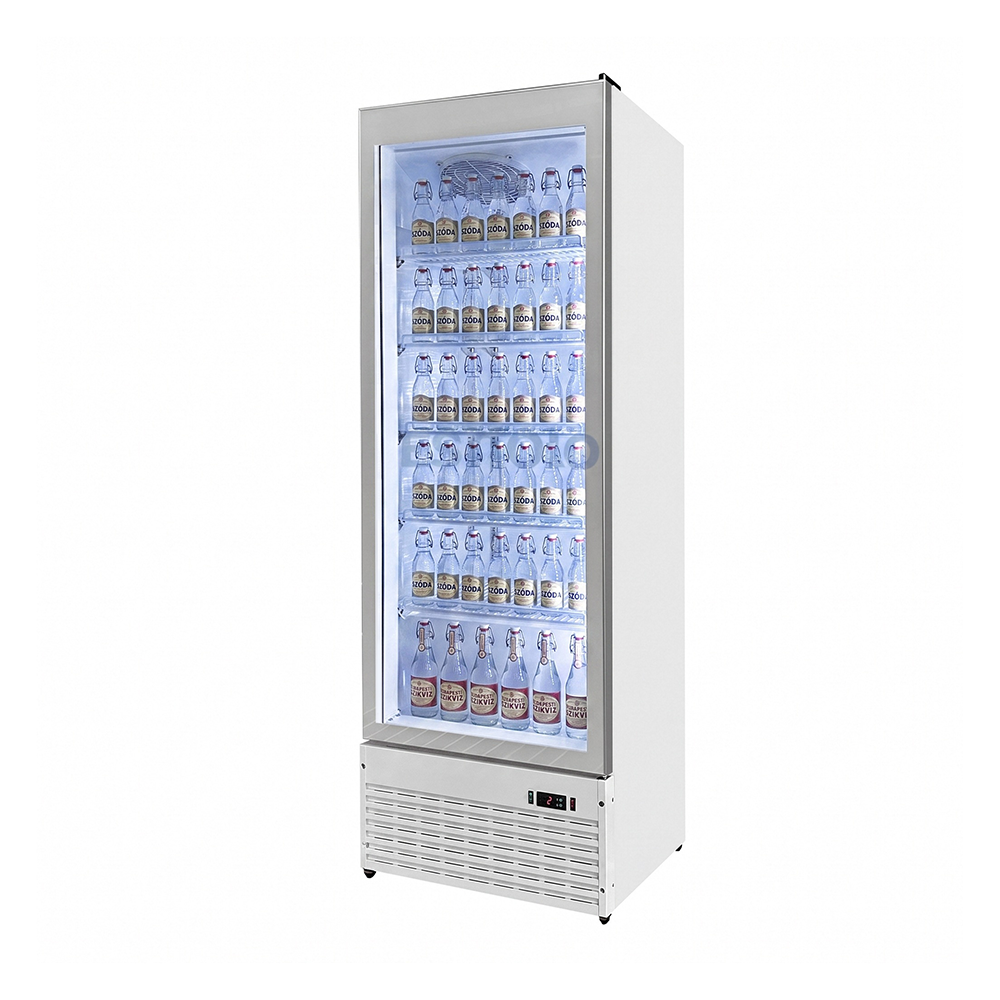
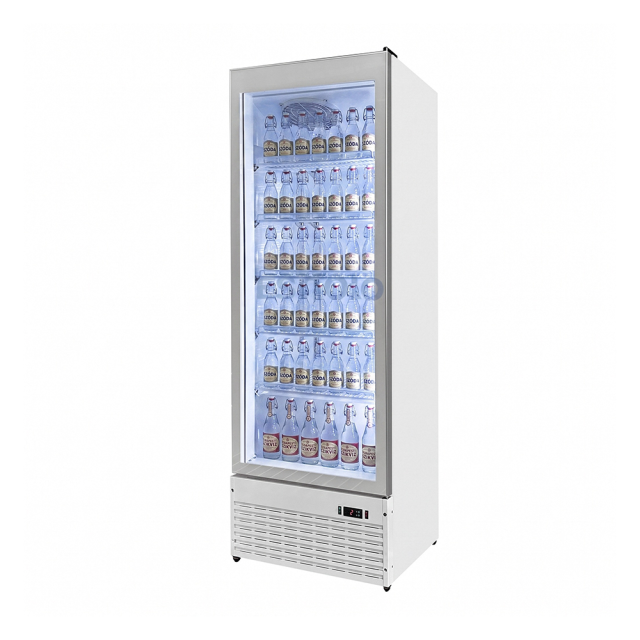
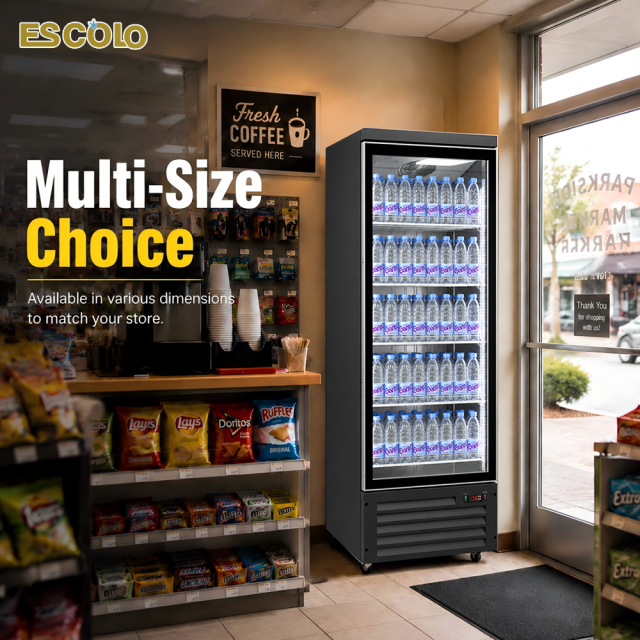
The ES-B380-1M / ES-B620-1M / ES-B700-1M / ES-B800-1M single-door display coolers offer compact design, clear product visibility, and efficient 0~+10°C cooling. Featuring fan cooling, auto-defrost, digital controls, LED lighting, and adjustable shelves, they are ideal for convenience stores, small shops, and foodservice retail.
Dimensions(mm):
1 Door 540*560*1900mm
1 Door 635*710*2030mm
1 Door 700*660*2005mm
1 Door 800*750*2030mm
  • Bottom Compressor Mounted Display Cooler; 1/2/3/4 Glass Door Optional
  • Bottom Compressor Mounted Display Cooler; 1/2/3/4 Glass Door Optional
  • Bottom Compressor Mounted Display Cooler; 1/2/3/4 Glass Door Optional
  • Bottom Compressor Mounted Display Cooler; 1/2/3/4 Glass Door Optional
  • Bottom Compressor Mounted Display Cooler; 1/2/3/4 Glass Door Optional
  • Bottom Compressor Mounted Display Cooler; 1/2/3/4 Glass Door Optional

Description

Series Overview

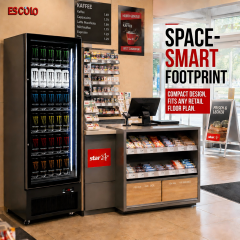
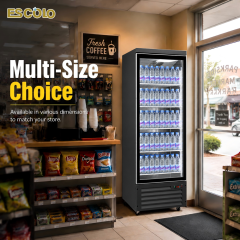
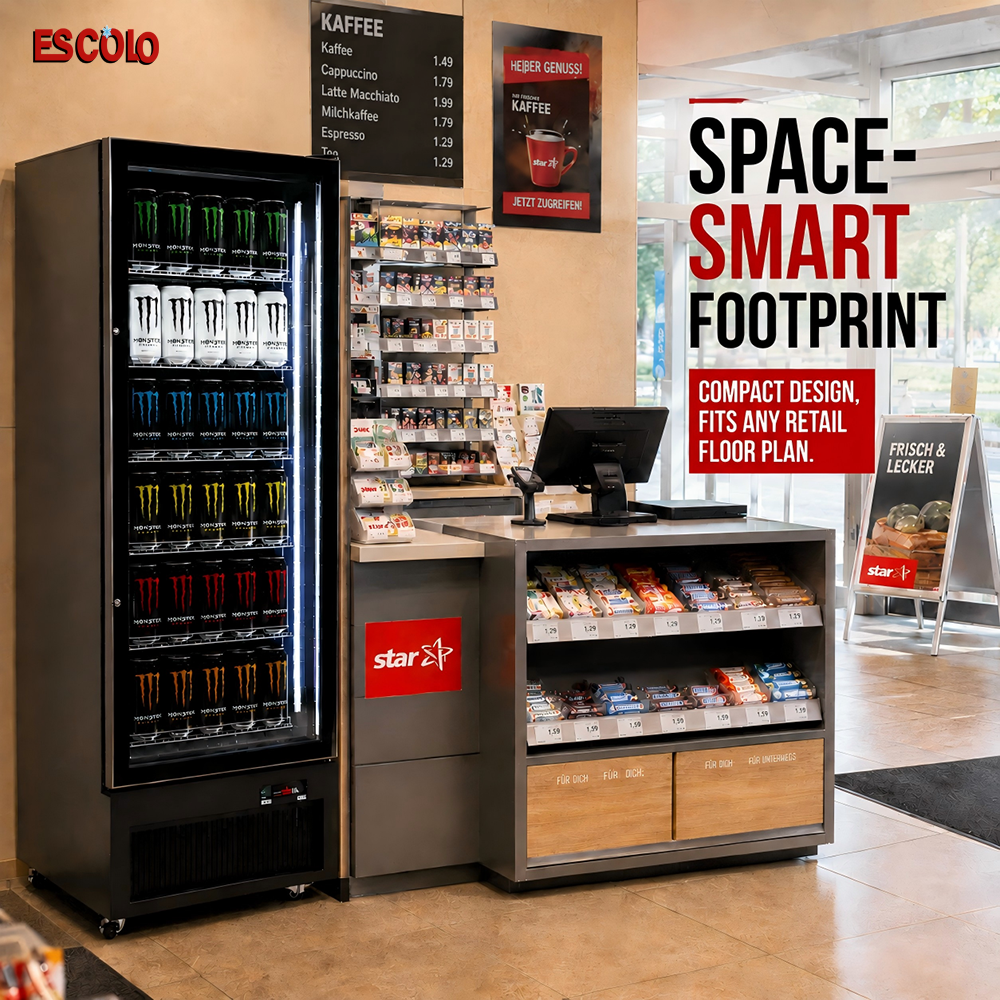
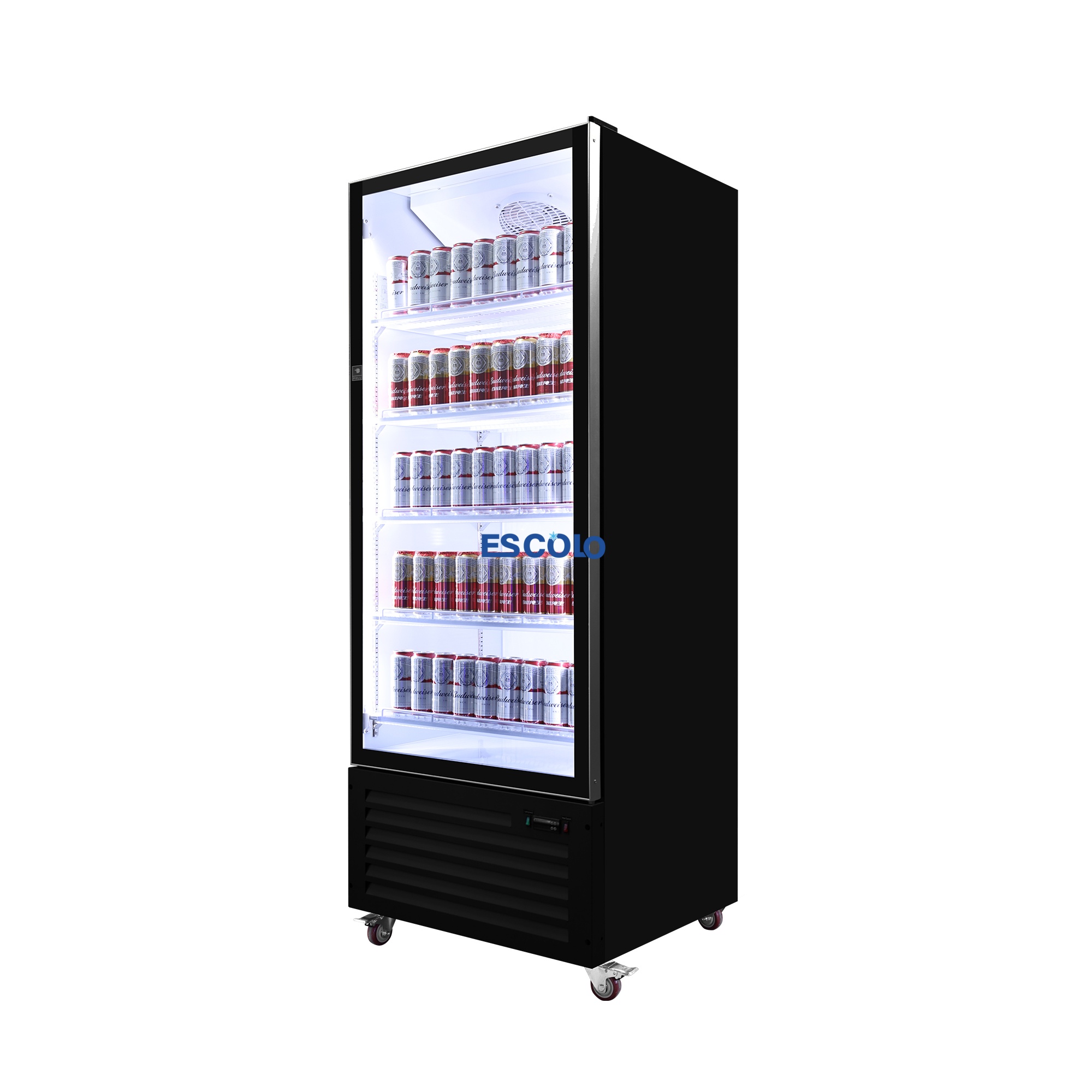
Tall black glass-door beverage refrigerator stocked with canned drinks

The display cabinet in this range is an upright glass door cooler with its compressor and condenser mounted at the base. Keeping the refrigeration pack low leaves the top of the cabinet flat and the interior clear from the floor pan to the top of the door, so the shelves run the full height and nothing cuts across the view into the cabinet.

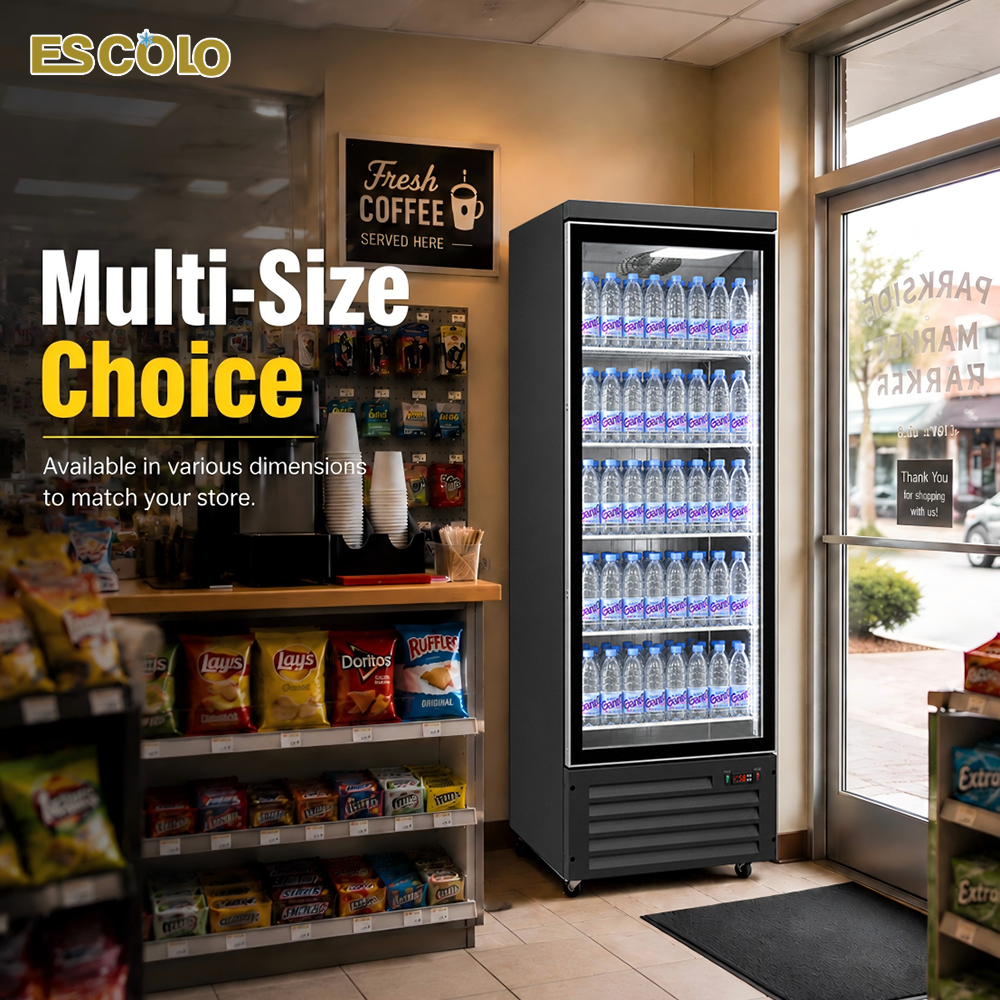
Capacity starts at 380 L in the smallest single-door model and reaches 2000 L in the largest four-door build, with one, two, three or four glass doors available across the series. That spread is deliberate: an independent shop can order a single bottom compressor display cooler and be finished, while a chain or an importer can take two-, three- and four-door cabinets from the same family and keep shelves, door hardware and controller settings identical from site to site.

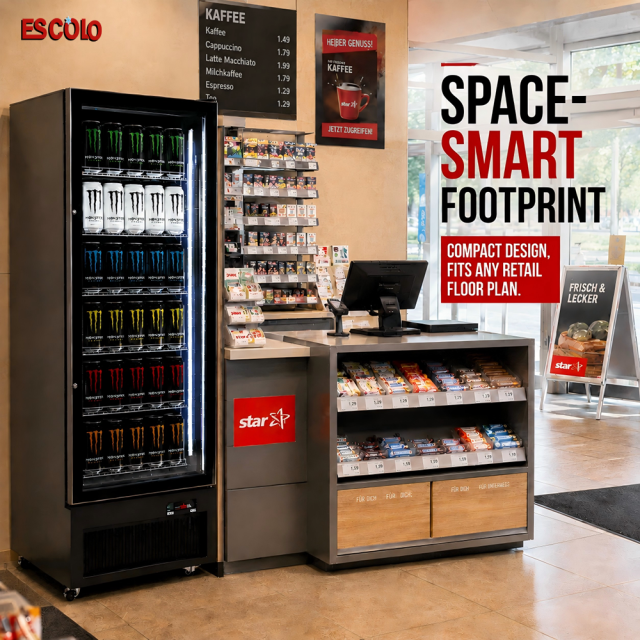
In practice the series is most often specified as a custom glass door fridge for convenience store and small-format commercial fit-outs, where the cabinet has to fit a fixed run of wall, hold a set number of facings per door and leave the aisle clear. It replaces a solid-door cooler, or a domestic refrigerator that has been pressed into shop service, and it sits naturally beside a glass door freezer when a store runs chilled and frozen lines in the same aisle.

Every model holds 0 to +10 °C, which covers bottled and canned drinks, dairy, packaged foods and cream-based desserts. Single units go to independent shops and cafés; multi-door builds usually ship as part of a store fit-out or inside a distributor's container, and each single-door model carries its own container loading figure.

Model Lineup

ModelDoorsDimensions (mm)CapacityTemperature20GP / 40HQ
ES-B380-1M1 hinge540 × 560 × 1900380 L0 to +10 °C36 / 95
ES-B620-1M1 hinge635 × 710 × 2030400 L0 to +10 °C24 / 51
ES-B700-1M1 hinge700 × 660 × 2005500 L0 to +10 °C24 / 51
ES-B800-1M1 hinge800 × 750 × 2030800 L0 to +10 °C21 / 42

Standard Features

  • Painted steel cabinet, inside and out. The liner and the outer panels are the same painted steel finish, so a spill or a scuffed trolley mark wipes off instead of staining, and there is no separate plastic liner to work loose. The base of this bottom compressor display cooler is the part that takes the knocks in a busy aisle, and painted steel hides them better than a bright bare finish.
  • Web-type painted steel condenser. Wire-and-tube condensers are simple to brush clean, which matters on a bottom-mounted cabinet where floor grit and dust collect near the coil. A clean coil is what keeps pull-down time steady over years of service.
  • Fin type evaporator. The finned evaporator spreads cold air across the full height of the cabinet, so the top shelf performs like the bottom shelf instead of running warm.
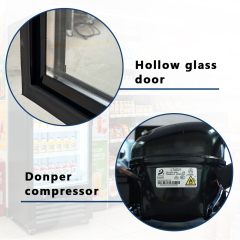
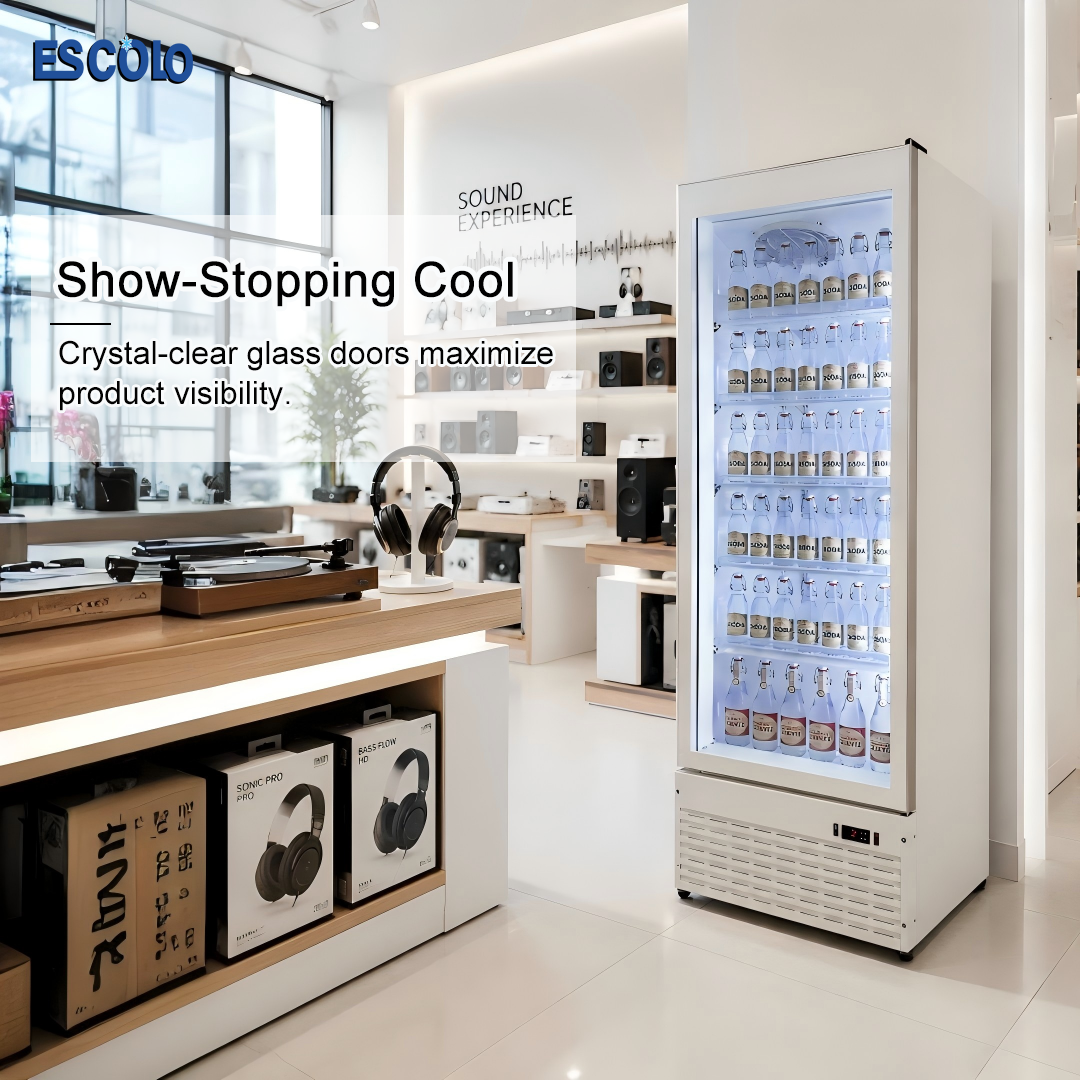
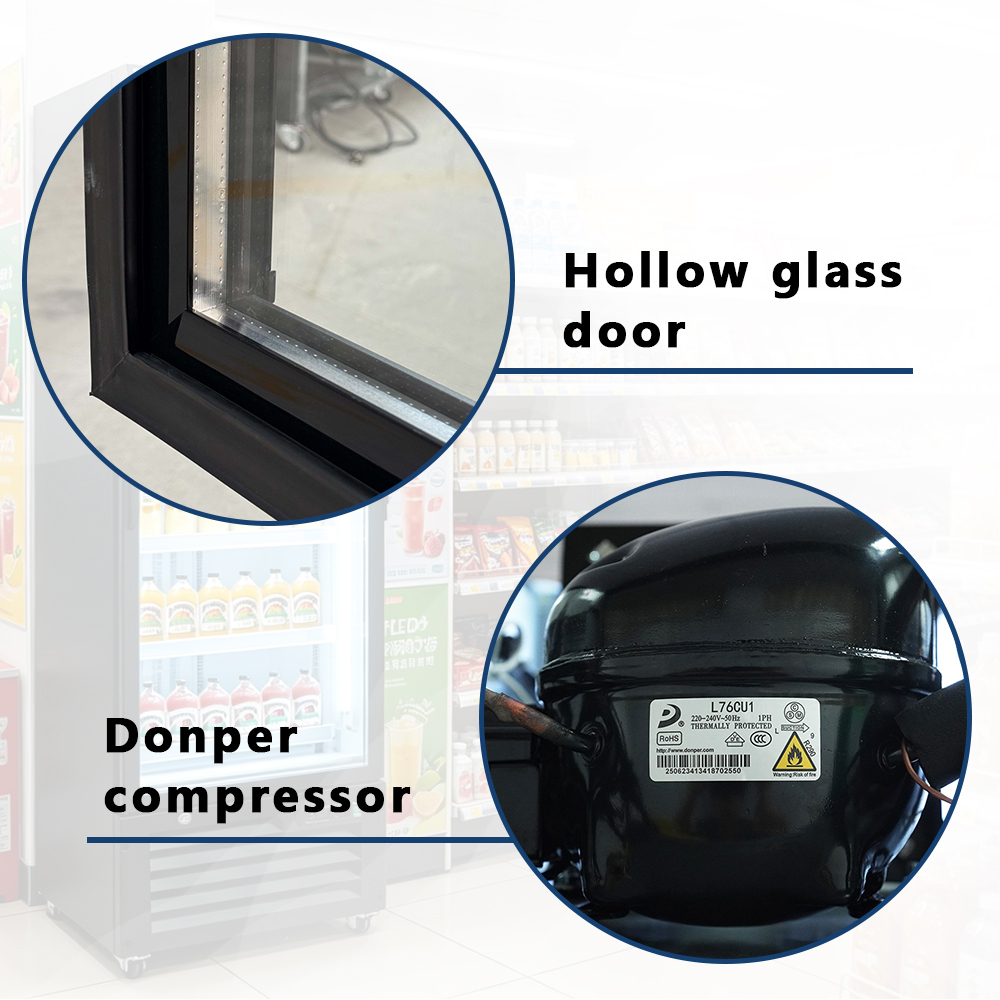
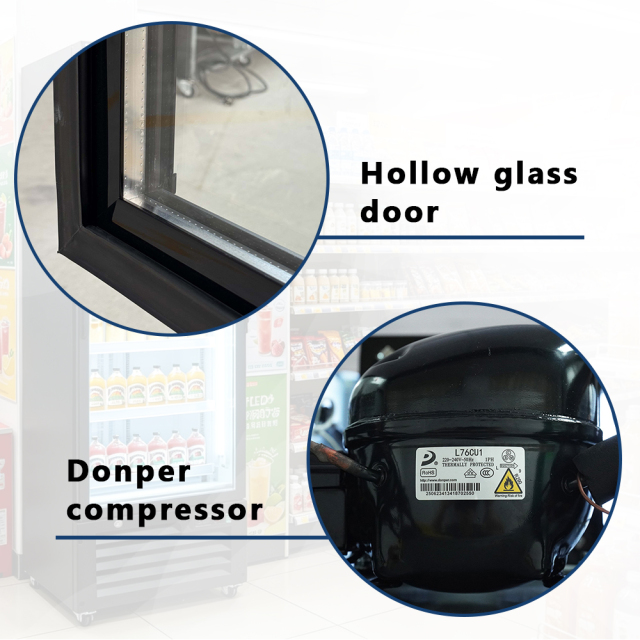
  • Hollow glass door in an aluminium frame, no heater. Double-walled hollow glass insulates without a heating element running all day, and because the door build is common across the series, a custom glass door fridge for convenience store use carries the same glass and aluminium frame as the largest cabinet, keeping the door light enough for staff to open one-handed while carrying a tray.
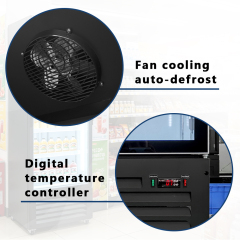
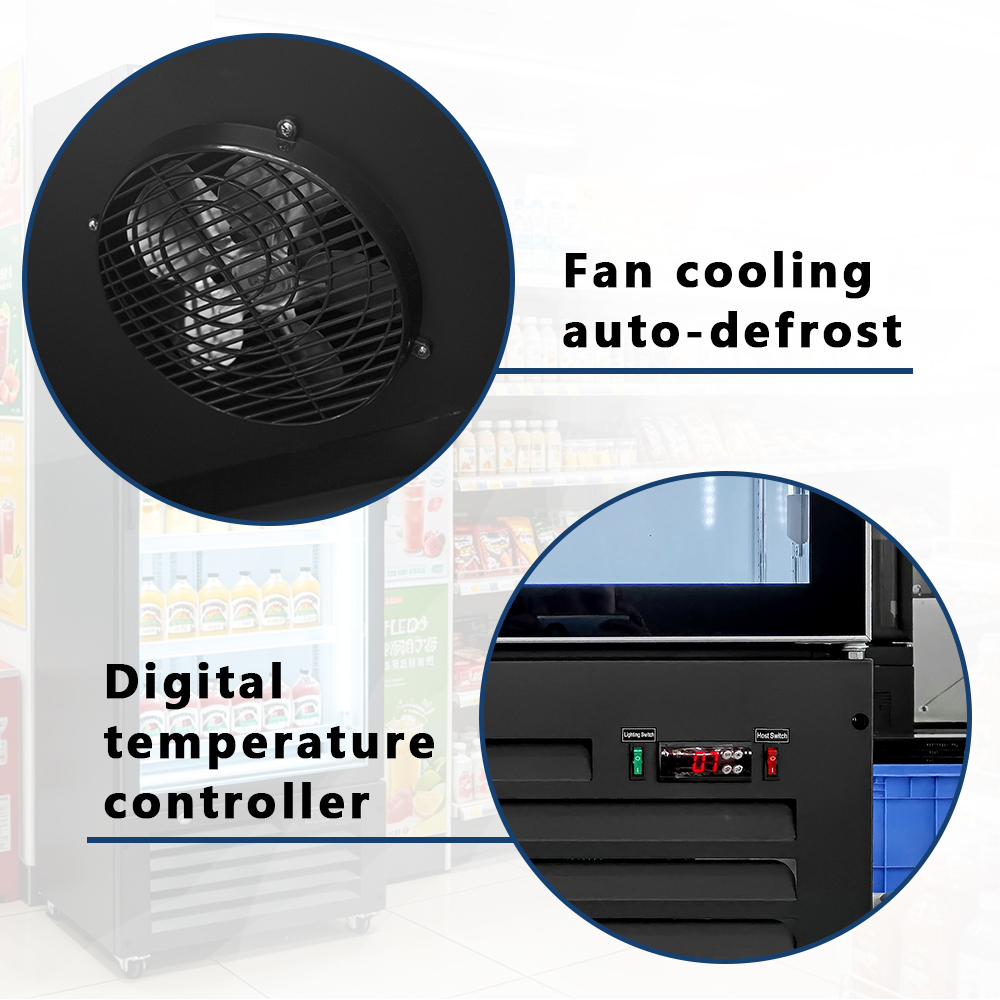
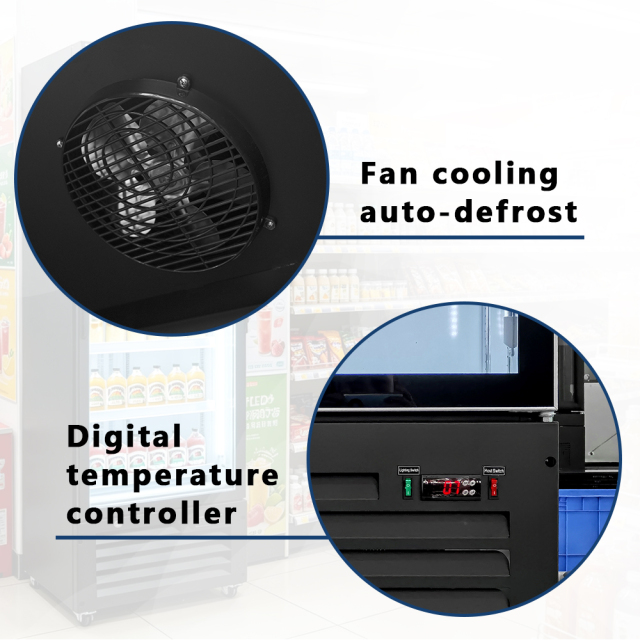
  • Fan cooling with automatic defrost. The fan pulls cold air back through the cabinet quickly once a door is closed, and defrost runs on its own cycle, so nobody has to switch the cabinet off, empty it and wait.
  • PVC shelves with price-tag strips. Shelves are PVC with an integral price-tag holder, so a promotion can be re-priced without tape and card stuck across the glass.
  • Vertical LED lighting. A vertical strip lights the full height of the display rather than pooling brightness on one shelf, and it adds far less heat to the cabinet than older lamp fittings.
  • Self-evaporating water tray. Condensate collects in a tray inside the base and evaporates from there, so there is no drain line to run across the shop floor and no tray to empty by hand.
  • Digital temperature control. The set point is entered on a digital controller and shown on the panel, which turns a shift check into a glance rather than a thermometer run.

Typical Store Set-Ups

  • Convenience stores and forecourt shops. A custom glass door fridge for convenience store layouts usually means a mid-size single-door cabinet, sized to a wall run or the space beside the till, and the glass front lets a customer read the shelf from the queue. They are deep enough for bottled drinks and dairy and shallow enough to keep the aisle clear.
  • Beverage shops, cafés and juice bars. One door and a lit interior do most of the selling; when the shelves are faced properly the cabinet doubles as the drinks menu.
  • Bakeries and dessert counters. Cream cakes, mousses, yoghurt pots and chocolate sit happily in a chilled cabinet, and a glass front at eye level sells them better than a closed box. Ambient bread and pastry belong in a dry showcase rather than here.
  • Restaurant, takeaway and canteen front counters. Bottled drinks, packaged salads and desserts stay within reach of staff, so door count matters more than total volume; two narrow doors often beat one wide door behind a counter.
  • Small supermarkets and grocery stores. Two-, three- and four-door builds take the same cabinet up to the largest size in the range for a full chilled wall, using the same shelving and controller across the run.
  • Importers, distributors and fit-out contractors. Chain buyers often line up chilled, frozen and bakery display from one commercial refrigeration equipment supplier so the whole store shares a service route and a spare-parts list, and taking the chilled run from this series keeps that consolidation simple.

Placement & Installation

  1. Measure the run and the door swing before the cabinet comes off the pallet. A hinge door needs clear space in front of it to open fully, and the cabinet should sit on a level patch of floor rather than straddling a joint or a drain channel.
  2. Stand the cabinet level. The refrigeration pack is inside the base, so the base carries the weight evenly on all four corners; adjust the feet and check with a spirit level before anything is loaded.
  3. Leave the base open to the room. Air is drawn in and warm air pushed out at the bottom of the cabinet, so a grille blocked by stock boxes, a kick rail or a tight plinth will cost you cooling performance. Give the base the clearance shown in the installation sheet.
  4. Let it stand upright after transport. If the cabinet travelled on its side, keep it upright for the settling time given in the manual before the first start.
  5. Check the supply before plugging in. Compare the nameplate voltage with the site supply, use a dedicated socket on a properly rated breaker, and confirm the voltage and plug standard for your market when you order.
  6. Pull it down empty. Switch on with the door closed, set the controller and let the cabinet reach its chilled range before loading stock, so the compressor is not fighting a full cabinet from a warm start.
  7. Load with the air path clear. Keep product below the load line, leave a gap at the back of the shelves and never stack goods against the evaporator fan.
  8. Walk the handover. Open and close the door to feel the seal, check the LED strip and the price-tag strips, read the controller and confirm the defrost cycle is running before the job is signed off.

Cleaning & Maintenance

Routine care. Wipe the glass with a soft cloth and a standard glass cleaner; abrasive pads and scrapers leave marks that catch the light on a display door. The painted steel liner needs only a mild detergent and a dry cloth, and the PVC shelves and price-tag strips lift out for cleaning. A weekly pass over the door gasket with a damp cloth keeps the seal supple, and the paper test — closing the door on a strip of paper and feeling for drag — tells you whether the gasket is still doing its job.

The condenser at the base. On a bottom-mounted cabinet the coil near the floor collects dust, cardboard fibres and kitchen grease, and a clogged coil is the usual reason a display cooler stops holding temperature. Brush or vacuum the coil at the interval your service engineer recommends for the site; a shop with a bakery section or heavy foot traffic will need it more often than a quiet canteen. Never pressure-wash the base.

Defrost discipline. Defrost is automatic, so do not chip ice off the evaporator or switch the cabinet off to speed it up. If ice starts to build on the coil or the back panel, check the door seal and that the door closes fully before looking anywhere else.

Stock handling. Keep the load below the line marked on the shelves, leave the rear air path clear, and rotate stock so older items sit at the front. A chilled cabinet should be left running overnight rather than switched off to save power; it will spend the next morning pulling down instead of selling.

Parts and service. Nothing on this cabinet is exotic. The door gasket, the LED strip, the shelf clips and the controller are the parts that age, and they are the parts a commercial refrigeration equipment supplier should be able to ship again years after the original order. Keep the model and serial details from the nameplate on file so a replacement is quoted correctly the first time.

Ordering & Delivery

  1. Settle the door count and the cabinet size against your floor plan. The series runs from a 380 L single door to a 2000 L four-door build, and the four single-door models carry their own dimensions and container loading in the model listing. If you are working from a shop drawing, send it and we will mark up which sizes fit the run.
  2. Confirm the door and frame details for your market. Glass specification, frame and handle often differ from the standard build for a particular market, and those details are fixed when the order is placed.
  3. Confirm the voltage, frequency and plug for the destination. These are set at order and cannot be changed on site afterwards.
  4. Plan around the minimum order quantity, which is 1 container for this product line. If the same store also needs frozen display, an open chiller run, a bakery showcase or an ice machine, say so at enquiry — those come from the same factory and can be planned into the same order.
  5. Match the order to the container you have booked. Loading quantities per 20GP and 40HQ are given with each model, so the split between sizes can be agreed before the booking is made.
  6. Ask for the paperwork at quotation stage: the specification sheet for the cabinet you have chosen, the container loading plan and the documents your customs broker needs. Cabinets are packed for sea freight in the usual export format; confirm the packing specification and the shipping marks before the booking is fixed.
  7. Lead time and payment terms depend on the model mix and the shipping schedule, so confirm both with your sales contact when the order is placed.
  8. Every order is covered by our After-Sales Support & Warranty arrangement. Ask your sales contact for the terms that apply in your market.
  9. If you want to check the door action and the finish before committing to a container, ask your sales contact about sample availability.
  10. As a commercial refrigeration equipment supplier we quote against your floor plan rather than a single part number: send the door count you need, the destination and the site conditions, and the quotation comes back with the loading plan attached.

Glass Door & Shelf Sets

What the non-heated door does in a humid room. The door on this bottom compressor display cooler is double-walled hollow glass in an aluminium frame with no heating film, so nothing in the glass is drawing power all day and there is no heater or door wiring to fail in service. The trade-off is the room-side pane: where a store runs warm and humid, or where the cabinet faces an air-conditioning vent, a doorway or a kitchen pass, moisture can settle on the outside of the glass and take the edge off the display. On a dry, air-conditioned sales floor the door normally stays clear through the trading day. If your site swings between humid and cold, such as a coastal shop, a forecourt with the entrance open all day or a bakery counter with steam nearby, describe the conditions when you enquire and we will say whether the standard non-heated door suits that position or whether a different door build is the safer choice for the store.

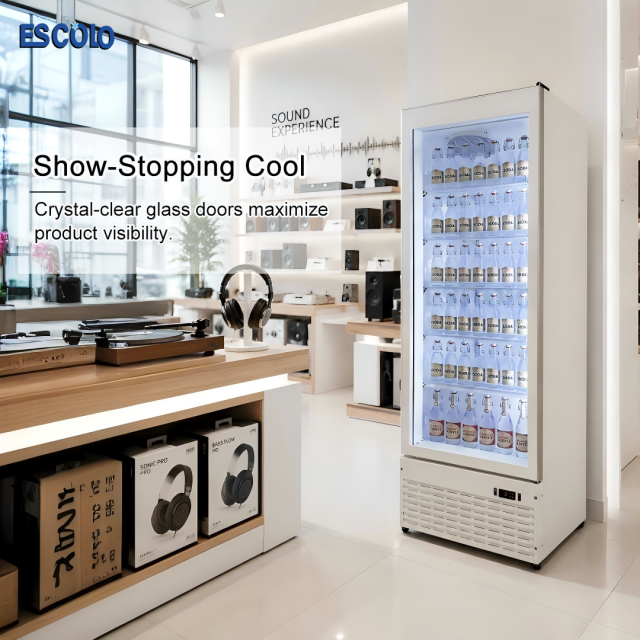
Keeping the glass readable. Two habits do most of the work. Keep the cabinet out of the direct throw of an air-conditioning vent and away from a doorway where warm air spills in, and close the door after facing up rather than leaving it propped while you work the shelves. Any film that does form on the outside wipes off with a soft cloth and a normal glass cleaner; never use a scraper or an abrasive pad on a display door, because the marks catch the light from the LED strip afterwards.

How the shelf set is chosen. Shelf count is not one figure for the whole series. It follows the height and door count of the cabinet you pick, and the set is confirmed against the specification sheet for that size when the order is placed. Before ordering, tell us what one shelf has to carry, such as 330 ml cans, 500 ml bottles, 1.5 L bottles or dairy tubs, and roughly how many facings you want per shelf. That decides the gap between shelves and how many rows each door gets, so the cabinet arrives set up for your planogram instead of being re-worked on the shop floor.

Shelf hardware. Shelf-edge labels stay aligned down the door, which matters where several cabinets stand side by side in a run and customers read across them.

Keeping a run consistent. Where a chain takes single-, two- and three-door cabinets from the same series, fixing the shelf package for each size at order means the same planogram drops into every store: the same number of facings per shelf, the same label height and the same door layout from site to site. Send the planogram with your enquiry and we will match the shelf sets to it across the mix rather than quoting one cabinet at a time.

Scale & Supply Capability

ESCOLO has manufactured commercial refrigeration equipment in Foshan, Guangdong since 2010, and the team now numbers more than 800 people. Fifteen-plus years in the trade, a network of 3,000+ qualified partner factories and an annual output of 200,000+ units let us run container-scale programmes and repeat orders for supermarket, convenience and foodservice buyers. OEM and ODM work is standard: size, colour, function and your own branding are set to the specification you send. Factory audit, pre-shipment inspection, consolidated shipping and after-sales support are handled in-house.

FAQ

Is the glass door heated?

No. This bottom compressor display cooler uses a hollow glass door in an aluminium frame without a heating element, which keeps running costs down and removes a part that can fail. The trade-off is condensation: in a very humid climate, or where the cabinet faces an air-conditioning vent or a doorway, moisture can form on the outside of the glass. Tell us the site conditions when you enquire and we will say whether the standard door suits or whether a heated door is the safer choice for that store.

Do I need to plumb a drain for the cabinet?

No drain is needed. Condensate runs into a tray inside the base and evaporates from there, so the cabinet can stand anywhere on the shop floor without a floor drain or a waste pipe. During service visits, check that the tray area is dry and clear rather than assuming it will look after itself indefinitely.

How many shelves come with each door?

Shelf count follows the height of the cabinet and the way you want to merchandise, so it is set on the specification sheet for the size you choose rather than being one number for the whole range. The set can be agreed when you order — tell us how many facings you plan per shelf and we will confirm the shelf package for that cabinet.

Does the series go larger than the single-door models?

Yes. The same cabinet is built with two, three or four glass doors and runs up to 2000 L, which is the size band used for supermarket chilled walls and distributor orders. Dimensions, door split and container loading for the multi-door builds are confirmed against your floor plan at quotation, because the internal layout changes with the size.

Download

CONTACT US

If you have any queries, get in touch today! Don't hesitate. We try to take the extra step for our customer satisfaction.
Name
Email *
Company
What Is Your Expected Order Quantity? *
1–10 units
11–50 units
51–100 units
101–300 units
301–500 units
500+ units
Leave a message
Name
Email *
Company
What Is Your Expected Order Quantity? *
1–10 units
11–50 units
51–100 units
101–300 units
301–500 units
500+ units